 |
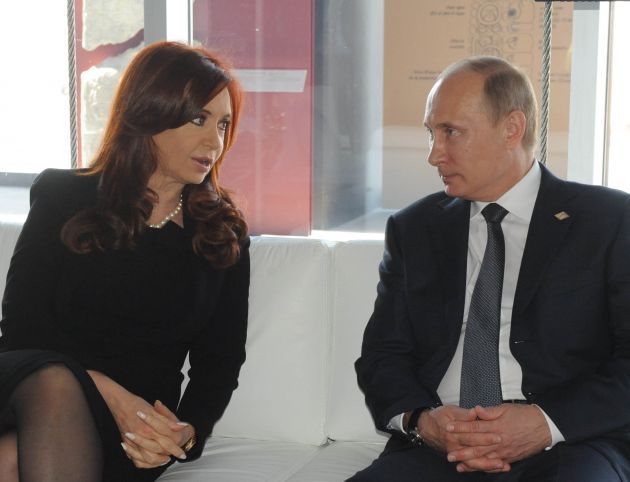
| One financial goner meets another? |
This
commentary by Mohamed El-Erian struck me as wildly speculative at first: Russia is the next Argentina...
yeah right! Are we talking about the same Russia that supposedly has a cool
$475 billion in foreign exchange reserves? It isn't pipsqueak Argentina with less than $29 billion in reserves that looks like it may default
tomorrow (more on this later after my earlier
commentary). El-Erian isn't convinced that Russia's troubles are to be as lightly taken as the markets suggest:
That said, Argentina is not entirely unique. Russia is on a similar path, though the details and the timetable differ. Russia's
government, companies and banks neither need nor want to default on
their debts. If, however, Ukraine-related geopolitical tensions get
worse and pressures mount on Western governments to impose legal
limitations on banks’ ability to transact on behalf of Russian entities,
they may find themselves unable to make payments despite ample
international reserves and manageable debt loads.
The point isn't that Russia has sufficient reserves to make payments for its energy companies and other state-owned firms' obligations. Rather, like Argentina, it may not be allowed to make these payments due to legal machinations--i.e., sanctions:
After last
week’s intensification of U.S. sanctions, Europe is preparing to detail
its own set of additional sanctions this week. Absent a change of
strategy by Russia -- an unlikely outcome given how President Vladimir
Putin readily ignored...financial sanctions
could materialize soon.
The market has yet to fully absorb this
possibility. Many investors believe that the Russian geopolitical issues
will somehow resolve themselves, because it is in nobody’s interest to
stumble into a lose-lose situation. Yet, as with Argentina, rationality
is not necessarily a good guide to what could happen. Absent a course
correction, the conflict is proceeding on a path that limits the
flexibility of the parties, along with the control they have on
outcomes.
Most investors' credit models do a pretty good job of
capturing the many factors that impact debtors’ willingness and ability
to pay. They have greater difficulty, however, dealing with the one-off
exogenous shocks that politics can deliver. Argentina is today’s
example, with all the suspense that it entails. If Russia does not
change course, it could be tomorrow’s.
World politics are messy and risk models can't predict them; what else is new? It's something to think about as Russia's fate hangs in the balance: economics will not (yet) doom Russia's economy but rather politics. Welcome, friends, to the International Political Economy Zone.
