Showing posts with label Trade. Show all posts

The Trials and Tribulations of Friendshoring

♠ Posted by Emmanuel in at 5/03/2023 06:19:00 PM
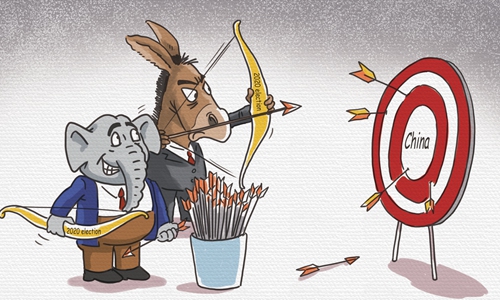
US election sees China bashing by both parties - Global Times
At least Chinese state media's take on the topic is obvious.

Puns on the term "offshoring"--moving one's production facilities abroad, or having foreign-based concerns manufacture components for you--have proliferated. Some time thereafter came the term "reshoring" to denote moving back production to where something was once manufactured. (A US firm moving its plant back to America from China would be the most obvious example.) 

Now we have the slightly more convoluted term "friendshoring" care of Treasury Secretary Janet Yellen. Like reshoring, friendshoring concerns moving production to locales more favorable to the company in question. For instance, if you had a plant in China, you may be moving it to Mexico to avoid Communist Party persecution of foreign firms through discriminatory regulation. Hence, both reshoring and friendshoring concern moving business activities to where authorities are more favorably disposed. However, the difference is that while reshoring is moving production back to where something was once made, friendshoring does not presume moving back, and the destination can be anyplace where authorities are amicable. That is, your risk of being put out of business by some Western-hating foreign autocrat is mitigated.

Or is it? There are a number of viewpoints out there regarding whether friendshoring is actually beneficial. The consulting firm Korn Ferry cautions that this practice may instead create enemies among countries you have chosen to leave. It boils down to the extent to which companies want to involve themselves in international politics:

“Friend-shoring can be extremely risky,” says Tom Wrobleski, co-leader of Korn Ferry's Supply Chain Talent Optimization practice. “You’re picking sides and can unintentionally forge bad blood with other countries.” In the long term, this could backfire if the country your company relies on—for lithium for batteries, say, or precious metals for computer chips—feels alienated...

The puzzle grows still more complicated when it’s infused with values and politics, says Wrobleski, who says these considerations play an important role in the decision-making process. “There must be balance between political alignment and the actual reason for doing business in a particular country,” says Wrobleski. 

Speaking of politics, the Wall Street Journal adds that the wider effect of firms choosing sides by classifying the world into friends and foes through their location decisions could result in the fragmentation of global supply chains. "Unfriendly" countries may feel antagonized and choose to keep to themselves more. In so doing, key commodities and burgeoning markets that were previously open for business may become increasingly unavailable.  This situation may partly explain the higher inflation being experienced worldwide nowadays. In economic jargon, diminished global economic integration increases trade frictions and therefore the ease and cost of doing business worldwide. 

Weighing matters, Raghuram Rajan urges us to "just say no" to friendshoring. Insofar as many poor countries are led by authoritarian figures who may come across as business unfriendly to Western firms, development may be hampered:

The benefits [of trade between rich and poor countries] are obvious. Final products are significantly less expensive, so even the poorest people in rich countries can buy them. At the same time, developing countries participate in the production process, using their most valuable resource: Low-cost labour. As their workers gain skills, their own manufacturers move to more sophisticated production processes, climbing the value chain. As workers’ incomes rise, they buy more rich-country products...

If any forthcoming friend-shoring mandates were to apply such a broad categorisation, they would have devastating effects on international trade. After all, friend-shoring will typically mean trading with countries that have similar values and institutions; and that, in practice, will mean transacting only with countries at similar levels of development...

The benefits of a global supply chain stem precisely from the fact that it involves countries with very different income levels, allowing each to bring its comparative advantage to the production process, PhD researchers from one, for example, and unskilled assembly-line workers from another. Friend-shoring would tend to eliminate this dynamic, thereby increasing production costs and consumer prices. While some labor unions would welcome the reduced competition, the rest of us would regret it.

On top of diminished trade benefits, Rajan reiterates that friendshoring may encourage protectionism among those being discriminated against. What is a global supply chain manager to do? I'll have more to say about this topic in the future, but for now, it's safe to say that each company will need to weight the benefits of more predictable supply chains with likely costlier production in friendlier locations and the potential loss of market access to aggrieved "unfriendly" countries. 

PS: If you have doubt the admittedly unwieldy term "friendshoring" is real, the IMF is already observing greater FDI among geopolitically aligned countries. The IMF further estimates potentially large efficiency losses due to this phenomenon. 
Geo/Econ Challenged: UK in CPTPP?

♠ Posted by Emmanuel in ,, at 3/31/2023 01:27:00 PM
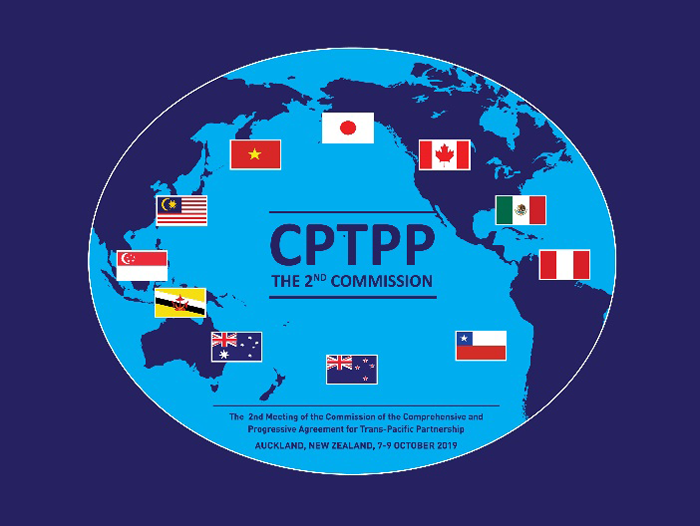
Second CPTPP Commission Meeting Logo
The UK will soon join this group, but does it really matter?

It has somehow come to pass that the UK has now joined an Asia-Pacific trade agreement. OK, so the free trade agreement in question is not the US-led Trans Pacific Partnership, but rather the US-absent Comprehensive and Progressive Agreement for Trans-Pacific Partnership (CPTPP). Moreover, the Pacific is vast: the world's largest ocean is said to contain over half the world's waters. Still, an undeniable fact is that the UK is not in the Pacific. (The last time I checked, it also belonged to this group called the "North Atlantic Treaty Organization".)

Chalk this oddity up to the Brexiteer pledge that leaving the European Union would somehow leave it better off by signing up to FTAs worldwide, and not just with the UK's neighbors. There are a few things to unpack before getting to the significance of this announcement, so here's a quick recap:

  • The trade-averse US government has continued post-Trump, meaning the US seems to have no intention of (re-)joining CPTPP. 
  • Lacking a firmly "Western" prestige partner, the remaining CPTPP countries likely decided to allow negotiations to proceed with the UK anyway.

Now, to the crux of the matter: are there significant economic benefits to be reaped by the UK from this agreement? The UK government estimates that their economy will gain 0.08% as a result over 10 years. 0.08%. To me that seems to be a rounding error instead of a significant gain. Put it down to the UK already having existing FTAs with most CPTPP members and trading far less with these Asia-Pacific nations than with its European neighbors:

The Comprehensive and Progressive Agreement for Trans-Pacific Partnership - or CPTPP - was established in 2018, and includes Australia, Brunei, Canada, Chile, Japan, Malaysia, Mexico, New Zealand, Peru, Singapore and Vietnam. Membership of the CPTPP loosens restrictions on trade between members and reduce tariffs - a form of border tax - on goods.

However, the gains for the UK from joining are expected to be modest. The UK already has free trade deals with all of the members except Brunei and Malaysia, some of which were rolled over from its previous membership of the EU. And even with some gains in trading the government only estimates it will add 0.08% to the size of the economy in 10 years. The Office for Budget Responsibility (OBR), which provides forecasts for the government, has previously said Brexit would reduce the UK's potential economic growth by about 4% in the long term.

Simply put, joining CPTPP would only claw back, oh, 2% of the economic output lost from leaving the EU. It's as close to non-news as you can get in the economic realm.

Biden's 'FTA-Less' IPEF Asia-Pacific Deal

♠ Posted by Emmanuel in , at 5/28/2022 12:31:00 PM

Japan usually goes along with US economic plans... but how about other Asian countries? 
 

Before Trump, the Republican Party represented the pro-trade American political party--especially in contrast to the trade union-dependent Democratic Party. Although Democratic presidents like Clinton and Obama promoted free trade agreements, they relied on Republican support to push FTAs through. After Trump, 'free trade' has become a dirty term in American politics regardless of party. So how is President Biden to shore up America's presence in the Asia-Pacific after his predecessor Barack Obama proposed the Trans-Pacific Partnership subsequently abandoned by Donald Trump? The answer is... do away with 'free trade' altogether.

I am not sure what appeal Biden's Indo-Pacific Economic Framework for Prosperity [IPEF] offers to Asian countries absent the usual tariff reductions. The details of IPEF are still very much to be determined based on consultations with the proposed participants. At best, it could represent useful technical assistance to others about making their economies more connected, resilient, clean, and fair. At worst, it could actually worsen trade access--especially to the vast American market--by imposing developed country environmental and labor standards on developing countries.  

At this stage, all we have to go on are the following bullet points:

  • Connected Economy: On trade, we will engage comprehensively with our partners on a wide range of issues. We will pursue high-standard rules of the road in the digital economy, including standards on cross-border data flows and data localization. We will work with our partners to seize opportunities and address concerns in the digital economy, in order to ensure small and medium sized enterprises can benefit from the region’s rapidly growing e-commerce sector, while addressing issues is such as online privacy and discriminatory and unethical use of Artificial Intelligence. We will also seek strong labor and environment standards and corporate accountability provisions that promote a race to the top for workers through trade [my emphasis].
  • Resilient Economy: We will seek first-of-their-kind supply chain commitments that better anticipate and prevent disruptions in supply chains to create a more resilient economy and guard against price spikes that increase costs for American families. We intend to do this by establishing an early warning system, mapping critical mineral supply chains, improving traceability in key sectors, and coordinating on diversification efforts.
  • Clean Economy: We will seek first-of-their-kind commitments on clean energy, decarbonization, and infrastructure that promote good-paying jobs. We will pursue concrete, high-ambition targets that will accelerate efforts to tackle the climate crisis, including in the areas of renewable energy, carbon removal, energy efficiency standards, and new measures to combat methane emissions. 
  • Fair Economy: We will seek commitments to enact and enforce effective tax, anti-money laundering, and anti-bribery regimes that are in line with our existing multilateral obligations to promote a fair economy. These will include provisions on the exchange of tax information, criminalization of bribery in accordance with UN standards, and effective implementation of beneficial ownership recommendations to strengthen our efforts to crack down on corruption.

Right now, IPEF is still nebulous enough to be vaporware. For others, there is a possibility that IPEF is largely downside (a grab bag of broadly protectionist US priorities) without upside (enhanced market access especially through lower tariffs).

After Qatar, Belligerent Saudi Takes on the UAE

♠ Posted by Emmanuel in , at 2/17/2021 10:07:00 AM

Will the world go to Riyadh if coerced to do so by the Saudi government?
 

With friends like Saudi Arabia, who needs enemies? Upon taking power, Crown Prince Mohammed bin Salman was seen as a reformist, market-friendly leader able to take Saudi Arabia forward into a post-fossil fuel future. This impression has taken a big hit in recent years with the 2017 embargo on Qatar as well as the still-unresolved 2018 murder of journalist Jamal Khashoggi at Saudi Arabia's Turkish consulate. Taking endless potshots at its fellow Gulf Cooperation Council (GCC) members doesn't seem to be the way to signal that Saudi Arabia is open for business. 

More recently, Saudi Arabia has come up with its most outlandish power play yet: It has cautioned multinationals that, unless they place their regional (read: Middle East) headquarters in Saudi Arabia, they will not be able to ink government contracts. Obviously aimed at Dubai in the UAE which vastly outstrips Saudi Arabia in "ease of doing business" indicators that you would naturally think companies would gravitate to when siting regional headquarters, the outcry has been understandably strong:

Saudi Arabia, in a bold and unexpected move, announced late Monday that by 2024 its government would cease doing business with any international companies whose regional headquarters were not based within the kingdom.  

The news has investors, bankers and expat workers buzzing — and scratching their heads.  

Saudi Arabia in recent years has pitched itself as a location for HQ offices in its campaign to create private sector jobs and diversify its economy as part of Crown Prince Mohammed bin Salman’s Vision 2030.

But what began as a pitch to global head offices has now become an ultimatum for some: either relocate your headquarters to the kingdom, or lose out on lucrative government contracts. And the move, Middle East analysts and finance professionals say, appears to be targeted at the region’s current headquarters hub: Dubai.  

Mind you, the UAE joined Saudi Arabia in the embargo on Qatar. Although regional economic rivalry is expected, punching below the belt in this way over restricting government procurement lest they headquarter in Saudi Arabia is widely perceived as unfair, especially since they are all supposedly part of a customs union in the GCC:

The Saudis are “trying to lure companies out of Dubai, I expect, and elsewhere,” Ryan Bohl, a Middle East analyst at risk consulting firm Stratfor, told CNBC. One UAE-based financier, who spoke anonymously due to having business operations in Saudi Arabia, described the move as “clearly targeting the UAE” and a “jab in the face” to Dubai.

“It’s a terrible decision,” the financier, a longtime veteran of the region, added. “It’s anti-common market, it’s anti-competition, and it’s essentially corporate bullying.”

The truth of the matter is that Saudi Arabia is a less attractive place to site your regional HQ with its more restrictive environment--economically and socially. The latter is of particular concern to Western expats:

The government aims to significantly increase Saudi Arabia’s current share of less than 5% of the region’s HQ offices...

But will that be enough to lure expats out of Dubai, where they can drink, wear bikinis on the beach and enjoy a far more liberal lifestyle, comparable on many levels to the West?

“The lifestyle in Saudi is not comparable,” said one Dubai-based venture capitalist, speaking anonymously due to professional restrictions. “You don’t have the same freedoms you have here — here I can go on a public beach and hang out ... Dubai is a global city, Riyadh is far from that. It lacks the diversity that Dubai has. That’s a big deal for me.”

Indeed, one of Dubai’s allures for foreigners is its majority expat population — 90% across the UAE as a whole. The success of Dubai’s global openness model manifests itself in numbers as well: according to the U.N.’s trade database, the UAE in 2019 received 300% more foreign direct investment than Saudi Arabia, despite its economy being about half the size.

And the UAE ranked 16th on the World Bank’s 2020 Ease of Doing Business Index, while Saudi Arabia ranked 63rd.

Speaking of government contracts, the lure is unmistakable: a supposed $220 billion that Saudi Arabia states it will spend to make Riyadh a global city (comparable to *gulp* Dubai). What's more, there are those who say Saudi Arabia is actually coming on in leaps and bounds:

The Saudi government is investing $220 billion in projects aimed at putting Riyadh in the world’s top 10 city economies, and is offering competitive tax-free salaries to employees willing to relocate there...

 Still, many expats who’ve worked in the kingdom feel differently. “There’s no doubt that Saudi will compete with Dubai,” said Alex Nasr, a consultant with several years of experience working around the country, adding that it’s already competing on the salary front.

“Now with Vision 2030 and the radical changes the nation is pushing through, it will begin catching up on the quality of life front … as soon as the veil is lifted on the lifestyle restrictions, the expats will begin to pour in.”

The West's WTO Hypocrisy on COVID-19 Meds?

♠ Posted by Emmanuel in ,, at 2/16/2021 12:37:00 PM

Should intellectual property laws upheld by the WTO be waived during a COVID-19 pandemic?

I almost forgot to post this one, but it's better late than never, I guess. There have been endless allusions to the idea that, rich or poor, the countries of the world are all in this fight against COVID-19 together. However, when push comes to shove, it appears the reality of the matter is rather different: A few weeks ago, large developing countries put forth the idea at the WTO that intellectual property rights on COVID-19 medicines should be abrogated while a global pandemic is going on. 

Perhaps unsurprisingly if regrettably, European and American countries indicated not being willing to go along. Since a consensus would have been required for an IP waiver on COVID-19 medicines to come into effect at the WTO, this effort was admittedly a long shot from the start:

Wealthy nations [...] reiterated their opposition to a proposal to waive intellectual property rules for COVID-19 drugs, three trade sources said, despite pressure to make an exception to improve access to drugs for poorer countries. Supporters of the waiver say existing intellectual property (IP) rules create barriers on access to affordable medicines and vaccines and they want restrictions to be eased, as they were during the AIDS epidemic.

But opposition from the European Union, the United States and some other wealthy nations at a meeting on Friday, means the proposal set to go before the World Trade Organization’s (WTO) General Council next month is likely to fail.

“If rich countries prefer profits to life, they will kill it by tying it down in technicalities.” said a delegate supporting the motion who attended the closed-door meeting. The 164-member WTO body usually has to agree by consensus unless members agree to proceed to a vote, which is exceptional.

Populous developing countries India and later China pushed for lifting IP restrictions on COVID-19 medicines, although you have to wonder if they have competing commercial interests since they too have production capabilities in making these medicines should IP be waived. Then again, the current WTO head Ngozi Okonjo-Iweala (this article was written before she became its Director-General) also supported the initiative:

The proposal was first raised by India and South Africa in October. Since then, China, which has five COVID-19 vaccine candidates in late-stage trials, has voiced its support, as have dozens of other WTO members, mostly from developing countries.

The World Health Organization says it supports tackling barriers to access to COVID-19 medicines, as does Nigeria’s Ngozi Okonjo-Iweala, selected by a panel to be the WTO’s next director-general.

You have to wonder though if some developing countries might want to declare medical emergencies that compel them to waive such IP on COVID-19 medicines under "compulsory licensing" procedures allowed by the WTO:

In 2001 — at the height of the AIDS crisis and under pressure from governments whose citizens were dying because they could not afford life-saving medicines — the World Trade Organization waded into the battle between intellectual property and public health. The resulting Doha Declaration ruled that the Agreement on Trade-Related Aspects of Intellectual Property Rights “should not prevent members from taking measures to protect public health.”

It confirmed that governments retained several mechanisms for guaranteeing affordable access to medicines, including issuing compulsory licenses, which allow them to use an invention without the patent holder’s consent in extraordinary circumstances. This applies not only to new drugs but also to existing medications whose patents have been extended because pharmaceutical companies made minor changes to formulations or discovered a new use for the medication.

Given the uncertainty over access to treatments for COVID-19, several countries have been laying the legislative groundwork to issue compulsory licenses for products that patent holders refuse to make accessible.

I think developing countries will first observe whether they can avail of more COVID-19 medicines they believe they need under the COVAX initiative. If that avenue proves unfruitful, then don't be surprised to see "compulsory licensing" claims start appearing. Make no mistake that our world remains riven by North-South divides even amidst a global pandemic. 

Buy American: Biden More Protectionist Than Trump?

♠ Posted by Emmanuel in , at 1/25/2021 01:18:00 PM

Is Biden a worse protectionist than Trump? Prove it isn't so, Joe.

I've been engaged with a lot of real-world work, so I haven't been able to post that much as of late (apologies). Still, here's my initial take on events of 2021 with Joe Biden assuming the US presidency. Although the rest of the world breathed a sigh of relief that the isolationist Donald Trump has literally departed the White House with little fanfare, the question remains: How much of an improvement will Biden be for international economic relations? 

A new article makes me question whether he will be much of an improvement since Biden is indicating more "Buy American" provisos for government procurement are in store to shore up US industry during these challenging times: 

President Joe Biden will take steps Monday to encourage the federal government to buy more American-made products, a move the new administration argues will protect U.S. jobs and juice an economy severely hobbled by the deadly coronavirus pandemic.

Biden, who pushed a $700 billion Buy American campaign as a candidate for president, is set to sign an executive order that will advance several policies to boost the federal government’s purchase of U.S.-manufactured goods and services, administration officials said Sunday.

Federal law requires government agencies to give preference to American firms when possible, but critics say those requirements haven't always been implemented consistently or effectively. Some have not been substantially updated since the 1950s.

The federal government spends nearly $600 billion a year on contracts, which is money the administration says can spur a revitalization of the nation’s industrial strength and create new markets for new technologies.

To that end, Biden’s order will increase the domestic content threshold, which is the amount of a product that must be made in the U.S. before it can be purchased by the federal government.

Right now, loopholes in federal law allow products to be stamped "made in America" for purposes of federal procurement even if barely 51% of the materials used to produce them are domestically made. Administration officials did not say how much Biden intends to increase that threshold.

It remains to be seen how Biden will tiptoe around the United States' WTO GPA commitments without offending other member countries. Still, the question remains: Is Biden really going to be more internationalist in outlook than Trump? This episode gives us reasons to doubt whether Biden's actions will match his rhetoric (which is admittedly better to listen to).

PRC Cities Go Dark Without Aussie Coal

♠ Posted by Emmanuel in ,, at 1/05/2021 04:42:00 AM

While the US-China trade war occupies most of the headlines for obvious reasons--it's the geopolitical rivalry that matters--don't assume there are any number of others going on. Arguably the most notable among these is the deterioration in almost all respects of Australia-China trade relations, which have been accelerated by the Morrison government wanting to investigate China's role in the spread of COVID-19 worldwide seemingly at the outgoing Trump administration's behest.

This not-so-genius move is precisely biting the hand that feeds in terms of Australia losing significant access to its largest export market:

Australia’s economy has been badly hit by escalating trade tensions with China — and it’s possible growth might “never return” to its pre-virus levels even when the pandemic is over, according to research firm Capital Economics.

China is by far Australia’s largest trading partner, accounting for 39.4% of goods exports and 17.6% of services exports between 2019 and 2020, the firm said. But Beijing has for months been targeting a growing list of imported products from Down Under — putting tariffs on wine and barley, and suspending beef imports.

Gross domestic product (GDP) in Australia could contract even more if Beijing continues to pile tariffs on more Australian imports, said its senior economist Marcel Thieliant in a note last week. Goods and services that are already “in the firing line” are worth almost a quarter of Australia’s exports to China — forming 1.8% of its economic output, the research firm said.

The list of affected traded goods grows longer all the time. Exemplifying the current fashion for lose-lose, though, the Chinese are not exactly finding what they need from other countries so easily. Consider coal. Absent affordable and plentiful supplies from Oz, many PRC cities are now reportedly having power outages:

Several major Chinese cities have reportedly gone dark as authorities limit power usage, citing a shortage of coal. Analysts said prices of the commodity in the country have shot up due to the reported crunch. The reports also follow rising trade tensions between Beijing and Canberra, leading some analysts to tie the coal shortages and blackouts to the unofficial ban on Australian coal.

Relations between the two nations soured last year after Australia supported an international inquiry into China’s handling of the coronavirus pandemic. Coal is just one in a growing list of Australian goods that China is targeting, as a result of their escalating row.

Last year, China told its power plants to limit the amount of coal imports from other countries to keep a lid on prices. Beijing reportedly lifted those restrictions later, but didn’t remove curbs on coal imports from Australia. China also reportedly gave state-owned utilities and steel mills verbal notice to stop importing Australian coal.

The case for trade was nevermore evident than it is here. Both governments have done their people a welfare-reducing disservice by engaging in a pointless spat over COVID-19 that neither has an obvious benefit from engaging in.

Asia's Giant US-Free FTA, RCEP, is a Go

♠ Posted by Emmanuel in , at 11/15/2020 06:14:00 PM

Spot the missing country during this mother of all virtual meetings (read more below).
 

This just in: After being on the drawing board for eight years, the Regional Comprehensive Economic Partnership (RCEP) has been agreed to at the regional level.  Featuring 15 countries with a combined GDP of over $26 trillion and a third of humanity, its dimensions exceed all those that came before. Befitting the vast expanse of the "Asia-Pacific," its pan-regional free trade agreement was destined to be geographically expansive as well.

Fitting the times, the region's countries agreed to it during a meeting hosted by the Vietnamese in a virtual Hanoi. RCEP will include China, Japan and South Korea in East Asia; Brunei, Cambodia, Indonesia, Laos, Malaysia, Myanmar, Philippines, Singapore, Thailand and Vietnam in Southeast Asia; and Australia and New Zealand in Oceania. We are 15 all in all, a mix of developing and developed (Japan, South Korea, Australia and New Zealand specifically) countries. With the US spinning its wheels in the trade negotiation realm--Trump is more interested in leaving than negotiating them--the spearhead for RCEP is, unsurprisingly, China:

Amid questions over Washington’s engagement in Asia, RCEP may cement China’s position more firmly as an economic partner with Southeast Asia, Japan and Korea, putting the world’s second-biggest economy in a better position to shape the region’s trade rules. The United States is absent from both RCEP and the successor to the Obama-led Trans-Pacific Partnership (TPP), leaving the world’s biggest economy out of two trade groups that span the fastest-growing region on earth.

By contrast, RCEP could help Beijing cut its dependence on overseas markets and technology, a shift accelerated by a deepening rift with Washington, said Iris Pang, ING chief economist for Greater China. RCEP groups the 10-member Association of Southeast Asian Nations (ASEAN), China, Japan, South Korea, Australia and New Zealand. It aims in coming years to progressively lower tariffs across many areas.

It bears repeating that while news reports emphasize the US falling even further back in the regional FTA sweepstakes having spurned the Trans-Pacific Partnership (TPP), it was never a party to the RCEP negotiations. What's more, the current US "president" is too preoccupied with cooking up inane conspiracy theories about his recent election defeat that he's missed his third straight Association of Southeast Asian Nations (ASEAN) shindig. And considering all Trump the Plump had to do was ask his toadies to set up a virtual attendance this time. Such an exemplary [non-]work ethic:

President Donald Trump skipped summits with his Asian counterparts for the third year in a row on Saturday, even as rival China is set to expand its influence with a massive free trade deal in the region. National Security Adviser Robert O’Brien said Trump regretted he was unable to attend the online summit with the 10 members of the Association of Southeast Asian Nations, but stressed the importance of ties with the region.

Trump attended the ASEAN summit in 2017, but sent only representatives during the last two meetings. A special summit with ASEAN that he was supposed to host in Las Vegas in March was called off due to the pandemic.

Another notable non-RCEP participant (for now) was India. As I've noted elsewhere before, RCEP actually just consolidates free trade agreements ASEAN has with the three aforementioned East Asian nations as well as Australia/New Zealand (ANZ). In this sense, RCEP is actually missing a country, India, which ASEAN also has an FTA with. The Times of India identifies a number of sticking points for Indian negotiators that were not resolved to their linking, making it pull out of RCEP last year: unfavorable rules of origin, large and rising deficits with other negotiating parties, and inadequate protections for its service industries:

India pulled out of the China-backed trade agreement as negotiations failed to address its core concerns. These were threat of circumvention of rules of origin due to tariff differential, inclusion of fair agreement to address the issues of trade deficits and opening of services. 

The deal would have brought down import duties on 80% to 90% of the goods, along with easier service and investment rules. Some in Indian industry feared that reduced customs duty would result in a flood of imports, especially from China with which it has a massive trade deficit. India’s trade deficit with other RCEP countries were also rising.  

If I were uncharitable, I'd put it down to domestic protectionism. The current leadership's allusion to swadeshi (self-reliance) is unmistakable:

For India, it will be an opportunity to strengthen its domestic industries and move towards its dream of becoming self-reliant. A large number of sectors including dairy, agriculture, steel, plastics, copper, aluminium, machine tools, paper, automobiles, chemicals and others had expressed serious apprehensions on RCEP citing dominance of cheap foreign goods would dampen its businesses.

Oh well; India may still join at a later date if it believes it's losing out to the others due to trade diversion effects. Already, there's talk of the US rejoining the TPP's successor, the Comprehensive and Progressive Agreement for Trans-Pacific Partnership (CPTPP). Maybe RCEP coming into effect will spur President-Elect Joe Biden--a joiner, not a leaver. 

India pulled out of the China-backed trade agreement as nego ..

"Trade War 4.0": How the EU Plans to Punish US Tech

♠ Posted by Emmanuel in ,, at 7/20/2020 08:12:00 PM
This is a follow-up to the earlier post about how the EU and US are on a collision course over the tax treatment of American tech giants, which the EU believes are operating nearly tax-free within their countries. If we were still dealing with old-fashioned goods, the solution for the EU would be simple: apply tariffs, which are taxes on goods. After all, the US is applying those on a lot of EU goods right now. But how would you retaliate against services which the US is dominant in? Since these are intellectual property-rich things, you would make it easier to violate IP.

Now, if there is anything the US guards zealously, it's the intellectual property of its firms. Even the WTO reflects this American predilection by incorporating Trade-Related Aspects of Intellectual Property Rights (TRIPS) despite there already being a United Nations World Intellectual Property Organization (WIPO) since 1967.

To be sure, the EU is also IP-rich and also pushed for IP inclusion at the WTO. However, the clear difference circa 2020 is that while the US is strong in technology IP, the EU is rather less so. Maybe it's really anger at not getting enough taxes out of the US tech giants. Or maybe it's just plain jealousy that the EU hasn't really developed many of these next-generation industries. No matter; the EU is looking to hit US IP in the quarrel over American tech giants as an emergent trade war strategy:
The EU is preparing a law that could allow its executive body, the European Commission, to hit back against U.S. tariffs by imposing sanctions on the intellectual property of companies such as Amazon, Google and Facebook. In a rare united front, Europe's main political groups on July 6 backed proposals to strengthen the EU's trade powers by expanding them into the realm of services and intellectual property rights, which they argue would allow them to match U.S. trade firepower...

Lawmakers in Brussels think sanctions on services will be a bigger deterrent than tariffs on soybeans and machinery. They would also be a better fit for highly globalized value chains, where production easily jumps borders...

Sanctions directly targeting a company's intellectual property, by contrast, would catch a larger share of America's high-value exports, and would be much harder to circumvent [by relocating production outside the US]. Experts contacted by POLITICO agreed that trade retaliation on services and intellectual property would be a powerful weapon, but cautioned that the U.S. could react furiously. “Tariffs on Bourbon and Boeing is one thing, but cross-retaliation against copyright and religious symbols like [trademarks] is a whole different level of warfare," said Hosuk Lee-Makiyama, director of the ECIPE think tank.
Essentially, the US has found it easy to conduct trade warfare with Europe because the EU still largely exports goods to America. The opposite does not hold, though: the US export mix to the EU is biased towards services, which again cannot be tariff-ied. By abrogating US IP as cross-retaliation, though, the EU walks a tightrope. Truly, it is the nuclear option that would prompt a significant deterioration in transatlantic trade relations. Even in the age of Trump, that's not a place more level-headed Europeans would like to head towards.  

Upcoming US-EU Trade War: Taxing Tech Giants

♠ Posted by Emmanuel in ,,, at 6/26/2020 11:01:00 PM
Trump wants his administration to beat up US tech giants, not European nations.
If you've paid attention to US news, you're aware that Facebook and other tech giants have been in the Trump administration's crosshairs for supposedly suppressing "conservative" viewpoints that differ from their supposedly liberal, West Coast biases. After--by his reckoning, at least--wanting to be politically neutral by giving Trump free rein, Mark Zuckerberg recently took a more proactive stance to removing Trump's more [ob]noxious social media messages. Recently, FB banned a campaign ad that had an inverted triangle--a Nazi-era mark for non-desirable persons to be executed in concentration camps like homosexuals and immigrants [sounds familiar]?

Just as I write, the fear of mass boycotts has prompted Zuckerberg to announce giving Trump an even shorter leash on outright politically motivated lies--or so he says:
Facebook said Friday that it will flag all “newsworthy” posts from politicians that break its rules, including those from President Donald Trump. CEO Mark Zuckerberg had previously refused to take action against Trump posts suggesting that mail-in ballots will lead to voter fraud, saying that people deserved to hear unfiltered statements from political leaders. Twitter, by contrast, slapped a “get the facts” label on them. 

“The policies we’re implementing today are designed to address the reality of the challenges our country is facing and how they’re showing up across our community,” Zuckerberg wrote on his Facebook page announcing the changes. Zuckerberg said the social network is taking additional steps to counter election-related misinformation. In particular, the social network will begin adding new labels to all posts about voting that will direct users to authoritative information from state and local election officials.
In retribution for being censored, Trump has threatened to remove protections granted to tech giants under Section 230 of the 1996 Communications Decency Act: No provider or user of an interactive computer service shall be treated as the publisher or speaker of any information provided by another information content provider. 

So it's a no-holds-barred Trump administration versus tech giants fight, right? Well, no. Actually, the administration is taking up their cause of avoiding being taxed in the European Union. Treasury Secretary Steven Mnuchin even recently walked out on negotiations to establish a global pact to tax the likes of Facebook and Google. The hope was that a unified global scheme would forestall revenue-hungry EU states from taxing US tech giants themselves or at the bloc-level. With the US not participating in those negotiations anymore, it's off to the races in the trade war stakes:
Europe and the United States are hurtling toward a trade war over who has the right to tax Google, Facebook and Amazon. After Washington confirmed Wednesday [June 17] that it had pulled out of talks on global rules for taxing the digital economy, officials including Bruno Le Maire, the French finance minister, and Paolo Gentiloni, the European economy commissioner, threw their weight behind national or EU-wide digital levies — plans that would likely bring retaliation from the U.S.

“We need an understanding in the global negotiations,” Gentiloni tweeted. “If the American stop makes it impossible, a new European proposal will be put on the Commission’s table.” The stand-off is expected to reignite a transatlantic trade dispute that has been simmering for more than a year. At stake is which country has the right to tax digital companies whose operations now span the world.


As Phil Collins once sang, it's a groovy kind of love America's current leadership has with the tech giants. On one hand, Trump is battling them at home, purportedly over curtailing free speech. For all that melodrama back home, it also appears that the US government still has its corporate titans' interests in mind abroad. Technology will undoubtedly be the industrial battleground for global dominance in the future, not automobiles, oil, or other dominant sectors of days gone by. 

Over a fifth of market capitalization of the S&P 500 index is now composed of Facebook, Amazon, Apple, Microsoft and Google [Alphabet], AKA FAAMG. The stock market would strongly vouch for Lighthizer's assertion that they represent America's best. So, if it means fighting for Facebook's ability to evade taxes abroad, the Trump administration has no reservations whatsoever in championing it. None at all.

Will the WTO Die on Dec. 10, 2019?

♠ Posted by Emmanuel in , at 11/22/2019 03:03:00 PM
Meet (trade) Killer BOB.
To those following international trade, it's been no secret that the United States has been blocking the appointment of appellate judges to the WTO's Dispute Settlement Mechanism--international trade court, if you will. Without having judges to hear appeals on different trade-related rulings at the WTO, a critical component of the organization will be terminally wounded--its legal one.

With an avowed isolationist like Trump as the US leader--and a US trade representative with a similar view of the world in Robert Lighthizer--this outcome was perhaps inevitable after the 2016 elections:
The world will not end on December 10, yet for many who have spent their careers within the global trading oversight system, the date has apocalyptic consequences. That is when the World Trade Organisation’s (WTO) highest dispute-resolution body will cease to function after the administration of US President Donald Trump blocked reappointments to its panel. Without a working appeals system, international trade disputes may never see resolution and could quickly evolve into tit-for-tat tariff wars that spiral out of control.
Lighthizer makes no efforts trying to disguise US efforts to kill of the Appellate Body:
The US sees the Appellate Body's role as one which strictly enforces a “contract” agreed to by WTO members. The European Union and many other countries, however, view the body as more of a court that is able to create new laws for the organisation, WTO deputy director general Alan Wolff said recently.

Lighthizer made that same point in a rare public speech in 2017 when he said the European Union views the WTO and its dispute-settlement rules as “sort of evolving kinds of governance.” “There’s a very different idea between these two things,” Lighthizer said. “And I think sorting that out is what we have to do.”
So what is the US position, then? Either it gets what it wants--a much-circumscribed set of issues the appellate body can rule on to avoid "judicial overreach" on trade matters--or it will simply blow up this international legal mechanism.

Despite criticisms that the WTO--its rules and legal rulings--favor wealthy countries, think of what the alternative situation is of a world without the WTO. It would be a move away from a (relatively more) rules-based order to, well, a move back to more of the law of the jungle. The realist situation awaits us once more--and Trump and his boys will be quite happy with that situation, actually:
But even if the US manages to ram through its fixes to the dispute system, American officials have a litany of other changes they want to see at the WTO. They include making it harder for countries like China to self-proclaim “developing” status, which affords them certain preferential treatment on trade. The US also wants more transparency from all nations, especially from China, on subsidies given to domestic businesses that export overseas.
A weakened WTO could bring back an era that allowed economically strong countries to steamroller other nations. Before the WTO established a rigid dispute process, trade was governed by the General Agreement on Tariffs and Trade, which determined trade disputes through diplomatic muscle rather than a deliberative, legal manner.
That may not necessarily be seen as a bad thing for Trump and his group of trade officials, who have long viewed the WTO as a suspect institution aimed at undermining US economic sovereignty.
Welcome (back) to the jungle--coming to an international trade partner near you December 10, 2019. 

Trade War: Wall Street Titans Ditch US Farmers

♠ Posted by Emmanuel in , at 8/19/2019 11:49:00 AM
Hey Trump, maybe you should berate Wall Street for not helping farmers in their time of (trade war) need
Here's another thing for Trump to tweet about: amid his trade war hysterics, he's somehow overlooked bellyaching about large Wall Street banking concerns getting rid of their agricultural loan portfolios as  quickly as possible. Just as the government is extending more financial supports to farmers--probably WTO illegal--so it probably will have to provide more loans as well as private lenders cower in fear:
[A]fter years of falling farm income and an intensifying U.S.-China trade war - JPMorgan and other Wall Street banks are heading for the exits, according to a Reuters analysis of the farm-loan holdings they reported to the Federal Deposit Insurance Corporation (FDIC). The agricultural loan portfolios of the nation’s top 30 banks fell by $3.9 billion, to $18.3 billion, between their peak in December 2015 and March 2019, the analysis showed. That’s a 17.5% decline. 

Reuters identified the largest banks by their quarterly filings of loan performance metrics with the FDIC and grouped together banks owned by the same holding company. The banks were ranked by total assets in the first quarter of this year.

The retreat from agricultural lending by the nation’s biggest banks, which has not been previously reported, comes as shrinking cash flow is pushing some farmers to retire early and others to declare bankruptcy, according to farm economists, legal experts, and a review of hundreds of lawsuits filed in federal and state courts. 
Meanwhile, farm bankruptcy claims are going through the roof at the wrong time as commercial banks are increasingly unwilling to lend to this sector just as demand for loans to keep them afloat is increasing:
Chapter 12 federal court filings, a type of bankruptcy protection largely for small farmers, increased from 361 filings in 2014 to 498 in 2018, according to federal court records. “My phone is ringing constantly. It’s all farmers,” said Minneapolis-St. Paul area bankruptcy attorney Barbara May. “Their banks are calling in the loans and cutting them off.”

Surveys show demand for farm credit continues to grow, particularly among Midwest grain and soybean producers, said regulators at the Federal Reserve Banks of Chicago, St. Louis, Minneapolis and Kansas City. U.S. farmers rely on loans to buy or refinance land and to pay for operational expenses such as equipment, seeds and pesticides. Fewer loan options can threaten a farm’s survival, particularly in an era when farm incomes have been cut nearly in half since 2013.
The reason why commercial banks are ditching farmers en masse is easy to understand: they likely can't pay back their loans during these times of Trump-induced agricultural distress:

The noncurrent rates were far higher on the farm loans of some big Wall Street banks. Bank of America Corp’s noncurrent rate for farm loans at its FDIC-insured units has surged to 4.1% from 0.6% at the end of 2015. Meanwhile, the bank has cut the value of its farm-loan portfolio by about a quarter over the same period, from $3.32 billion to $2.47 billion, according to the most recent FDIC data.

Bank of America (BAC.N) declined to comment on the data or its lending decisions. For PNC Financial Services, the noncurrent rate was nearly 6% as of the end of March. It cut its farm-loan portfolio to $278.4 million, down from $317.3 million at the end of 2015. David Oppedahl, senior business economist for the Federal Reserve Bank of Chicago, said the banking community is increasingly aware of how many farmers are struggling. “They don’t want to be the ones caught holding bad loans,” he said.

As is usually the case, good job, Trumpie. It rightly serves those who voted mostly for Trump to experience the full brunt of trade wars which he promised. 

Trade Smackdown: Trump Vs. Santa

♠ Posted by Emmanuel in , at 8/03/2019 07:46:00 PM
"You want toys this Christmas, junior? You'll get fewer of 'em if they're from China, kid!"
Until very recently, the Trump administration has taken care not to hit Chinese exports of consumer goods--especially electronics--with its assorted tariffs. Now, though, the gloves have fully come off as he announced that practically all remaining PRC imports would be hit by these import taxes. 10% tariffs, here we come. What's particularly interesting is the timing: Trump attributes it to China not buying more US agricultural products as had been agreed to as well as its inaction on controlling illicit fentanyl production destined for the US.

At any rate, hitting Chinese goods with tariffs--consumer goods most notably--is spectacularly bad timing from the perspective of Chinese manufacturers and American retailers gearing up for the Christmas season. The South China Morning Post sees it as nothing less than a "war on Christmas" declared by Trump:
Many of the goods on the fourth list of trade war tariffs are consumer products often given as Christmas gifts. Of the US$300 billion, mobile phones make up the largest portion at US$44.8 billion, followed by laptops at US$38.7 billion, toys at US$11.9 billion, and video game consoles at US$5.4 billion, according to US International Trade Commission figures.
“This time the list includes toys. So you might say the Trump Administration has now officially declared war on Christmas,” said Jock O’Connell, an international trade adviser to research firm Beacon Economics.
Can these parties beat the clock before the stipulated September? It will be a difficult act given logistic vagaries of seaborne freight. Plus, US retailers have already stocked up a lot with the trade war in mind, so additional storage capacity is harder to find:
With less than a month before the proposed deadline, the window to front-load – that is, dispatching shipments early to avoid the new tax – is narrow. It usually takes 17 days for sea shipments from China to reach the West Coast of the US and 27 days to New York on the East Coast.
“I shouldn’t think this move would result in a substantial surge in imports,” O’Connell added. “Even if your Chinese suppliers had goods on hand, you’d have only a couple of weeks at most to get them on a ship bound for a West Coast port.”

When the Office of the United States Trade Representative (USTR) filed a notice of the previous increase in tariffs on US$200 billion of Chinese goods from 10 per cent to 25 per cent in May, there was some relief for companies that could prove they had made their purchases before the tariff was announced.

Some hope that goods at sea before that cut off point could potentially be exempt from the new tariff, if a similar pattern is followed this time around, but this is unconfirmed. “There is definitely a short lead time,” said Jennifer Diaz, a lawyer at Diaz Trade Law in Miami. “We will see if customs uses September 1 as an export deadline like they have previously.”
Further complicating matters is the fact that US inventories and warehouses are already nearing capacity due to previous bouts of front-loading designed to beat earlier rounds of tariffs, particularly last year. US seaports are also in peak import season, with space already tight at many important hubs.
IF someone deserves a lump of coal in the world economy, it's Trump. For so long, the world operated on the understanding of export-led development by Asian nations to the United States, manily. If the old model no longer holds, what comes next? 

Trump on LDCs: Give Shitholes Food Aid

♠ Posted by Emmanuel in ,,, at 5/13/2019 04:37:00 PM
Feed Shithole Countries Program [FSCP]--a forthcoming American "gift" to the world?
Sometime ago, precisely zero people were surprised when US President Donald Trump characterized what were understood to be poor, migrant-sending countries as "shitholes." Rising to political prominence on a false, racist claim--the Obama "birther" conspiracy--displaying such verbal animus was to be expected. More recently, though, Trump has been toying with the idea that all the agricultural products which would have been sold to China can instead be purchased by the US government and distributed to these "shithole" countries as food aid. This action is to be done to help farmers who voted by and large for this obese racist (who probably doesn't need more food anywaygoing by his portly physique).

Leaving aside the intent here--Trump does not have a charitable or well-meaning bone in his body (remember that his "foundation" was a scam that's since been shut down)--there are several salient points which suggest it will help neither American farmers nor citizens of poor countries if Trump's latest harebrained idea was to be implemented. Bloomberg explains.

First, this idea has already been tried before during the Carter administration, and it didn't quite work as planned:
In the 1980s, crops expanded just as the export ban caused Soviet Union countries to start buying grain elsewhere. At the time, growers could deliver supplies to the Commodity Credit Corporation below certain loan rates...

The purchases aren’t a “very effective” way to deal with overhang, “and that’s what the government eventually realized," said Arlan Suderman, chief commodities economist at brokerage INTL FCStone Inc. “It does help support cash prices, but it limits rallies in the market because the market knows if it rallies too much, there are all those bushels still in the bin that will come out.”
Second, much of what China bought was not for human consumption but rather feed for livestock. What's more, LDCs are ill-positioned to receive a deluge of food anyway:
Aid programs are also too small. The U.S. government’s Food for Peace program usually buys and ships about $1.5 billion worth of goods a year to other countries. On top of that, the nations in need are usually seeking food-grade commodities, such as rice and wheat, said Joseph Glauber, former chief economist at the U.S. Department of Agriculture. The vast majority of U.S. corn and soy production is for use in animal feed or biofuel.

Many poor countries may also not have the facilities needed to process soybeans, which can also yield cooking oil. Some countries may also be opposed to large amounts of aid because it could hurt their farmers.
Third, dumping government-subsidized foodstuffs in the developing world would constitute a flagrant violation of WTO rules specifically meant to protect poor countries' farmers from such dumping:
Trump’s move could also generate disputes in the World Trade Organization as the measures can be seen as market distorting. The aid could send prices lower, hurting countries like Brazil and Argentina, which are also major corn and soybean exporters. “You can’t just dump grain at concessional prices,” Glauber said. “That would constitute an export subsidy. That is something the WTO members agreed not to do.”
Memo to Trump: the developing world doesn't need your racism or your country's food aid. 

US to WTO: China Isn't a Developing Country

♠ Posted by Emmanuel in , at 4/09/2019 10:44:00 AM
If Trump had his way, the WTO would have far fewer "developing countries." (China wouldn't be one, of course.)
There's an interesting fight going on at the WTO on the classification of developing countries as, well, developing countries. The Trump administration--never a fan of multilateral organizations like the WTO to begin with--wants fewer countries to be classified as such. At present, about two-third of WTO member countries have this status, and together with it, special and differential treatment (SD&T). SD&T allows preferences for developing countries that developed countries do not have such as a longer time frame for meeting WTO commitments or subsidizing their agricultural industries. From America's point of view [or is that Trump's?], this abuse has gone on for far too long.

On the other hand, China wants to keep this designation despite becoming the world's second-largest economy. From the South China Morning Post:
China will refuse to give up the “special and differential treatment” it enjoys as a developing nation at the World Trade Organisation, in a rebuke to a US proposal that would pare back the privileges China and other nations enjoy on trade. China is categorised as a developing country at the Geneva-based institution, which affords it “special and differential treatment”. This enables China to provide subsidies in agriculture and set higher barriers to market entry than more developed economies.

The dispute reflects a fundamental divide within the WTO that has threatened the future of the global multilateral trading system. The United States has long complained that too many WTO members – about two-thirds – define themselves as developing countries to take advantage of the terms the status permits them to trade under.
Allowing WTO members to classify themselves as developing countries to avail of SD&T is the latest American grievance against the WTO:
China, India, South Africa and Venezuela have opposed a US proposal to reform the “special and differential treatment”, published earlier this year. The four have already submitted a paper to the WTO saying that the self-classification of developing member status has been a long-standing practice and best serves the WTO’s objectives.

The joint letter also claims that many WTO rules have actually favoured the US and other developed countries, in the areas of agricultural support, textile quotas and intellectual property rights protection.
Unless other wealthy countries jion with the United States it's hard to see how the US gets traction on this issue in the medium term. 

WTO ‘National Security’ Ruling Meets Trump

♠ Posted by Emmanuel in , at 3/30/2019 07:36:00 PM
From Crimea to America: considering the plight of "national security" trade barriers.
Here's a heads-up for everyone; over the next few days, the World Trade Organization is expected to rule over Russia hitting the Ukraine with trade sanctions on "national security" grounds [DS512]. In the past, such claims were considered unquestionable by the WTO. However, the expectation now is that the WTO will rule against Russia and in favor of the Ukraine.

You should be asking by now, "What do Russia-Ukraine 'national security' dust-ups have to do with the United States?" Well, it sets a precedent for the WTO proceeding with cases having to do with national security and ruling in favor of the complainant. And, insofar as the United States has hit so many of its trade partners with such claims for limiting imports, the WTO's change of heart would render the US vulnerable to a world...of hurt:
The World Trade Organization is set to rule for the first time on a dispute involving a member’s national security, challenging a key justification for President Donald Trump’s tariffs and putting the arbiter of international trade conflicts on a collision course with the U.S. The WTO will issue a ruling on a case in which Russia imposed trade restrictions on Ukraine, saying they were necessary in the interest of national security, according to an official with knowledge of the report who asked not to be named because the process is private.

The decision could still be appealed or settled outside of the WTO. The ruling confirms the WTO’s authority to determine whether such measures are necessary to protect a country’s security.
The ruling could set up a showdown as US trade partners take it to the WTO dispute settlement mechanism over similar "national security" tariffs:
A WTO ruling on the Russia dispute could force the U.S. to justify why the European Union, Canada, Mexico and a half-dozen other nations that have filed disputes against Trump’s metal tariffs, pose a security threat. “The fact that the panel is actually going to engage in an inquiry of whether there is basis for these national security measures means things are looking really bleak for the U.S.” Nicolas Lamp, a former dispute settlement attorney at the WTO, said in an interview on Wednesday. “For the U.S., this finding could confirm all their worst fears about the WTO.”
To be sure, the isolationist-nationalist Trump would like nothing more than to pull the US out of the WTO, and being taken to court there over "national security" could be the last straw. Then again, Trump is still not the United States, and there may be a more united pushback from the business community and business-minded legislators if Trump threatens WTO withdrawal.

At any rate, the fate of the WTO is going to be shaped a lot over the next few days. Stay tuned.

Will Boeing's 737 Ground US-China Trade Talks?

♠ Posted by Emmanuel in , at 3/20/2019 05:19:00 PM
The only thing being "maxed" around here are US-China trade tensions.
It's a major embarrassment for the mainstay product of the United States' largest exporter of manufactures to be grounded worldwide. Remember, though, that Chinese aviation authorities were among the first to do so. Boeing's workhorse model, the 737, has had teething problems with the rollout of its latest edition, the Max 8 and 9. Worse still, the two recent crashes of the plane appear to have been caused by similar factors, shifting the likelihood of blame away from pilot error to the software of the plane.

Now, we learn that not only is the Boeing 737 Max a global aviation concern, but also one that could ground US-China trade talks. You see, one of the quicker ways to "bridge" the enormous US-China trade imbalance is for the PRC to buy big-ticket items, and few come more expensive than state-of-the-art jetliners. Unfortunately, though, the Chinese understandably balking at purchasing more 737s--these are meant more for the domestic market--may cause wider damage to trade negotiations:
China’s move to ground Boeing Co’s 737 MAX jetliners following the deadly Ethiopian Airlines crash has cast a shadow over the American planemaker’s immediate hopes for a major jet order linked to a U.S.-China trade deal, industry sources said...

Evidence of a major potential order for more than 100 jets worth well over $10 billion at list prices had risen in recent weeks as Washington and Beijing reported some progress in trade talks to resolve a months-long trade war.

Those expectations were fanned by signs of pent-up demand stemming not only from a drop in China’s public purchases as the two sides descended into a tariff war, but also because China placed no private orders for Boeing aircraft in 2018, according to trade and industry sources familiar with the matter. Now, those sources say it is uncertain how quickly China will be willing to give the 737 MAX the expected new endorsement after ordering its own airlines to stop flying the jet
Also keep in mind that the Chinese are busy rolling out their own Boeing 737 / Airbus A320 competitor, the COMAC C919. To burnish its reputation for safety, especially among PRC nationals, it may be worth denigrating the Boeing 737 as unsafe such as by canceling orders originally meant to appease the trade-crazed Donald Trump:
China may now see an opening to establish itself as more of a leader in the aerospace industry, having already embarrassed the Federal Aviation Administration by leading a global charge to ground the Max that left the U.S. regulator isolated in its defense of the plane’s airworthiness and nearly the last of its brethren to temporarily ban the jet from commercial flight. China may be wont to relinquish its newfound role as a champion of safety, particularly as Comac prepares to drive a wedge in the Boeing-Airbus duopoly with the roll-out of its C919 in 2021. China says the plane — which can fit up to 168 passengers, similar to the Max 8 plane implicated in the crashes — has more than 800 orders worldwide.
In any event, this latest brouhaha over the 737 Max surely does not look like it's helping to bring current trade talks to a successful conclusion. After all, what else big-ticket goods are still made in the USA that the Chinese would buy lots and lots of?