And the World's Best Finance Minister is...

♠ Posted by Emmanuel in , at 12/14/2012 06:22:00 AM
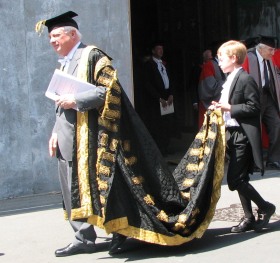
Cesar Purisima of the Philippines for 2012 according to Euromoney. It just goes to show you how far the United States has fallen in the opinion of those in the know that an American has not won this award since Bob Rubin back in 1996 (before being tarnished by all that Citi stuff during the global financial crisis). Nowadays, of course, being US Treasury Secretary doesn't involve much more than writing $1,000,000,000,000+ worth of IOUs year in and year out. However, the rest of the world (surprise!) doesn't think that prudent macroeconomic management involves such shameful behaviour.

Appropriately enough, this award is usually given at the World Bank / IMF meetings, this year famously held in Tokyo, Japan.
Cesar V. Purisima has been named “2012 Finance Minister of the Year” by leading global banking and finance magazine Euromoney for his “careful and successful stewardship” of the Philippine economy, and for his initiatives in promoting capital markets, both in the Philippines and in the Association of Southeast Asian Nations.

Euromoney is the flagship publication of business and financial publisher Euromoney Institutional Investor. It has been selecting a “Finance Minister of the Year” over the past 30 years to coincide with the World Bank/International Monetary Fund (WB/IMF) Annual Meeting. Selection is based on three factors: Opinions of a committee of Euromoney editors, views of world’s leading bankers, and analysis of over 400 global economist-contributors.

Secretary Purisima, who received the award during the week-long WB/IMF Meeting in Tokyo, which started October 11, 2012, said it is a recognition of the Philippines’ economic gains under the Aquino Administration. “This is a testament to how far the Philippine economic story has turned around under the leadership of President Aquino. The President’s unwavering commitment to good governance has brought significant gains to the Philippine economy,” he said. In 2011, Secretary Purisima was also named Finance Minister of the Year by the London-based financial news source, “Emerging Markets,” comprised of current financial news on emerging market trends and analysis in capital markets.
The unique thing with him is that while mainstream economists like Simon Johnson--one time head of research at IMF--now fault the United States for massive amounts of corruption via a "Wall Street Takeover," Purisima has chosen good governance and anti-corruption as important things to pursue. Given the Philippines' endemic culture of corruption, it will be an uphill battle for him, but it does make sense if you think of it even if "corruption fighter" is not usually one of the roles a finance minister usually takes: Would the US be bailing out banks to the tune of trillions of dollars of, ah, "stimulating" free money policies if they weren't so entrenched?
He said that the administration has laid the groundwork so that confidence would improve and investments would come in. Purisima said that unlike in previous administrations, the Aquino administration can boast of “honest, transparent and accountable leadership.” Furthermore, he said that the government would continue to improve the business climate, level the playing field, put in place predictable rules and implement a strong anti-corruption drive.

The government, Purisima said, has been doing this. “We are now starting to ignite private sector interest,” he said. He also said that there is now more fiscal space because of the administration’s anti-corruption drive. Every week, the Bureau of Customs (BOC) and the Bureau of Internal Revenue (BIR) alternates in filing before the Department of Justice (DOJ) cases against smugglers and tax evaders. 

Michael Pettis Should Read More, Blog Less

♠ Posted by Emmanuel in ,, at 12/13/2012 10:45:00 AM
Skip the maths, will ya?
I have in the past tied Michael Pettis to the whipping post for uncritically accepting Bernanke's self-serving notion of a "global savings glut" amidst falling levels of savings worldwide and a fantasyland assertion that the US household savings rate would hit double digits. It didn't, and I still don't quite understand why someone who keeps making factually inaccurate statements and predictions remains popular. If you read blogs to keep ahead of the curve of mainstream media or to understand the antecedents of various economic events, well, I would not be so sure about that if you are a regular China Financial Markets reader.

I do not like to keep doing this, but he has done it again (and again and again). In a recent blog, he takes Arvind Subramanian and Martin Kessler to task for their argument that there is a "yuan bloc" emerging in East Asia. The PIIE authors base this argument on movements of several regional currencies covarying more with the Chinese yuan and less with the US dollar. However, Pettis argues that this argument is artifactual:
Well actually you can argue with the math, or at least you can argue with the interpretation of the math. There are alternative – and much simpler, I think – explanations for the increased “co-movement”, and these do a much better job, I think, of explaining what is happening than reserve currency displacement.

Assume for a moment a global scenario in which the largest exporter of manufactured goods in the world has a significantly undervalued currency. Assume further that many of its competitors also have undervalued currencies, and would like to revalue in order better to manage their domestic monetary policies. Assume finally that the world is in crisis, and exporting nations are having trouble maintaining the necessary growth rate of their exports, so they cannot allow their currencies to rise faster than that of their main export competitors.

In this scenario which currency would the currencies of the smaller exporting countries track, the US dollar, or the undervalued currency of the largest and most competitive exporter of manufactured goods in the world? Almost certainly the latter, right? The smaller exporters would want their currencies to rise, but the rise in their currencies would be limited by the rise in the currency of their largest competitor. This would happen not because they are tracking a new reserve currency but only because they are in export competition with that currency.
That is all well and good if Subramanian and Kessler didn't bother to consider this scenario as Pettis clearly suggests, but they did. On page 11, the PIIE boys write:
i. Is the RMB bloc related to trade integration with or competition against China?
A currency could co-move with the RMB because it is integrated with China in terms of common supply chains. A related but distinctly different reason for co-movement could be if policy targets the RMB because countries do not want to lose competitive advantage vis-à-vis Chinese exporters and domestic manufacturers. In other words, the reason for the co-movement could be competition against rather than integration with China.

How can we distinguish the two? One way of measuring competition is to see if a country exports products similar to China’s. Mattoo, Mishra and Subramanian (2012) develop such an index of competition relative to China. Unfortunately, they compute this index for fewer emerging market countries than contained in our sample.

When we introduce this index of competition (which is country-specific), it has consistently the right sign (the more a country competes with China, the more likely its currency to track the RMB). But is not consistently significant in a statistical sense (in Table 6, the index is statistically significant in column 2 but not in column 1). And when we run a horse race between this competition variable and a pure integration variable, the latter consistently trumps the former. So, the evidence, albeit limited, favors an explanation for co-movement that is more related to trade integration than competition, although a role for the latter cannot be ruled out. One reason for that last caveat relates to the findings reported in Table A6. It seems that outside East Asia, more countries track the RMB when it depreciates than when it appreciates. Moreover, the average magnitude of the CMCs outside East Asia more than doubles in such instances. So, we cannot rule out entirely a competitive pressure motivation for currencies to track the RMB.
PIIE boys did their homework, period. Some points:
  1. I don't know why Big Name Authors think they can get away with such sloppy writing;
  2. My policy of not having a comments section is vindicated by the echo chamber over at Pettis' blog. 59 comments...and not one who points this out either. I guess the Pettis Fan Club takes his word for gospel truth for better or worse--rather worse here;
  3. I'm afraid that this is another example of inept blogging. Pettis writes--and he sure does write with posts extending to thousands and thousands of words--but he clearly doesn't do so from a position of knowledge of the material he himself links to;
  4. This demonstrates why some quantitative analysis skills are worth learning for those interested in the subject matter. How do you measure covariance? How can alternative variables be included in models to account for alternative hypotheses? Pettis is a poet with limited numbers chops, so this probably explains his lack of awareness about such things. Do the math.
Note to Mike: If you link to something, at least try to understand what you're criticizing. I am not convinced that the yuan is going to take over as the world's dominant currency soon either, but I think it's at least worth trying to understand the arguments of Subramanian and Kessler before criticizing them for faults they didn't commit.

Egypt Falls at First Hurdle to Get $4.8B IMF Loan

♠ Posted by Emmanuel at 12/11/2012 07:23:00 PM
As Egypt falls into a Morsi-made crisis by him trying to ramrod an Islamist-designed, next-to-no other public consultation constitution via a hastily called referendum this Saturday, its financial rescue prospects get even cloudier. Public order has gotten even worse than in recent months--which is in turn a marked deterioration from the Mubarak years. I guess the IMF's wish for a broad-based consensus is a pipe dream: How exactly is the current government going to gain any semblance of approval from non-hardline Islamist stakeholders for harsh conditionalities after these constitutional manoeuvrings?

Apparently, Morsi's allies have now decided not to push through with the IMF loan for now since they understand that the opposition will only be stoked further should bitter medicine be forced on the Egyptian people in addition to a constitution only a Muslim Brother could love:
A vital $4.8 billion International Monetary Fund loan to Egypt will be delayed until next month, its finance minister said on Tuesday, intensifying the political crisis gripping the Arab world's most populous nation. As rival factions gathered in Cairo and Alexandria for a new round of demonstrations, Finance Minister Mumtaz al-Said said the delay in the loan agreement was intended to allow time to explain a heavily criticised package of economic austerity measures to the Egyptian people. 
The announcement came after President Mohamed Mursi on Monday backed down on planned tax increases, seen as key for the loan to go ahead. Opposition groups had greeted the tax package, which had included duties on alcoholic drinks, cigarettes and a range of goods and services, with furious criticism. "Of course the delay will have some economic impact, but we are discussing necessary measures (to address that) during the coming period," the minister told Reuters, adding: "I am optimistic ... everything will be well, God willing."
All will be well, Inshallah? The current government is fundamentalist and fantasist at the same time. So much for all that Internet Freedom jibba-jabba about how Egypt was embarking on a new era of digital democracy and that sort of nonsense.

Don't make me laugh.

Lord Patten, 'Fat Pang', on the 21st 'Asian Century'

♠ Posted by Emmanuel in ,, at 12/11/2012 08:29:00 AM
Though not always, expatriates often develop piercing insights into the often strange political economy of Asian nations as outsiders looking in. Lord Christopher Patten of Barnes should be familiar to all scholars of Asia as the last British governor of Hong Kong. He remains controversial to this day for, in so many words, attempting to enshrine democratic processes in the colony prior to the 1997 handover. Jaded Hong Kong residents even grew a fondness for him--well, at least outside the business community--for his instincts as a retail politician did not go away when appointed for the post. From Andrew Craig-Bennett's superb and much-recommended history of Hong Kong where he traces the backhanded nickname of endearment "Fat Pang":
Patten continued to behave differently to his predecessors; although, unlike his predecesors for many generations, he did not speak either Mandarin or Cantonese, he used to go for informal strolls in the streets, chatting to people and pressing the flesh. In fact, he was behaving like the seasoned democratic politician that he actually was. Trouble was, Hong Kong had never seen such an animal before. As my Taipan remarked, "When will he stop kissing babies in Mong Kok? Doesn't he realise he doesn't have to get elected in this job?" 

Patten also used to make political speeches at the drop of a hat - no mere cutter of ribbons with a few kind words, like earlier Governors, he would deliver a twenty minute oration and - people listened. He became the first and last Governor to acquire a Chinese nickname - Fat Pang - 肥彭 (Chinese nicknames were sought after amongst the gweilo [foreign] community because they were only bestowed (behind your back) if you deserved one, for good or ill, and it was usually very hard to find out what yours was.)
So it is that he retained that Tory British predilection of adopting strong democratic stances as governor when his country of course used to be the world's foremost imperialist and slaver. Needless to say, attempting to instil democracy in a colony that would soon be handed over to China did not go so well with the PRC. What's more, his actions have undoubtedly caused ongoing headaches for the Chinese leadership insofar as several opposition parties now responsible for organizing mass protests against the mainland and so forth sharpened their teeth during Patten's epoch-ending stint:
Legco [legislative committee--which retains its role post-handover] debates became very different; long diligently televised, they started to be watched. The subject of debate moved away from the usual municipal trivia and started to take on a broader view. Patten was a veteran of the House of Commons; Hong Kong's political class watched and learned.

The first group to take a serious dislike to Fat Pang was the business community. Legco was not meant to be a debating chamber; it was meant to be a rubber stamp for [commercially friendly] decisions arrived at over lunch. All this political activity had an effect which I must assume (since he is still active in politics, and has not settled down to write his memoirs yet) Patten intended it to have. Hong Kong developed political parties. Strictly speaking, there had been parties since soon after WW2, but with one exception they were informal and had little influence.
Very interesting stuff. In line with this bit of Patten-era Hong Kong history, RBS has an unsurprisingly rollicking interview with the man himself on the so-called Asian Century. To no one's real surprise given his advocacy as Hong Kong governor, he believes that how far the likes of China and India will go depends on the extent they internalize democratic values (especially China):
Yet Chinese consumption remains low as a proportion of GDP, as does domestic investment. If China is to make its growth sustainable, it must change its model from investment in low-cost manufacturing to investment in the domestic economy and personal consumption. This will mean offering more social entitlement programmes and investing more in education and health. Sustainable growth also requires political reform, an area in which the Chinese leadership has had to tread carefully. “The Chinese often claim that they can do things to the economy without having an effect on politics,” says Lord Patten. “I rather doubt that myself and so, clearly, do some Chinese leaders.”
Like me, he believes that prospects of Chinese global preponderance are wide of the mark:
Next year will see a change in China’s political guard. Xi Jinping is expected to take over the presidency from Hu Jintao, but comparatively little is known about the likely new leader’s agenda. There is an ongoing debate within China between the party hardliners and some of the modernisers.

“The hardliners’ argument is that if the party continues to allow the privatisation of state and enterprises, along with more foreign direct investment, it will sooner or later lose control over the state,” explains Lord Patten. “The modernisers say that unless they continue to stand back from the state and enterprises, and encourage the private sector, the economy won’t grow quite so fast and won’t create so many jobs, which would result in the party losing control. I think the Chinese dilemma is that both those propositions are correct.”

In light of these challenges, he questions the claim that the 21st century belongs to China. “It’s certainly the case that America and Europe won’t dominate the global agenda in the next few years in the way they have in the past century,” he says. “But I don’t think that we’re going to live in a Chinese century. It may be one in which the Chinese and Indians, like the Japanese, refuse to define modernity in entirely western terms, but I don’t believe that we’ve seen the end of western influence.”
Good stuff; and he's probably on target.

Venezuelan Bonds: Pricing Hugo Chavez's Demise

♠ Posted by Emmanuel in , at 12/09/2012 08:55:00 AM
While I am certainly no fan of Hugo Chavez, I do not wish terminal illness on anyone as a God-fearing Christian. That said, financial markets make it their business to peer into the crystal ball to foresee the future. Will Venezuela open itself up again to foreign investment in the energy sector, for instance? Nowhere is the practice of divination more visible than with Venezuelan sovereign debt, which has been on a roller-coaster ride as of late given its president's reportedly serious medical condition.

News reports out of Caracas are, in a word, manic. Let me provide some examples here. Early Friday morning, Bloomberg was commenting on the rally in 15-year bonds as Chavez's situation was viewed as dire and he was in Cuba for advanced medical treatment. Whereas Venezuelans used to regard his trips to Cuba with more curiosity, they had supposedly grown indifferent:
“In times past, when he’s gone to Cuba for treatment, there’s always been video of him getting on or off the plane or he would make a phone call to Venezuela’s state TV or pose with a picture of the Granma newspaper with Fidel for a sort of proof of life,” Russ Dallen, the head bond trader at Caracas Capital Markets, said today in a telephone interview from Miami. “But we haven’t had any of that for going on 21 days now. We’re getting closer to the end.”

The yield on Venezuela’s benchmark 9.25 percent securities due in 2027 fell 33 basis points, or 0.33 percentage point, to 9.18 percent at 3:12 p.m. in Caracas, according to data compiled by Bloomberg. Yields have plunged 1.74 percentage points since mid-November. The bond’s price rose 2.62 cents today to 100.50 cents on the dollar, the biggest one-day rally since June 2010.
Well guess what; just a few hours later Chavez made a semi-triumphant display returning home. So bond prices again fell:
Venezuelan bonds fell, pushing yields up from the lowest level since February 2008, after President Hugo Chavez broke a 21-day silence and returned from cancer treatment in Cuba. The yield on Venezuela’s benchmark 9.25 percent securities due in 2027 rose 26 basis points, or 0.26 percentage point, to 9.43 percent at 10:12 a.m. in Caracas, according to data compiled by Bloomberg. The bond’s price fell 2.02 cents today to 98.58 cents on the dollar, the biggest one-day drop since Oct. 9...

State-run Venezolana de Television broadcast images of Chavez waving and smiling as he came off a plane. The self- proclaimed socialist, who has seized companies and imposed currency and price controls during his 14 years in office, said he was “very excited” to be back in Venezuela.
Over the weekend, Hugo Chavez further reached out to the electorate which had elected him to another term and whose fourth inauguration is set for 10 January 2013. Hoping for the best but expecting the worst as the saying goes, Chavez has anointed his successor in Vice-President Nicolas Maduro. Previously, Chavez reportedly did not disclose the exact nature of his condition and the accompanying need for repeated trips to Cuba:
Venezuela’s president Hugo Chávez has revealed that he needs more cancer surgery and endorsed vice-president Nicolás Maduro as his successor if his condition should worsen...“It is absolutely necessary, absolutely essential, that I undergo a new surgical intervention,” said Mr Chávez in a national television broadcast on Saturday night, despite repeatedly having claimed to be free of cancer.

“With God’s will, as on previous occasions, we will come out of this victorious,” said Mr Chávez. He said doctors had found a recurrence of “some malignant cells” in his pelvic area, from which tumours have previously been removed. He has never disclosed the precise type or severity of his cancer.
Given the clear-cut majority Hugo Chavez attained in the most recent election, I simply do not think that "Chavismo" will disappear with the man should he step down from office for whatever reason. In any case, it will be a test of whether his personal popularity is mostly attributable to what Max Weber called "charismatic authority" or to deep-seated grievances against Western and mestizo domination Chavez routinely rails against. I am sorry to disappoint the markets, but I suspect it's the latter. It is unlikely that Venezuela will have a radical change to pro-market leadership to replace him anytime soon.

At any rate, I am convinced that the best outcome for Venezuela anyway, especially given its highly divided electorate, is not a sharp turn towards a neoliberal regime, but rather a market-friendly brand of socialism of the sort that Brazil has exemplified with (lapsed dependencia theorist) Cardoso, (labor unionist) Lula and now (former Marxist activist) Dilma Rousseff. All those three Brazilians were firebrands in their youth, but eventually grew up understanding the need for economic development and to play along to some extent with the damn capitalists. May Venezuelan leadership go down the same route in due course.

In the meantime, don't be surprised to see even more bond gyrations as markets open on Monday.

12/10 UPDATE:  As predicted, bond yields are falling in expectation that a post-Chavez administration will come into power soon...
Venezuelan bonds surged, sending benchmark yields to a five-year low, as speculation mounted that President Hugo Chavez will be unable to complete his third term after he acknowledged a recurrence of his cancer. The yield on the government’s dollar bonds due 2027 plunged 57 basis points, or 0.57 percentage point, to 8.79 percent at 10:52 a.m. in New York as traders anticipated a new administration taking office and courting the investment Chavez drove away. The bond’s price soared 4.61 cents to 103.71 cents on the dollar, according to data compiled by Bloomberg...

Today’s gains add to a two-week rally that left Venezuelan bonds up 44.7 percent this year, the second-biggest return in emerging markets after the Ivory Coast. In his 14 years in office, Chavez has seized more than 1,000 companies and imposed currency and price controls as part of what he says is a push to turn South America’s biggest oil producer into a socialist country. Those moves left Venezuela’s yield premium to U.S. Treasuries over 1,000 basis points as recently as Oct. 10, according to JPMorgan Chase & Co.’s EMBI Global index.

“There is a clear correlation between the price of Venezuela’s debt and Chavez’s health,” Jorge Piedrahita, chief executive officer at Torino Capital LLC, said in a telephone interview on Dec. 6. “The market believes that a post-Chavez Venezuela will not be socialist.”
I do not doubt that Chavez's health is dire, but at the same time, I think market participants vastly overestimate the possibilities for change in the market-friendly direction. Certainly it won't happen all at once.

Why (They Say) Somali Piracy is Falling

♠ Posted by Emmanuel in ,, at 12/07/2012 07:56:00 AM
 ...or so they say. Given my nationality, I have been particularly interested in this issue. Providing between one-fifth to one-fourth of all seafarers depending on your source, the Philippines has been particularly hard-hit by Somali piracy since its seafarers literally have a 1-in-5 to 1-in-4 chance of being on board a vessel hijacked in the Gulf of Aden. However, including even the BushBama years, all bad things must come to and end. Just as maritime piracy has been curbed in the traditional hotspot of the Malacca Straits due to littoral states engaging in more vigilant patrolling of these waters, so too does it seem that piracy has been reduced in the now-notorious Gulf of Aden. Instead of Southeast Asian nations doing the patrolling, however, it's been European ones under the command of EU-Navfor and its Operation Atalanta to keep piracy in check.

EU Navfor Rear Admiral Duncan Potts (seconded from the Royal Navy--history suggests they know a thing or two about piracy) gives a number of reasons for this decrease:
  • The deployment of armed private security guards on board ships who have been 100% successful in deterring or defeating attacks;
  • Better management practice by shipping companies, such as hardening their vessels or taking evasive action;
  • Pre-emptive action by combined navies in the region, helping to ensure that pirates do not get out of their anchorages;
  • A change in Somalia at national and local level, with Somalis far less tolerant of pirates.
Me? I am not entirely sure if this phenomenon is done and dusted. While the cost-benefit ratio of piracy has risen significantly as of late, long-term development of Somalia needs to occur to deter this line of livelihood going forward. In accomplish that, you need to accomplish a number of things that will be no small feat such as (1) establishing rule of law in the coastal regions especially and (2) creating viable sources of livelihood aside from fishing and piracy. Interestingly, Filipino seamen have been treated relatively well since they are viewed by the Somali pirates as victims of circumstance--poor people just like themselves as opposed to Europeans or others.

To be sure, Somali fishers-turned-pirates still complain that it was European overfishing in their waters that has made them lose their traditional livelihoods and turn to yo-ho-hoeing. I tried to investigate this evocative environmental notion sometime ago, but there is no data comparing fish stocks off the Somali coast over the years that could provide empirical evidence for such claims. (Please get in touch with me if you do!) So, what we are left with are counterarguments from those encouraging deterrence that other factors play a far larger role.

For instance, see this interview of Patricia OBrien, UN Under Secretary-General for Legal Affairs ont he matter:
Q: Many fisherman impoverished by declining fish stocks turn to piracy. Will the Yeosu Project [see here], which aims to build the capacity of emerging countries to address such issues, contribute to combating piracy?

A: The initiative taken by the Republic of Korea is commendable, and constitutes an important part of the regional and international efforts that must be undertaken by States Parties to UNCLOS and to the 1995 Agreement relating to the Conservation and Management of Straddling Fish Stocks and Highly Migratory Fish Stocks to promote the conservation of fish stocks, both within and beyond the Exclusive Economic Zone (EEZ, a nation’s official territorial waters).

However, the root causes of piracy do not only lie in the mismanagement of fish stocks and the depletion of resources from seas and oceans. If the trends regarding piracy off the coast of Somalia are to provide any guidance, whereby pirates have expanded their areas of operation and acquired heavier artillery, allowing them to attack larger ships further out at sea, major shipping routes such as the Strait of Malacca should continue to be monitored closely.
And cue "Rhymin' and Stealin'" for old times sake...

Ramchandra Guha on Why London Outdoes NY

♠ Posted by Emmanuel in ,, at 12/06/2012 07:51:00 AM
With all due respect to our readers from the Big Apple, I still hold that London is the world's capital for reasons both fair and foul. Quantitatively speaking, you can cite trading volumes in various financial markets to argue that London truly deserves the title of "the world's financial capital" unlike what you keep hearing on CNBC. It is also considered more open to all comers regardless of race, colour, or creed (unless you're an intolerant sort like Captain Hook). Throw in the astonishing buoyancy of its real estate market even as economic times are difficult--not something that can necessarily be said of New York--and the quantitative evidence for London's supremacy is overwhelming.

But, there are also qualitative aspects to this designation. Ramchandra Guha, the renowned Indian historian who succeeded Niall Ferguson at our LSE IDEAS as the Philippe Romain chair (see his recent WSJ interview as well), serves up a fond reminisce of his year in London that also bolsters the case that it is indeed the world's capital:
New Yorkers may contest this judgement, but despite the many attractions of the Big Apple, London still holds the edge. For one thing, the architecture is more appealing. The buildings are elegant, and on the human scale. They speak to you in a way that skyscrapers cannot [I can only assume he did not spend a lot of tie in the City of London!]. The city’s crescents and squares lend it an eccentric charm that the straightforward grid of Manhattan does not contain. And there are many more parks in London, as well as water bodies of various shapes and sizes.

London is also, in social terms, at once more diverse and more integrated than New York. On its streets and subways, Arabic and Hindi jostle with English and French (and, increasingly, Polish). New York, by contrast, is essentially monolingual. (To be sure, first-generation immigrants speak their language at home, but on the streets at least it is mostly all English). At the same time, in London, blacks and whites and coloureds are less rigidly separated by social class or place of residence. As a result, there are more mixed groups in the parks and restaurants of London than in the parks and restaurants of Manhattan.
To be sure, the academically inclined also have huge benefits by virtue of its unique place. He mentions the absolute wealth of speakers who would come on campus to speak. While the relatively younger LSE is not quite up there with Cambridge and Oxford in the prestige sweepstakes, the sheer volume of top-class speakers from academia, business, civil society and government who would come to speak is astounding since they inevitably come to (obviously English-speaking) London to be heard if they are in Europe:
The LSE has, however, one inestimable advantage over those other places of learning — it is located in a city in the centre of the universe, and thus regularly visited by scholars from Asia and Africa, North and South America, and of course Continental Europe. Its location and its attractions mean that a Mozambiquan historian wishing to travel to Brazil is very likely to route his journey via London. So too the Indian sociologist travelling to San Francisco or the American political scientist studying the Congo.

Making use of this strategic location, the LSE showcases a more impressive series of public talks than any other institution in the world. Harvard or Columbia might have specialists from other universities coming in for departmental seminars, and occasional public lectures for a wider audience. But the LSE has, during term time, as many as four different public lectures every day. The student, professor and alert private citizen are all spoilt for choice. Thus, on the same evening, one might have Paul Krugman speaking in the Sheikh Zayed Theatre, the lawyer who attended on Nelson Mandela speaking in the Old Theatre, and an expert on Egypt speaking at the Hong Kong Theatre. 
Geographically speaking, the LSE's place at the centre of London which is in turn the "centre of the universe" cannot be bettered. Heck, my very own boss hosted John McCain prior to the US elections. As I like to point out, though, you're not out of luck if you don't happen to be in central London since most of the events are recorded and podcasts if not videos are available online. Enjoy...but don't expect our NYU colleagues or others from Noo Yawk to offer the same sort of amenities for reasons Ramchandra Guha so eloquently makes!

Will Remittances Outstrip FDI to LDCs?

♠ Posted by Emmanuel in at 12/04/2012 07:50:00 AM
In an older post, I reiterated the argument that if rich countries were truly interested in promoting world development, then they would allow more persons from poor countries to work there. As we all know, however, significantly increased liberalization of migration is not likely because of the politics in rich countries. Labour protectionism, unvarnished racism, and misplaced fears of terror all work against making globalization live up to the name instead of the half-baked sort we have today which favours rich countries. That is, the free movement of capital, goods and services benefits those who have plenty of those--rich countries--more than it does those who have mostly labour--poor countries--to offer in the bargain.

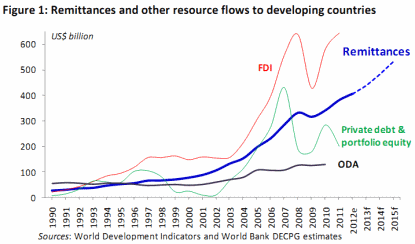
Reading through the World Bank's most recent Migration and Remittances Brief, I was thus rather encouraged by migrant workers' international remittances slowly but surely gaining ground on FDI as the poor countries' largest source of capital inflows. What is more, projections are that they will keep that trajectory, while more volatile FDI which tends to vary with global economic conditions may again suffer a large dip alike during the global financial crisis:


Rich countries are understandably stingy with official development aid (ODA) nowadays since they really don't have cash to burn, especially with their assorted crises. Still, FDI is arguably better in the sense that its benefits are longer lasting. Then again, remittances are better yet insofar as they do not have the same sort of boom and bust cycles even during the teeth of financial crises. I suspect that this hypothesis may unfortunately be tested by another major crisis coming out of the developed world--that is, remittances will again outstrip FDI for the first time since the early Nineties.

Gadgets Make the World Go Round: 15 Yrs of ITA

♠ Posted by Emmanuel in ,, at 12/03/2012 12:07:00 AM
During these dark days of Doha Round deadlock, good news from the WTO is hard to come by. But, even your ever-pessimistic correspondent has managed to fetch--wait for it--reasonably good news involving the WTO. Although many people do not know of it, the Information Technology Agreement (ITA) signed under the auspices of the WTO way back in 1996 was a seminal event in the formation of global value chains in  the electronics industry. By gradually encompassing more and more countries in tariff-free arrangements in the production of electronic goods, disparate nations have benefited. To use commercial lingo, ITA enabled both Super Mario and Samsung to each have their own (export) Galaxy.

Just to show you how I am in such a generous mood, I will even let Mr. Doha Round Failure himself, WTO Director-General Pascal Lamy, fill you in on ITA's importance:
The 21st century is the era of information and communication technology, and the ITA has played a vital role in promoting affordable access to those technologies. This sector is crucial for the world economy – not only due to its considerable size, but also because it is an important driver of productivity, innovation and, ultimately, economic growth. Over the past 15 years, world exports of IT products have almost tripled in value since 1996, and reached an estimated US $1.4 trillion in 2010, accounting for 9.5 percent of world merchandise trade. Together, ITA participants account for 96 percent of world trade in IT products. And because they provide duty-free treatment to imports on a most-favoured-nation basis, they have created opportunities for exporters in all WTO members, including those in least-developed countries.

With the most recent participation of Colombia, the ITA has now grown to include 74 WTO members, and the majority of them are developing participants. Developing countries have consistently increased their participation in world trade of IT products since 1996, accounting for approximately 64 percent of exports and 51 percent of imports in 2010. While a growing share of the investment in both the production and use of these products is made by developed country IT industries, IT spending is increasing considerably in some emerging economies, such as China, India and countries of the Association of Southeast Asian Nations (ASEAN). These investments have been the catalyst that has allowed countries as diverse as China, Costa Rica, and some ASEAN countries to develop their capacity for manufacturing IT products and become important players in global production networks. In addition, other developing nations used these IT products and technologies as tools to become key players in other areas. For example, access to affordable IT equipment was instrumental in enabling India to become a powerhouse in consulting services, software development and other services. 
Good stuff, and there's much more information on the ITA's history, mechanics and future in the publication I excerpted Lamy from. As ever there's far too much interesting stuff to read if you're interested at all in international political economy. Rest assured that, sometimes at least, the WTO works.

Sooper Franc KO's Calvinist Global HQ in Geneva

♠ Posted by Emmanuel in ,, at 12/02/2012 02:38:00 PM
John Calvin before the Geneva Council, 1549
On the Sabbath day, I guess it's time for another weekend feature. For, after a long while, we have another instalment of religious political economy ("RPE"). John Calvin should be exceedingly well-known to students of social science as Max Weber's Exhibit A in the transition to a Protestant Work Ethic from Catholicism (and what we can only presume to call, ah, the Catholic Sloth Ethic by way of comparison). That is, material success was taken by Calvinists as suggestive that their destination lay beyond the Pearly Gates and not the Gates of Hell.

Now, the Swiss have traditionally been more tolerant of differences in opinion and dissenters throghout their history, so it was perhaps inevitable that Calvinism with its zero-fun, hair shirt outlook would be welcomed in Geneva--a town that has since been associated with sybaritic accoutrements alike the world's finest chocolates and wristwatches. In time, Geneva as the "Protestant Rome" even became a target for the separation of church and state. Yet, it bears remembering that the arrival of Calvin in Geneva in the mid-sixteenth century was much-lauded by those partial to him as an epochal event not only for the faith but also for the city:
On the very day of his arrival Calvin presented himself to the Council. During this session the general programme of his duties was determined; he returned home with a well-developed plan of activity; his desire was to establish in Geneva a State of which God Himself would be Head and the citizens of which would have to strive to lead a life in the closest possible conformity with the precepts of the Gospel. This idea has been called theocracy. It is indispensable, in any attempt to understand Calvin and his writings, to remember that he remained true to this principle all his life, and that any of the mistakes for which he may be reproached today are based on this system...

The founding of the College and the Academy marked an important date in the history of Geneva. The poor, modest city became, so to speak, the Protestant Rome. The running of its schools became a model for a large number of other academies. Thenceforth the young students of Europe flocked to Calvin's Academy.
So, where's the RPE here? A few months ago I talked about how the Swiss franc was becoming incredibly strong as a result of the Eurozone crisis. Safe haven capital flows and all that jazz. Swiss authorities have thus been compelled to intervene on behalf of its export industries alike the aforementioned food producers and watchmakers, but it's not only them who have been hurt. Geneva was already one of the most expensive cities in the world to begin with, and this dubious distinction has only been exacerbated by the mighty Swiss franc. Somewhat unsurprisingly, the Calvinist umbrella group the World Communion of Reformed Churches recently decided to pull the plug on its Geneva headquarters because foreign donations did not stretch very far in (converted) CHF. From the press blurb:
The Executive Committee of the World Communion of Reformed Churches (WCRC) has voted to relocate its offices from Geneva, Switzerland to Hanover, Germany. The results of the vote taken via email were announced today by WCRC President Jerry Pillay...
The move comes in response to concerns about the cost of running an organization in Switzerland. These include staff salaries and the high value of the Swiss franc. Most WCRC membership fees and donations are made in Euros or American dollars that have dropped in value in the past several years against the strong Swiss franc. The move to Hanover is scheduled for the end of December 2013. The new offices will be located at the Calvin Centre owned by the Evangelical Reformed Church of Germany where the Reformed Alliance has its offices. WCRC has a seven-member staff. 
And so here ends 463 years of close association between the Calvinist Church and the city of Geneva. A financial crisis on Europe's periphery that has resulted in a remarkably strong Swiss franc has done what centuries of bloody conflicts in continental Europe have failed to do. Then again, the euro isn't exactly a wimpy currency either, so it does make me wonder if they could have chosen a lower-cost location than Hanover, Germany in line with their ascetic philosophies. Hungary, anyone?