Will Xiaomi Be China's First Tech Superbrand?

♠ Posted by Emmanuel at 6/22/2014 12:30:00 AM
Xiaomi mascot Mitoo [L] dreams of overseas market share.
The business press is all agog over the emergence of Chinese mobile phone maker Xiaomi. Supposedly, we are on the cusp of a Chinese tech superbrand competitive with products from anywhere else in the world. Naturally I'm a bit skeptical. Aren't these Chinese the same folks who had to buy the ThinkPad name from IBM to be able to sell PCs abroad? Outside of China and B2B circles, who's heard of Alibaba and Baidu? It doesn't really count when you buy off brands others have developed or you're only big in China. Admittedly a nation of 1.3 billion is a pretty big market, but being big there doesn't make you a household name worldwide.

Enter Xiaomi. The press keeps drawing comparisons between its founder Lei Jun and Steve Jobs--he is an engaging salesperson for his products too--though he'd rather be his own man. Personally, I'm taken by their mascot Mitoo who sports an army hat bearing a red star, of all things. Let's just say Mitoo's political affiliations are being toned down for overseas markets where Communist paraphernalia is not quite as welcome (such as Taiwan). Given how racist-protectionist Americans are about foreign technology firms with Communist Party affiliations, I shudder to think how Xiaomi's reception will be Stateside if its mascot remains a red booster! In any event, some of the hype I cannot understand. For instance, they claim Xiaomi's exclusively online retail model is unique. Has Businessweek ever heard of Michael Dell?
Xiaomi’s real invention is its business model. It sells online, never in stores, and avoids conventional advertising, devoting only about 1 percent of its revenue to marketing. (By comparison, Samsung earmarks 5.4 percent.) Instead, the company relies on China’s social networks, Weibo and WeChat, and the free press Lei gets as a national tech hero.  
There's no doubt about it: to be able to boast that Xiaomi has become a global brand, it must crack Western markets. Otherwise, it will be regarded as a China-only phenomenon. For this mission they've hired former Google man Hugo Barra:
On the 11th floor in the main building, in a corner office, is the realm of Hugo Barra, the Brazilian-born Google executive who made news by joining Xiaomi in 2013 to lead its overseas expansion. As he talks, Barra paces his spare office, which overlooks the old tenements that once housed the workers of the demolished wool factories. Barra’s shelves are stocked with Mitoo dolls and other knickknacks. Evidence of his five-year tenure at Google hangs on the walls, including a framed Pac-Man doodle that once appeared on the search engine’s home page.

Barra is naturally bullish about the company’s prospects abroad, and one new weapon is the $130 Redmi smartphone, which Xiaomi introduced last year alongside the pricier Mi 3. The phones look alike, but the Redmi sports an inexpensive processor from Taiwan’s MediaTek. Barra even mulls the prospect of a $50 smartphone that might one day upend the economics of mobile. “I don’t think it’s possible today, with the quality of software and hardware that we would expect,” he says, “but I expect that could change over time.”

Xiaomi has to show it can use Western social media tools such as Twitter (TWTR) as well as it has exploited Weibo and WeChat. It must extend its supply chain across oceans and adjust its business model to countries where carriers sell handsets and customers aren’t accustomed to buying phones online. It must also overcome the association that Chinese brands have with piracy and counterfeiting. And Xiaomi will have to learn to do with less free, worshipful publicity. “Lei Jun is a relative nobody outside China, so leveraging his fame may be a little bit more difficult to do,” says Michael Clendenin, managing director of China’s RedTech Advisors. “Guerrilla marketing won’t be as easy.”
To get props as China's first tech superbrand, America awaits as the world's largest consumer market. Otherwise, Xiaomi will only be regarded as a mainly Chinese phenomenon a la Alibaba, Baidu, etc.


Shakira, the Yoko Ono of Spanish Football

♠ Posted by Emmanuel in ,, at 6/21/2014 02:00:00 AM
Shakira killed Gerard Pique and Spain's double fantasy for a World Cup repeat.
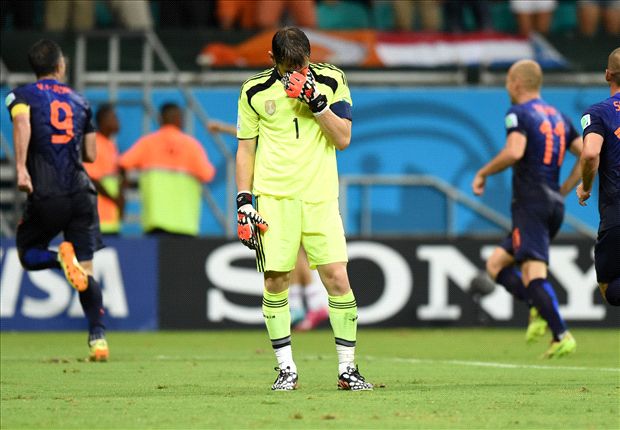
[Apologies for this post not concerning IPE all that much, but it is definitely international and affects the reputation of the greatest footballing nation in recent times. Besides, it's the weekend.] Following its 5-1 drubbing at the hands of the Netherlands, Spain lost its second game 2-0 to a hungry and inspired Chilean side. Now, the reasons for Spain's decline have been endlessly rehearsed over the past few days and they all can't be ignored: Barcelona FC's decline mirrors Spain's decline. The Spanish team is now too old. Spanish tactics are by now predictable and the lack of surprise fools nobody. And so on and so forth.

This being the World Cup, though, I have another, more entertainingly plausible hypothesis about Spain's unprecedented two losses in a row at the start of a defending campaign: it's the fault of Colombian megastar Shakira. Sure she sang the catchy 2010 World Cup song, but let's just say that her other sporting involvements have not been as profitable. When Barcelona FC and Spanish national team center back Gerard Pique famously paired with her, it was all downhill for his career as he became fat, dumb and happy--like the Americans he grew increasingly fond of being around:
Pique's problems began in Pep Guardiola's final season at Barcelona. PG and GP enjoyed an excellent relationship initially, but the coach grew frustrated at his player's attitude towards training and conditioning. As the defender's relationship with Shakira grew, so too did his waistline: Pique fell in love with one of the world's most glamorous singers - and fell out of love with the beautiful game.

Guardiola tried everything to get Pique back on board, but was increasingly irked by the player's irresponsibility off the pitch: Gerard and Shakira posted pictures of them white-water rafting - an activity strictly forbidden in the player's contract at Camp Nou. That was in the summer of 2011, and during the winter break, the two shared some snaps of them jet-skiing in Miami. That, too, was supposed to be off-limits.
Barcelona FC famously sicced private investigators on Guardiola's behalf to monitor their wayward center back as he wanted to live the glamorous life:
Pep, although a media-friendly coach, hoped his players would shun the spotlight and was concerned at Pique's priorities - especially as the defender was flouting the rules on his holidays. Gerard also incurred the wrath of his boss by leaving his car parked in a bus lane in central Barcelona with the door open ahead of a crucial Champions League trip to Bayer Leverkusen. On and off the pitch, he was becoming far too distracted.

It has since emerged that Guardiola hired private detectives to spy on the defender in a desperate attempt to learn the full extent of his off-field behaviour and, in that final season under Pep, Pique played just 22 times in La Liga and only five games in the Champions League.
Never the quickest center back in an increasingly high-tempo game, Pique looked totally out of sorts in the Netherlands game and was dropped to the bench for the Chile game. Not that it did much to help Spain's prospects, but it's kind of shameful to be washed up at the age of 27. Without a reliable central defender, Sergio Ramos notwithstanding, Spain's prospects went the way of the dodo.

Yoko Ono is famously known as the woman who allegedly broke up the Beatles, the greatest rock group of them all. In the same manner, Shakira probably cannot escape blame as the woman who destroyed Spanish footballing dominance, incredibly having won the 2008 and 2012 European championships and the 2010 World Cup to boot.

Nowadays, I guess the only thing underneath Pique's clothes is...a big gut.

From Where Does Silicon Valley Import Its Brains?

♠ Posted by Emmanuel in , at 6/20/2014 02:00:00 AM
There's an excellent infographic over at Businessweek on where its workforce comes from both inside the United States and outside of it. There are some highly interesting results: First, Mexico more than any other country or state provides the most human capital to Silicon Valley. Second, the Philippines is, after Mexico, the second-largest provider of human capital to the area. However, why is it that you rarely hear of startups from folks from those countries? Odd. By contrast, India ranks only ninth in terms of headcount, but it matters rather more in the overall picture since a third of all startups there are headed by Indian entrepreneurs.

When viewing the infographic, I am reminded of the excellent research of AnnaLee Saxenian on the link between migration and technological innovation. Her pioneering work in this area remains Silicon Valley's New Immigrant Entrepreneurs that established the case that anti-immigrant xenophobia ultimately harms the United States' future economic prospects. #7 China and #50 Taiwan are also important in the sense that many Chinese who gain experience working in Silicon Valley often apply their skills once they return. Together with the Indians, they form the backbone of another study of hers on transnational communities and the evolution of global production networks.

Good stuff.

How the World Cup Showcases Brazilian Inequality

♠ Posted by Emmanuel in ,, at 6/19/2014 02:00:00 AM
Just as you don't see fat or old people in Ricky Martin videos, something's missing here.
Brazil has long been the unwilling keeper of an image of radically high inequality, with fabulous wealth sitting alongside wretched squalor in any number of its cities. So many years after the black football player Pele won the hearts of the world with his magnificent displays, I am afraid that not all that much has changed. To be sure, the conditional cash transfer program Bolsa Familia which gives poor households grants upon meeting health and education criteria for their children has helped. That said, inequality remains radically high there, with Gini coefficients measuring inequality well above the 50 mark.

Earlier on, protests about the social wastefulness of hosting the World Cup were bolstered by a provocative image taken during the Confederations Cup also held in Brazil in which [rich, white] matchgoing fans threw garbage into a dumpster inhabited by a [poor, black] woman. Unfortunately, the supposedly progressive Brazilian leadership of Dilma Rousseff--formerly a Marxist guerrilla fighter--appears to be tone deaf to the sensitivities about race and inequality the sport raises. Alike the United States where [rich, white] basketball and football fans pay top dollar to watch sporting events dominated by black athletes, the symbolism is not lost:
Inside the stadium, crowds have been what you might expect at these large scale sporting beanos: basically a collection of rich people. This World Cup, like much of the London Olympics, is out of reach of those who cannot pay a premium for tickets. Welcome to the world. This was always going to be the case from the moment it became clear only 400,000 of 3.3m tickets would be made available to ordinary Brazilians, with most at prices beyond the reach of the average salary. There have been comments about the lack of non-white faces in the stadiums. This is not football-specific racism so much as a reflection of wider inequities. Brazil’s middle class is predominantly and historically white. These are not so much white people as rich people.
The Guardian's Barney Ronay reads this one correctly: having ultimately funded the mega-stadiums hosting these events, the ordinary folks certainly had a right to normally priced tickets. In this day and age of media supersaturation, it simply does not look good when this supposed "melting pot" has stadiums filled with a sea of white faces. It hardly reflects the multiracial composition of the football team:
While football cannot be blamed for Brazil’s entrenched social issues, Fifa can and should be blamed for not insisting a huge tranche of tickets go on sale to Brazilians at fixed, affordable prices. And not simply over the internet, to which not all have access, but through local team memberships and stadium connections. Everyday Brazilians are often hugely passionate about club football. They should be sitting in those publicly funded seats at Brazil’s World Cup.
The attendance shocker of the World Cup so far was the group stage rematch of the last event's finalists Spain and the Netherlands featuring 3,500 seats. I'll put the no-shows down to corporate-sponsored seats. Again, what harm would it have done to sell those to average Brazilians who'd have been more than happy to attend?

Happy 50th Birthday G-77! (Well, Sort Of)

♠ Posted by Emmanuel in , at 6/18/2014 02:00:00 AM
We kicked out S Korea after it joined the OECD rich country club, but its UN chief attended anyway.
 Most of you are probably thinking, those guys are still around? The G-77 was forged during a time when developing countries began to recognize their shared interests and desired to make them better known at international organizations. Even now, it remains the premier grouping among developing countries at the UN General Assembly even if it receives minimal press attention. To commemorate its fiftieth birthday, the G-77 recently held an event in Bolivia. Being perfectly honest, the G-77 has often degenerated into a mouthpiece for anti-Americanism, which is obviously not developmental in itself. Nor has it been a significant forum in developing a common platform for the Global South.

Still, the latest event proved noteworthy in a few respects. First, UN Secretary-General Ban Ki-Moon (is it just me or does he sound like a Sanrio character?) attended our shindig:
Mr Ban Ki Moon in his opening speech said the G77 and China had given the South a global voice, and the Group provides an immense contribution to the UN. He told President Morales that he appreciated his vision of Living Well, as development based on living well is humanity living in harmony with Nature and with each other. The Secretary General said the SDGs [sustainable development goals] require Global Partnership and the G77 has a key role to ensure its effectiveness. The Group should press for a fair trade regime, technology transfer and so on. The G77 and China plays a key role in the UN to formulate a post 2015 Development Agenda.
Aside from the Bolivian president, Argentina's Cristina Fernandez, also took to the mic together with other stalwarts of the Latin left:
With regard to the economic order, [she] said a crisis currently persists and affects many countries of the world, “my country had been affected before, this is happening is not capitalism, it is a complete and utter distortion, qualify as anarcho-capitalism.”

[S]he finished by thanking all present [for their] intervention and President Evo Morales, for the invitation “if we do not we should remove in time” [then] good “because we have to call to reach a new world order to continue living.” Prior to the president [of] Argentina, the presidents of Venezuela, Nicolás Maduro; Cuba, Raul Castro and Uruguay, José “Pepe” Mujica, urged the G77 to move toward a new world order more just and equitable.
Speaking of the Uruguayan leader, he also went all ecological on us:
Uruguay's austere president is urging world leaders to fight a "culture of waste" in which poor nations try to emulate richer countries rather than live in balance with the environment.Speaking in Bolivia on Sunday to a summit of the Group of 77 and China, Jose Mujica calls the growth in consumerism "a trap" that will produce material gain at the cost of human development. Mujica is a former guerrilla leader and he has won attention for his no-frills lifestyle as Uruguay's president, including driving an old Volkswagen Beetle and living on a simple flower farm.
This being the G=77...and China, Vietnam took the opportunity to use this venue to decry Chinese imperialism via the PRC's expansive territorial claims in the South China Sea:
China rebutted Sunday night accusations made by Vietnam over the South China Sea, urging the Vietnamese side to immediately stop all the disruptive and destructive acts against China's legal operations in the sea. At the conclusion of the Group of 77 (G77) plus China summit in Bolivia, Le Hoai Trung, Vietnam's permanent representative to the United Nations, claimed that China operated a drilling rig "in the exclusive economic zone of Vietnam" and sent warships to drive away Vietnamese vessels, which "infringed Vietnam's sovereignty and territorial integrity."
While I certainly sympathize with the G-77--unlike South Korea we are the poor countries who stayed poor--I despair at the actual political clout we have. Reform at the IMF and World Bank remains stalled. The UN Security Council's permanent members are still the victors of WWII. We again issued a call for a new world order, but that's been the refrain for, oh, forty years now. So much has happened, but nothing's really changed I fear as the G-77 has become yet another "talk shop" with a slightly different cast of characters dominated by Latin blowhards and the like.

Iraq's a Goner, But Kurdistan Isn't

♠ Posted by Emmanuel in , at 6/17/2014 01:00:00 AM
It's another fine mess we can lay on the West's doorstep: Mosul residents seek refuge in Kurdistan.
Wolfowitz of Arabia, Kimmitt the Fallujah Frog...remember those Bushites? The impending collapse of the state of Iraq--a patchwork quilt whose borders were arbitrarily drawn by scheming Westerners--has given me flashbacks of the second Gulf War I'd rather forget. For historical background, let us first recall how Iraq came about. When WWI ended, the Ottoman Empire which had encompassed Iraq was dismembered. To fulfill British wishes and grant them international legitimacy, the UK "transferred" decision-making on modern-day Iraq's fate to the short-lived League of Nations:
In the aftermath of WWI, the League of Nations (a forerunner to the United Nations) was established. One of its jobs was to divide up the conquered Ottoman lands. It drew up “mandates” for the Arab world. Each mandate was supposed to be ruled by the British or French “until such time as they are able to stand alone.” The League was the one to draw up the borders we see on modern political maps of the Middle East. The borders were drawn without regard for the wishes of the people living there, or along ethnic, geographic, or religious boundaries – they were truly arbitrary. It is important to note that even today, political borders in the Middle East do not indicate different groups of people. The differences between Iraqis, Syrians, Jordanians, etc. were entirely created by the European colonizers as a method of dividing the Arabs against each other.
Few deny that Iraq's problems stem from the impossibility of simultaneous self-determination for three ethnicities: Sunni, Shia and Kurds. Especially when energy revenues flow to the central government, it is hard to divvy up the proceeds in a manner deemed fair by all three ethnicities. Today's conflicts are motivated by sectarian violence. The Sunnis who were in power under Saddam Hussein resent the Shias newfound domination and have rebelled. Even it means supporting deranged jihadists, they are at least Sunni deranged Jihadists who seem to be capable of taking the fight to cowardly American-trained Shia "security" forces who certainly don't see the point in defending the non-entity which is Iraq.

To be blunt, Western powers have been complicit in looking the other way as the Kurds have been marginalized, first under Saddam Hussein who famously used poison gas against them to quell an uprising after the first Gulf War and then under Shia-led rule as they've been frozen out of Iraq's commanding heights. This situation may not last for long though as the Kurds have taken over state security in their lands as Shia-trained forces predictably abandoned them to their own devices. With cities falling left and right to the militants, Kurdistan has become a safe haven--although not everyone is allowed in:
An estimated half a million people from Iraq’s second largest city Mosul have fled since militants from the Islamic State and the Levant took control earlier this week. There have been chaotic scenes at border crossings entering nearby Irbil Province in the autonomous region of Kurdistan. “The situation is hopeless in Mosul,” said Waad Ali. “They burned down a police station so I’m doing my best to save my family and protect my children.”

Only those with families or invitations from Kurds are being allowed in. For those who aren’t permitted entry to the region the United Nations Refugee Agency in cooperation with the Kurdish government have provided a temporary alternative for the fleeing Iraqis.
Hence the immaculate case for Kurdistan. The only group among the three that has been shown capable of governing are the Kurds. Saddam Hussein and the current Shia leaders show all you need to know about the others' public administration chops. What will likely follow is a protracted conflict in other parts of Iraq as it descends into civil war. The United States and other Western powers have tired by now of sending troops to pacify the area. America will mount airstrikes, but it is difficult to see how these can shore up the Shia leadership in Baghdad without boots on the ground. Rather than condemn the entire Iraq to endless conflict, there is a bastion which can hold out: Kurdistan. It will become the "buffer zone" in a failed state:
The answer, I think, has to do with governance. Kurdish fighters feel that their regional government represents them and are willing to fight for it and their land. In contrast, Shiite Iraqi Army recruits do not know Sunni areas like Mosul and do not want to be there, much less die there. Sunni soldiers, meanwhile, do not feel that the government they serve is theirs. They have seen their communities shut out by Maliki and his disconnected politicians in Baghdad. The Sunni Arabs faced serious persecution in the last couple of years, seeing their peaceful protests violently put down by Maliki and their elected leaders sidelined and hunted down one by one.


Allowing constitutionally-envisioned decentralization of power and the formation of other regions could have stopped this and put locals in charge of their own security and finances. This never happened except for in Iraqi Kurdistan, and even there local governance has come under threat by Maliki’s pressure (although Washington could not care less, of course). In the rest of Iraq, promised money and governing authority from Baghdad hardly filters down to the regions, and security forces take all their orders from far-away politicians of the central government.
David Romano continues by envisioning what will happen to Kurdistan. As the rest of the country dissolves into chaos, the Kurds will be in an excellent position to extract concessions from the West:
The real threat in Iraq was never Kurdish secession, but rather renewed authoritarianism in Baghdad and the resistance this would spark in excluded communities. Instead of being so overbearingly “respectful of Iraq’s territorial unity,” the Americans should have been a bit more concerned with Iraq’s constitutional integrity and the decentralization it promised.


In the meantime, the Kurdistan Regional Government will continue to secure its region and help refugees from Mosul and other places. If the Kurds are wise, they will also refuse to lift a finger for the Americans and Baghdad unless their demands are met. These demands will probably relate to ending the budget embargo on the Kurdish region, financial aid to care for the refugees, payments and weapons for peshmerga forces, recognition of Kurdistan’s hydrocarbons rights and a new government without Mr. Maliki. While the Americans and Baghdad mull over these demands, they might also consider promises regarding disputed territories they both made to the Kurds some ten years ago – before the Kurds use current events to take matters into their own hands.
Iraq as we know it is lost, and you risk incredulity to suggest only Americans can "save" it having set it on its current path. There are good reasons why they didn't try to put Humpty-Dumpty together again that apply here. For geopolitical reasons, especially longstanding Western ally and NATO member Turkey being strongly opposed to Kurdistan statehood since its own Kurdish population may also seek to join the new state, I do not think they will declare themselves to be one de jure. However, with all other vestiges of Iraqi government wiped out or dysfunctional, there will be no one else to talk to who can credibly claim to be "in charge" of their territory. The Turks understand this and now see Kurdistan as a buffer zone keeping them from bordering the militants. The Westerners will deal with the Kurds too since there will be no one else to talk to. De facto they will be the only remaining authority of consequence in (the former) Iraq.

After being trampled on for so long, Kurdistan's time will soon arrive.

Italy, Migration & the "Balotelli Generation"

♠ Posted by Emmanuel in ,, at 6/16/2014 12:30:00 AM
Mario Balotelli: Not just a footballer but a poster boy for an entire generation.
I cheered England on as it inevitably lost to Italy 1-2 (being a true romantic, I am drawn to lost causes). I was nonetheless intrigued by the contributions of Mario Balotelli, the first black player to make the storied Italian national team, who again scored the game winner for the Azzurri. There is no doubting that "Super Mario" has a few screws loose in his head. However, his odd behavior usually arises when playing club football, hence his bouncing around club after club after club. When playing for Italy, however, he has been remarkably level-headed (credit the manager too). Don't ask me to explain how given the racial abuse he's received there. Almost singlehandedly defeating much-fancied Germany in Euro 2012 en route to the finals to make his mum happy, he has the talent to carry the national team.

Nevertheless, his flamboyant lifestyle and frequent outbursts on and off the pitch have made him a global celebrity. It is in the context of Italy's debate over migration that he has become a lightning rod for controversy. His apologists blame his excesses on having to deal with racism in Italy on a daily basis, while his detractors use him to scare whites into thinking how uncontrolled migration would be like with hundreds of thousands of nutcases calling themselves Italian. Hence his emergence as a polarizing figure emblematic of migration debates in Italy, which the press has dubbed the "Balotelli Generation":
That may be, in part, because Balotelli started to play football at the moment when Italy, buoyed by the false boom of the euro zone's party years and needing young workers to fill the deficit left by its rapidly aging population, became a magnet for economic migrants. In a photograph of Balotelli's grade-school football team, his is the only black face. It was an experience he repeated when he joined the Italian national under-21 team in 2008. His inclusion in the side reflected wider social change. Italy has become more diverse, and it has done so more rapidly than many other European countries. In 1990, the year of Balotelli's birth, just 1 Italian resident in 100 held a foreign passport. Today, that number is 1 in 12. Many of those migrants are black; many hold menial jobs. But a black middle class is also emerging as the children of migrants, born and raised in Italy and sometimes referred to as the "Balotelli generation," enter the workforce. Balotelli, the most prominent black Italian, has become a symbol of his country's uneasy transition. 
I am reminded of black pioneers in American professional leagues subject to similarly ugly racist taunts like Jackie Robinson in baseball. The difference is that quite a few of them debuted together, while Balotelli remains the sole black player on the Italian national team. He bears the brunt of it all. Speaking of America, his acquired fame allowed him to be on the cover of Sports Illustrated in a country that has next to no interest in world soccer:
This week Balotelli became just the second non-U.S. pro soccer player to appear on the cover of Sports Illustrated magazine since 1994. (David Beckham was the first, in 2007.) It's an arresting cover image by photographer Jeffrey A. Salter -- Balotelli, balanced on a plexiglass platform, appears to be walking on water—and probably one of my favorite 20 SI covers of all time.

Why is Balotelli on the cover? Well, in each of the past two years I've asked my Twitter followers: If you could pick one figure from the world of soccer to read about in a magazine profile, who would it be? On both occasions, Balotelli won in a landslide. The reasons are clear: Balotelli, 23, has shown extraordinary goal-scoring potential on the soccer field, and he has many sides off it: a symbol of the New Europe; a creator of madcap hijinks; an emerging leader in soccer's fight against racism. 
Black players have encountered racism to varying extents in other European national teams as they began to play in soccer leagues, but it has toned down somewhat as familiarity has set in. (Spain is a notable exception, while some French right-wing extremists now deny its 1998 World Cup victory happened since many of the players were colored people, not "real" French.) What separates Balotelli is that Italy's national team did not feature black players until Mario came along when most of the rest already have:
"You can't overblow that significance," says John Foot, professor of modern Italian history at Bristol University, who has written a history of Italian football. "Even when they're talking about reforming the citizenship laws in Italy, they call it the Balotelli law.

"He's not just a footballer there, he's much, much more than that. He's a massive symbol. He represents the future, which, actually, is already the present. There's a whole series of second generation black players coming through in Italy and that critical mass will make the difference; it will mean Balotelli is not the only trailblazer any more.

"Being the one black born-and-bred Italian is an enormous pressure to deal with." Yet the pressure has only increased on Balotelli since Euro 2012 when his goals, which took the Azzurri to the final, assumed what Foot calls "immense symbolic power, a sign that black Italians were here to stay, something which a strong minority of Italians have found very difficult to accept".
The choices facing European countries in demographic terms are similar to those facing Japan: It is hard to imagine economic growth in the face of depopulation given the latter's inherent tendencies towards deflation and economic stagnation. Nobody selected him to do so, but Mario is fighting the case for migrants in Italy against considerable racism. However, the question lingers: would migration be less of an issue if its most visible image in Italy was more like Jackie Robinson, a man of quiet dignity? With "Super Mario" riding high once more, I guess we'll never know. 

UPDATE: Mario Balotelli is a tad self-absorbed.

World Cup: Spain Loses 5-1, 'Socialist Football' Ends?

♠ Posted by Emmanuel in , at 6/14/2014 02:45:00 PM
Spain's old guard looked, well, old.
The rematch of the World Cup 2010 finalists Spain and the Netherlands was highly anticipated since they were paired in the group stages this year. Spain was thought to be in the ascendant, having two of its teams contest the Champions League final and another win the Europa League. The Dutch fans stayed home in droves as they didn't expect much from their aging attackers and young defenders. It was thus a shock to most that the defending champions were throttled 5-1 by the Dutch, who could hardly believe their luck. It was really ugly for Spain fans. As the world looked on stunned, Spain, winners of the last World Cup and the last two European championships, are wondering just what happened.

One of the points requiring reassessment is possession-based football popularized by Spain's most dominant team of the past few years, Barcelona, and adopted by the national team coach Vincent de Bosque. Despite Barcelona being an exceedingly rich football club--the second most valuable after Real Madrid, there is a political philosophy of unselfishness that traces its roots oddly enough to the Netherlands' "total football:"
It took the basic tenets of total football to previously unimagined extremes – in part because of an exceptional generation of players many of whom had been schooled in a particularly idiosyncratic style at La Masia [FC Barcelona's youth academy], in part because of a visionary coach in Guardiola, and in part because of the changes in the offside law that increased the size of the effective playing area and so permitted smaller, more technical players to flourish.

When totaalvoetbal emerged as a term in the Netherlands in the early 70s, the totaal aspect of it was part of a wider movement in Dutch culture, particularly architecture. JB Bakema, one of the theory's prime exponents, argued that all buildings should have individual characteristics but should be designed with their place in the overall environment in mind. The application of the term to football made sense in terms of Bakema – the whole point of it was that players were aware of their positions within the system and were constantly renegotiating it for themselves; but there was also, at least outside of the Netherlands, a more popular resonance. This was total football because everybody, it seems, could do everything: defenders could attack and attackers could defend.
Some football commentators describe it as sporting socialism, with the aging superstar Xavi Hernandez as its guru:
And if tiki-taka [shorthand for passing and possession-based football] is Marxist, then Xavi is its Trotsky. He is tiki-taka's idealistic radical. He simply can't conceive of why any team wouldn't play possession-based football. But like Trotsky, he is being exiled. Whether he starts or not is one of the major issues in Spain at the moment. His level has dropped significantly in the past two years, as he is no longer able to provide the obsessive defensive pressure that he used to.
The opposite, of course, is the Jose Mourinho brand some have dubbed "anti-football" perversely designed to give the other team possession. Being in possession according to Mourinho makes it more likely they will make mistakes you can capitalize on. Oddly enough, these extremes of total possession and giving the opponent most of it are unliked by fans:
That's a natural part of evolution. A thesis (radical possession) arises, an antithesis (radical non-possession) arises to combat it and at some point a synthesis is achieved that will govern the consensus of how the vast majority of clubs will play for the next few years. That the two extremes are so seemingly unpopular is revealing, less in the preference it suggests on the part of the majority of fans for football with a more traditional narrative of cut and thrust, than in the depth of the hostility.
The funny thing is that the current Spanish team has the players it needs to overhaul the aging Barcelona backbone of the national squad. Atletico Madrid's forward Diego Costa featured but did not really play as well as he could in a tiki-taka-esque style alien to him. There were also the midfielder Koke--anointed by no less than Xavi as his successor--and right back Juanfran on the bench from Atletico Madrid, a team on a shoestring budget that unexpectedly beat the world's two richest clubs to the Spanish championship and came within three minutes of besting Real Madrid in the Champions League final.

Bottom line: teamwork still wins games, but tenacious team defending Atletico Madrid style instead of superfluous team passing Barcelona style is probably the way forward for Spain. It's too bad del Bosque chooses to dwell in past glories with his team selections since football has moved on and its golden generation is not young anymore. It is fitting that Holland, the home of total football that gave rise to tiki-taka, brings the message to Spain so graphically that there are different ways of playing the game. Evolve or die, and Spain looks to be doing more of the latter given its coach's druthers.

Philippine Call Center Ascendancy & 'Accent Neutralization'

♠ Posted by Emmanuel in , at 6/13/2014 02:00:00 AM
"Shuur, no prob...yeh, got that rite!"
Oy, I was reluctant to say this myself for fear of bias, so it's good to relate the same idea through another source. In the past I've posted about how the Philippines has surpassed India in terms of both call center employees and revenues even if India still retains an advantage in higher value-added business process outsourcing services. Working in a call center isn't exactly considered a glamor job by any stretch of the imagination: You have to work the night shift and field complaints from ornery Americans who can't distinguish a phone socket from a Ethernet socket. That said, starting salaries can be quite high, and pay-for-performance packages quite lucrative.

What is the Philippines' secret of success? Simply put, they can easily pretend to be American over the phone--something which Indians cannot supposedly do as readily. Yesterday being Philippine Independence Day celebrated all over the Internet, it bears remembering that the Yanquis colonized the Philippines in 1898 and stayed there after supposedly "liberating" it during the Spanish-American War, delaying its sovereignty for half a century. It wasn't such a good thing to do for a nation priding itself on not following European imperialism, but hey, it did wonders for preparing Filipino call center workers a century later. Indeed, Filipinos have managed to not only imbibe American pop culture but to be among its architects. Despite making America-bashing a blog pastime, even your humble blogger knows what a "flea flicker pass" is as well as a "4-6-3 double play." Gotta relate to the throngs of US-based readers, see.

Even in the impersonal world of call centers, familiarity with the customer goes a long, long way. Though it's an exceedingly politically incorrect term from a cultural studies perspective, "accent neutralization"--sounding like someone from the United States' Midwest obviously ignores diversity and downplays the fact that English came from, well, England--is now recognized as an advantage:
It’s no secret that Indian call centers have an accent problem. That problem is now proving to be incredibly costly. Accents, according to one of the nation’s top trade associations, are largely to blame for India losing 70 percent of its call center industry to the Philippines. Call centers shifting from India to the Philippines will be responsible for $30 billion in lost foreign exchange earnings this decade.

The head of India’s Associated Chambers of Commerce offers a blunt assessment of his nation’s accent-related woes. “Employees in Philippines call centers speak English fluently with a neutral accent, which is what customers look for and that is something missing in Indian accents,” said D.S. Rawat, the group’s general secretary. “That is a prime reason why [call center] business is thriving in that country.”
Most of the time, Americans don't even know they're speaking to someone from the Philippines:
Americans on the line with one of the Philippines’ rapidly expanding call centers may have no idea they’re connected to a tropical archipelago in Southeast Asia. To the American ear, Filipino speech can sound similar to the Latino accent, a linguistic legacy of three centuries of Spanish rule in the Philippines. “Accent is a big part of the story,” said Gillian Virata, senior executive director of the IT and Business Process Association of the Philippines, or IBPAP. “We have a ‘neutral’ accent and we don’t speak fast. Some Indians do because their dialect affects the way they speak English.”
Aside from speaking like Americans, making small talk goes a surprisingly long way towards relating to Americans and their idioms. This skill can be traced again to the colonial era and the proliferation of US culture:
The English language proliferated in the Philippines after the US triumphed in the Spanish-American war in 1898 and took the island nation as its spoils. The next five decades of US occupation were characterized by gruesome subjugation but also the rise of a public education system emphasizing English. The outcome: American cultural fingerprints are still easy to see in the modern Philippines. The nation adores basketball and cheeseburgers. Unlike in India, where a call center agent named Vikram may transform into “Victor” when he comes to work, a Filipino is more likely to have a Christianized name familiar to Americans (such as Mark or Maria) in real life.

Many Filipinos are already primed on American pop culture. But call centers try to fill in the gaps. “When I’ve visited call centers, they might have the TV turned to the Rose Bowl,” Virata said. “We’re not very familiar with American football and they need to know what’s exciting the people they’re speaking with.”
Personally, I don't care where the person I'm speaking to comes from as long as the query I have is addressed, hence my reluctance to write this post. That said, racist-protectionist Americans are waking up to the new threat. Whereas India used to be the bogeyman for them, the Philippines is rapidly becoming the new one, especially since most can't tell Filipino call center respondents from American ones. There is the unwarranted assumption that call center workers from abroad are out to defraud Americans in bills proposed regarding "consumer protection."

Just to show you how the "threat" has changed, consider the AFL-CIO's latest salvo in getting such a bill passed as they now fear Philippine, not Indian call centers:
Disclose Call Center Location to U.S. Consumers: It would require the relocated overseas call center agent to disclose their name and physical location of their operation. For example, a customer may hear, "Hello, this is Jane in Manila."
I guess you must be doing something right when racist-protectionists without anything better to do than rent-seek start ganging up on you.

Good Environmental News From China (Really)

♠ Posted by Emmanuel in , at 6/12/2014 02:00:00 AM
China often gets a bum rap for its environmental performance. This can be unfair as it is with the US continuously harping on the bad air in Beijing when, in reality, the world's most polluted cities in terms of particulates are instead concentrated in the Indian subcontinent. Yes, its overall performance leaves something to be desired, but this is somewhat mitigated by its less-developed status as per the principle of common but differentiated responsibilities and respective capabilities (CBDR/RC). Moreover, there are areas where China is actually doing quite well environmentally-speaking.

A case in point is afforestation, or planting trees in areas that did not have them. China's top-down political economy has well-known drawbacks, among them excessive prioritization of growth by officials at the expense of environmental stewardship. On the other hand, efforts to promote afforestation appear to have benefited the environment. Once decided on afforestation from public pressure and fears of deforestation, China began planting trees in droves. Studies suggest benefits are already evident even if locating where to plant trees is an important consideration:
China has the largest afforested area in the world. Afforestation not only contributes to increased carbon storage but also alters local albedo and turbulent energy fluxes, which offers feedback on the local and regional climate. This study presents previously unidentified observational evidence of the effect of large-scale afforestation on land surface temperature (LST) in China. Afforestation decreases daytime LST, because of enhanced evapotranspiration, and increases nighttime LST. This nighttime warming tends to offset daytime cooling in dry regions. These results suggest it is necessary to carefully consider where to plant trees to achieve potential climatic benefits in future afforestation projects. 
Still, others caution that these afforestation efforts are bound to fail since tree varieties are not often planted in areas suited for them, and the resulting monocultures leave afforested areas vulnerable:
More recently, however, the nation appeared to be reversing that trend, largely with massive campaigns to plant trees. In the first decade of the new millennium, China annually increased its forest cover by 11,500 square miles, an area the size of Massachusetts, according to a 2011 report from the United Nations.

But scientists and conservation groups are beginning to voice concerns about the long-term viability of significant aspects of China’s reforestation push. Of greatest concern is the planting of large swaths of non-native tree species, many of which perish because their water needs are too great for the arid regions in which they are planted. China also is cultivating large monoculture plantations that harbor little biodiversity.
Nor are the planting practices of China particularly efficient, they say:
To be sure, trees have been planted, with millions of seeds dropped from airplanes and millions more small seedlings manually planted. But in an extensive analysis of such “afforestation” efforts published last year in Earth Science Reviews, Beijing Forestry University scientist Shixiong Cao and five co-authors say that on-the-ground surveys have shown that, over time, as many as 85 percent of the plantings fail.
 I think the afforestation effort is admirable even if fine-tuning is involved in a number of respects. First and most obviously, selecting areas which yield climate benefits systematically instead of just seeding vast areas willy-nilly is welcome. Second, tailoring tree varieties to these areas is another good idea. Third, mixing varieties to avoid monoculture is also potentially welcome. Still, it's good to know that even China has some environmental success stories. Go ask the World Bank.