Showing posts with label Currencies. Show all posts

Silver Eclipses Gold... Thanks to the EU?

♠ Posted by Emmanuel in ,, at 7/22/2020 05:46:00 PM
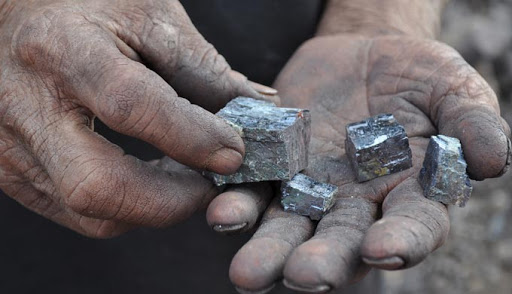
I have been looking at an entry point to buy silver over the past few months, but a dip has not really come. Indeed, the metal has soared recently, handily outperforming gold. Why is this so? For a long time, the gold/silver price ratio was historically high, so there is likely some mean reversion there. That is, gold became too costly relative to silver despite having similar attributes, so silver's price had to move up eventually. Like gold, silver is something with intrinsic value unlike paper money or even virtual currencies. So there's some of that consideration at play:
It is hard to find an asset on more of a roll than silver. On Tuesday, silver for September delivery surged nearly 7%, the highest settlement since March 2014, and 83% above its March lows. Silver was up in the early hours of Wednesday as well. “It seems the precious metal has been caught up in the perfect storm,” says Jeroen Blokland, senior portfolio manager at Robeco Asset Management.

Much of what’s driving silver also is driving gold — aggressive monetary policy financing of fiscal spending, which limits the ability of bond yields to rise. That is sending inflation-adjusted, or real, yields lower, which tends to boost precious metals. In addition, silver is still cheap relative to gold by historical measures.
However, it's not probably not enough to say "silver is like gold" for an explanation. Indeed, silver has more industrial applications than gold. That said, how does this function matter when economic activity is slowing down dramatically worldwide? The emerging argument is that "green" industries rely a lot on silver, and that the current pandemic is hastening the emergence of these industries. What's more, the EU recently passing a bloc-wide stimulus measure championing investment in these industries should in theory boost silver's fortunes further:
But the latest catalyst may well be the European Union’s €750 billion recovery fund, which not only earmarked 30% of spending on environmental initiatives but said funding of other projects has to be in line with the Paris climate accord. Furthermore, the possibility the EU could issue so-called green bonds may create a safe asset, providing a reference security for private sector green bond issuance.


–– ADVERTISEMENT ––
“The catalyst of the recent rally, however, seems to be the fact that the world is aiming for a ‘green’ recovery, with a significant part of the stimulus assigned to environmentally friendly measures,” says Blokland. “As silver has a wide range of industrial uses, including electronics and solar panels, demand for this metal should rise from this angle as well. We remain overweight commodities as the outlook for both industrial and precious metals looks bright.”
For the increasingly environment-conscious like myself, this development is a welcome one. I just wish I bought some silver sooner as it races into the distance [aargh].

Can Trump Destroy Hong Kong's Dollar Peg?

♠ Posted by Emmanuel in , at 7/08/2020 07:20:00 PM
Asian financial crisis, SARS, global financial crisis, COVID-19 outbreak...HK$ remains pegged. Whither Trump?
There are several ironies in the Trump administration's ongoing efforts to strike back at China for eroding Hing Kong's political freedoms through passing a national security law via the mainland's rubber-stamp legislature. For a wannabe authoritarian, Trump taking action against China for eroding its territory's independence is kind of rich. For another thing, Hong Kong is one of the few places on earth that imports far more the United States than it exports. Trump regularly bashes those the US runs large bilateral trade deficits with, so what is Hong Kong doing here? Take it from the horse's mouth--the US Trade Representative notes:
U.S. goods and services trade with Hong Kong totaled an estimated $66.9 billion in 2018. Exports were $50.1 billion; imports were $16.8 billion. The U.S. goods and services trade surplus with Hong Kong was $33.4 billion in 2018.
As such, the US cannot punish Hong Kong with the same tariff it hits the rest of the PRC with since it mostly trades in services, not goods. So, how about restricting services trade with Hong Kong, then? One way the Trump administration has thought of doing this is by targeting the Hong Kong dollar's peg to the US dollar at about 7.8 HKD per USD:
The proposal to strike against the Hong Kong dollar peg, possibly by limiting the ability of Hong Kong banks to buy U.S. dollars, was raised as part of broader discussions among advisers to Secretary of State Mike Pompeo, Bloomberg’s report on Tuesday said. Undermining the peg was seen by some advisers as one way to hit back at China for its moves to whittle away at Hong Kong’s political freedoms, the report said.

Other administration members pushed back against the proposal, worrying that such a move would only hurt Hong Kong banks and the United States, not China, sources told Bloomberg. The idea also was not elevated to White House senior levels, the report said.
The ways it would work are by restricting access to US dollars:
Market watchers are pondering what measures could be implemented to undermine the peg and what the fallout would be. Analysts at broker Hamilton Court FX predicted this could be done by reducing or rescinding swap lines, curbing Hong Kong authorities’ ability to buy and sell dollars in order to keep the currency within its defined trading range. Commerzbank analyst Hao Zhou called it a “low-possibility” event but with risk of huge market impact.
Sure, the Trump administration's China-bashing appears boundless, from pulling out of the World Health Organization over allegations of unwarranted PRC influence to denying entry to foreign students who will only be taking online courses at US universities (since Chinese account for the largest number of foreign students). Remember, though, that the Hong Kong Monetary Authority--its central bank--has $445 billion worth of reserves to combat a US assault on the peg with. If things get tough, Hong Kong authorities have said they can further draw on the PRC's dollar stockpile. Most market commentators also describe this proposed action as futile since it would boomerang mightily on its perpetrator. So the Trump administration can try, but it will most likely fail--after plunging the world economy into heaven-knows-what that would make the global financial crisis look like a rom-com romp by comparison.
---

Patrick Bennett, head of macro strategy for Asia at Canadian Imperial Bank of Commerce
It’s a fairly wacky idea that they would be able to force Hong Kong off the peg by some means. I’ve been against the idea that Kyle Bass and others trying to break the peg -- that has been a spectacularly unsuccessful idea so far, and I expect it to be the same.
Stephen Innes, chief global market strategist at AxiCorp
Why this is bad not to mention an unlikely move: First, direct U.S. action against the peg could trigger China’s response by putting U.S. assets, including USTs or equities. Second, such a move could destabilize USD pegs elsewhere, including U.S. allies around the world, especially those in the Middle East. Third, the unthinkable instability that it would trigger in the USD-based global financial ecosystem could drive a selloff in US equity markets – an outcome abhorrent to the White House ahead of the November presidential election.
Xia Le, chief Asia economist at BBVA Hong Kong
It’s technically difficult to impose, and it’ll hurt U.S. a lot. The peg is maintained by Hong Kong, which doesn’t need approval from the U.S. and not something the U.S. could easily manipulate. Technically, it’s very hard for them to prevent any businesses from investing in the city or limiting the ability of Hong Kong banks to buy U.S. dollars.
Carie Li, an economist at OCBC Wing Hang Bank
At the moment, the Trump administration isn’t seriously considering this as it’s very risky for them. It’s more about specific restrictions for financial institutions under the sanctions. Hong Kong is the world’s third-largest U.S. dollar trading center, which would mean if the HKD can’t be pegged to the USD it would be unfavorable to the U.S. by curbing the number of transactions in U.S. dollars and would lower investor confidence in the greenback.
Becky Liu, head of China macro strategy at Standard Chartered Bank
At this stage I personally assign a relativity low possibility for this to happen. Having said that, in the recent days U.S. has taken some totally unexpected actions by withdrawing from the WHO. So the likelihood of the U.S. doing something is still very likely, it’s just likely to be less drastic in terms of impacting the convertibility between the HKD and the USD, like setting a limit on how much exposure banks are able to have on the Hong Kong dollar or setting limits on the amount of exposure U.S. companies can have towards the Hong Kong dollar.

NOPEC: Will Saudis Deny USD Oil Payment?

♠ Posted by Emmanuel in ,, at 4/05/2019 04:03:00 PM
Here's some news important to the study of IPE that has been flying under the radar. American lawmakers have, since the turn of the millennium, been contemplating passage of a "NOPEC" law removing the immunity of nations from American antitrust laws. As the name implies, the main target is collusion on setting global oil prices by OPEC member countries. In response to the Trump administration's increasing browbeating about high oil prices and OPEC's role in causing them, Saudi Arabia has come up with a potentially consequential strategy. That is, the Saudis will begin pricing their oil in a currency other than US dollars:
Saudi Arabia is threatening to sell its oil in currencies other than the dollar if Washington passes a bill exposing OPEC members to U.S. antitrust lawsuits, three sources familiar with Saudi energy policy said.

They said the option had been discussed internally by senior Saudi energy officials in recent months. Two of the sources said the plan had been discussed with OPEC members and one source briefed on Saudi oil policy said Riyadh had also communicated the threat to senior U.S. energy officials.The chances of the U.S. bill known as NOPEC coming into force are slim and Saudi Arabia would be unlikely to follow through, but the fact Riyadh is considering such a drastic step is a sign of the kingdom’s annoyance about potential U.S. legal challenges to OPEC.

In the unlikely event Riyadh were to ditch the dollar, it would undermine the its status as the world’s main reserve currency, reduce Washington’s clout in global trade and weaken its ability to enforce sanctions on nation states.

“The Saudis know they have the dollar as the nuclear option,” one of the sources familiar with the matter said.“The Saudis say: let the Americans pass NOPEC and it would be the U.S. economy that would fall apart,” another source said. 
Despite being a dollar bear, I am unsure if the Saudis denominating oil sales in another currency would be the proximate cause of the dollar becoming an even less dominant currency worldwide. At any rate, here's a NOPEC description:
NOPEC, or the No Oil Producing and Exporting Cartels Act, was first introduced in 2000 and aims to remove sovereign immunity from U.S. antitrust law, paving the way for OPEC states to be sued for curbing output in a bid to raise oil prices.

While the bill has never made it into law despite numerous attempts, the legislation has gained momentum since U.S. President Donald Trump came to office. Trump said he backed NOPEC in a book published in 2011 before he was elected, though he not has not voiced support for NOPEC as president.

Trump has instead stressed the importance of U.S-Saudi relations, including sales of U.S. military equipment, even after the killing of journalist Jamal Khashoggi last year. A move by Saudi Arabia to ditch the dollar would resonate well with big non-OPEC oil producers such as Russia as well as major consumers China and the European Union, which have been calling for moves to diversify global trade away from the dollar to dilute U.S. influence over the world economy.
It could be potentially exciting, eh? The real question for me is what would cause such a dramatic rupture in US-Saudi relations that the Arabs would stop pricing oil in USD. Still, I do not think the economic consequences for the dollar would be catastrophic. If many others follow suit, though, then we may be on the cusp of a whole new international political economy (though I doubt it).

From 1985 Plaza Accord to 2017 'Trump Tower Accord'?

♠ Posted by Emmanuel in , at 11/30/2016 05:29:00 PM
Like Macaulay Culkin, foreign exchange markets circa 2017 may need some direction from Trump.
Too strong a US dollar is not usually good for the rest of the world economy, but that's what we have at the moment with widespread expectations that the United States will hike interest rates faster with a "President Trump." As growth is expected to ramp up through pump priming, the dollar has strengthened accordingly. A casualty since the November 8 election result has been emerging markets--currencies, bonds, stocks...you name it. Not only do they have to deal with an increasingly more attractive US market, but there's also Trump's threat of protectionist measures against developing countries. It has not been a pretty picture in the emerging markets.

However, neither the incoming US leadership nor the developing countries currently being roiled by the strong dollar may necessarily be pleased by this state of affairs. US exports would become less competitive abroad with a strong currency. Meanwhile, the likes of China, Mexico and so on would become easier target for unfairly "manipulating" their exchange rates from the perspective of a President Trump when, in reality, it is the rampaging dollar that is more behind the current moves.

What to do? In 1985, the United States famously gathered economic bigwigs of other major American trade partners at the famous Plaza Hotel in New York to agree to coordinated interventions leading to a weaker US dollar and stronger yen, deutsche marks, francs, etc. Between then and now, Donald Trump briefly owned the Plaza--hence his cameo appearance giving directions to Macaulay Culkin in Home Alone 2: Lost in New York set in--where else--the New York Plaza.

Trump may no longer own the Plaza, but the idea of gathering foreign economic leaders to weaken the dollar once more makes sense according to Hongkongers Andrew Sheng and Xiao Geng:
The strengthening dollar and weakening yuan are shaping up as powerful crosscurrents for global growth. Their divergence could amplify tensions between the U.S. and China over a persistent trade deficit that President-elect Donald Trump has promised to shrink through tariffs and by labeling China a currency manipulator, risking a trade war between the world’s biggest economies. It’s a scenario both sides are keen to avoid.

China doesn’t want excessive yuan weakness because it would prompt companies and savers to shift money out of the country at a destabilizing pace. America doesn’t want unbridled dollar strength that would hurt exporters. While the problem could self correct if the greenback loses steam, there are also worries that it won’t.
How about the Trump Tower Accord--especially to help Asia avoid another regional financial dislocation. The US getting its external deficit under control would also be a plus:
One solution could be a "Trump Tower Accord" modeled on the 1985 Plaza Accord named after the New York hotel where it was signed. Like that pact, a new agreement would seek to put a lid on the dollar’s gains...

"A Trump Tower Accord is needed to bring some coordination into the international financial system to avoid the unnecessary negative shocks and uncertainty of uncoordinated policies," Xiao said in emailed remarks...

The risks are especially acute in Asia, home to the world’s fastest-growing economies. A weakening yuan -- it fell to an eight-year low versus the dollar last week -- will pressure regional currencies just as the Fed gears up to lift interest rates for only the second time in a decade. That combination will strain government’s international reserves and pressure companies who borrowed dollar denominated debt. 
Because such a move could worsen the trade deficit, and work against the President-elect’s stated intention to keep American jobs from migrating overseas, “it is hard to rule out” currency intervention as something a Trump treasury department might find politically expedient, Faust said.
As pointed out by the authors, the US dollar was already overvalued by 10-20% at midyear. What more now as the currency has only gained steam since then? Sometimes, the market may need a nudge to set itself right on occasion. That moment is probably now.

Beautician 1, Brexit 0: EU's Turn to Stop It

♠ Posted by Emmanuel in , at 11/03/2016 03:45:00 PM
The pound flies after the court decision was released requiring parliamentary approval of Brexit.
A few months ago I featured a story on the legal challenge mounted by British hairdresser Deir Dos Santos concerning the need for UK parliamentary approval to commence on the process of exiting the European Union. In EU jargon, this is known as the Article 50 process. Today, the ruling was issued in favor of Deir Dos Santos and against Prime Minister Theresa May who intended to serve Article 50 to the EU by March of 2017.

My belief is that this is not a mere "technicality" on the road to Brexit. Instead, requiring parliamentary approval--if upheld since HM government intends to appeal--changes the picture entirely. Prior to this turn of events, the British pound was driven to multiyear lows by the fear of a "hard Brexit"--the UK leaving the EU without having agreed to market access agreements. Recall that UK parliamentarians were largely against Brexit (480 stay against 150 leave). So, while the ruling Conservatives and their Labour counterparts give lip service that they will honor the result of the referendum (and the "people's will" by extension), the actual implication is that anything remotely resembling a hard Brexit will likely be turned down by parliament. What politician would like to be on record for having royally screwed the British economy by isolating it economically from its most important trade partners? 

So, the job for the EU assuming they want to keep Britain in their fold is now much simpler. Knowing that parliamentarians--a generally more educated bunch than the mob of the electorate--will scotch a highly unfavorable deal, the EU simply needs to keep making grossly unfair offers to the UK over and over. Since parliament is now required to consider the offer tabled by the EU prior to the UK triggering Article 50, the EU should adopt an absolutely hardline position to negotiations that no sane British politician would agree to. That is, next to no trade concessions whatsoever. Parliamentarians were already disinclined to Brexit to begin with, so now they have a simple excuse to keep rejecting it: "the EU keeps making a bad offer."

Not only does this keep the demonstration effect of how awful life could be outside the EU to deter others from leaving, but it also keeps the UK inside it indefinitely if Eurocrats play their cards right.

The EU always intended to offer the UK a raw deal. The difference now is that relatively sane people (UK parliamentarians) need to agree to this raw deal. The EU should make the terms so ludicrously bad that no quorum will be arrived at to trigger Article 50. After a few years, this stuff will have died down as folks get tired of this entire nonsense. Everyone can be happy save for the delusional Brexiteers. 

Mrs Clinton's New E-Mail Investigation Hits Mexican Peso

♠ Posted by Emmanuel in , at 10/28/2016 09:35:00 PM
There's an interesting article on MarketWatch on how the FBI issuing a recent statement that it would look further into Hillary Clinton's e-mails--here we go again--has affected various markets. Earlier in the day, it looked like US stock markets would end a three-day losing streak, but the uncertainty reintroduced into the American presidential elections put paid to that as understandable fears of a Trump presidency returned.

More interestingly from an international perspective, the Mexican peso hit the skids once more as "Build a Wall" Trump and his NAFTA-canceling xenophobia were given a lifeline:

Just when you thought it was all over...

Correlation Between Mexican Peso, Trump Poll Numbers

♠ Posted by Emmanuel in at 9/18/2016 02:05:00 PM
The Mexican peso seemingly moves in the opposite direction to Trump's poll numbers these days.
America's Mr. Nasty is apparently making his presence felt south of the border. With Mexico being on the receiving end of a lot of his isolationist (he suggests leaving NAFTA), protectionist (ditto) and racist (characterizing the Mexican people as "rapists") rhetoric, the political fallout of a Trump presidency (heaven forbid) have not gone unnoticed in the markets. The far right has well and truly established a presence in North America.

Bloomberg offers the chart above in relation to the performance of the Mexican peso, whose fortunes as of late mirror those of Trump's polling numbers in the upcoming US presidential elections. The write-up suggests as much. Also, revisit NAFTA:
Concern Trump will follow through on his promises regarding Mexico if elected has helped the peso weaken 10 percent this year, the worst performance of any major currency apart from the U.K. pound. It was last week’s biggest loser, sliding 1.7 percent, and has since dropped to the lowest since June after Democratic presidential nominee Clinton’s campaign announced she was ill.

The peso’s status as the most-liquid emerging-market currency after China’s yuan has left it particularly vulnerable to selling, sending it to repeated record lows and forced the central bank to raise interest rates.

Mexico is arguably the major world economy most dependent on the U.S. Trade between Mexico and the U.S. has grown fivefold to more than $500 billion in goods annually since Nafta took effect in 1994, making the Latin American nation the largest U.S. trade partner after China and Canada, according to data from the International Monetary Fund. While Mexico has also strengthened its trade ties with other nations and has a free-trade agreement with the EU, it still sent 73 percent of exports to the U.S. in 2015, compared with 79 percent the year before Nafta was implemented.
There's also Trump's talk about holding Mexican expatriates' remittances hostage to building his now-infamous wall which the Mexican government would pay for:
In addition to ending Nafta, Trump has said he’ll make Mexico pay for the wall -- a proposal that the government has repeatedly said is a non-starter -- by holding remittances from immigrants in the U.S., which play an important role in bolstering the peso.
It's no surprise that nasty things happen when the topic turns to the nasty guy.

It's Blitz 2: Central Banks Prepare for UK's EU Referendum

♠ Posted by Emmanuel in , at 6/22/2016 04:58:00 PM
Nasty people like Harry Potter's uncle Vernon Dursley--EU "Leave" voter--keep central bankers up at night.
With voting in the UK's EU referendum just a few hours away, the world's major central banks are on standby together with the London bankers into the small hours of Thursday evening and Friday morning. While the latter have making or at least not losing money on their minds, the former have keeping the international financial system intact in the event of a "Leave" vote. Which is, of course, a rather more pressing task.

Of course, the Bank of England is directly in the line of fire. First in the line of fire outside of the UK proper will be the ECB. As it so happens, both appear to be making arrangements in preparing for the worst. It's the European equivalent of the infamous US "plunge protection team," perhaps, as a "backstop" is looking likely if the negative outcome holds:
The European Central Bank would publicly pledge to backstop financial markets in tandem with the Bank of England should Britain vote to leave the European Union, officials with knowledge of the matter told Reuters.


The preparations illustrate the heightened state of alert ahead of the June 23 referendum, which will help determine Britain's future in trade and world affairs and also shape the EU. The pound and euro have lost value on fears a Brexit could tip the 28-member bloc into recession.


Such an announcement from the ECB would come on June 24 if an early-morning result showed that British voters had chosen to leave the EU, according to the sources. The aim is to underpin investor confidence across Europe and contain further market jitters.


"There will be a statement to do whatever it takes to maintain adequate market liquidity," said one senior central bank official, who spoke on condition of anonymity.


The ECB's pledge would involve opening so-called swap lines with the Bank of England, allowing euros and sterling to be exchanged and effectively making unlimited funding in both currencies available to European banks, the sources said.
Nor is it an entirely European story as the US and Japan are also going to be pulling out all-nighters since the negative event will likely have global consequences--a strengthened dollar, lower interest rates, and so forth as a "risk off" line of action:
Central banks in Japan, the U.S. and Europe are discussing an emergency supply of dollars to financial markets, seeking to ensure continued access to the currency even if the pound plunges in the event that the U.K. votes to exit the European Union.

The likely plan is to use dollar swap lines between the Federal Reserve and central banks in Japan, Canada and Europe, letting these institutions borrow dollars from the Fed to lend to financial institutions within their jurisdictions.

The Bank of Japan, which provides dollars to financial institutions once a week, will consider carrying out operations on consecutive days if it determines that supplies are running short. The ECB and BOE likely are also discussing specific measures with the Fed. Group of Seven leaders could issue a statement at the same time as an emergency dollar liquidity injection.

The BOJ is communicating and cooperating closely with other major central banks, so it can handle a dollar shortage, BOJ Gov. Haruhiko Kuroda assured reporters Thursday. Fed Chair Janet Yellen said Wednesday that a Brexit would affect the global economy and worldwide financial conditions. Though she mentioned no specifics about the Fed's planned response, a source said the central bank is considering supplying dollars to European markets.
The memory of 2008 is still fresh in the minds of central bankers as the international financial system is threatening to seize up as it did then from a lack of liquidity. This time almost everyone has ammunition on hand--namely foreign exchange, or more usually US dollars--to guard against risk events. 

Everything's now in place. All that remains is the voting. Most of the rest of the world in hoping for "Remain,"  but it's in the hands of the British people whether to avoid or commit economic suicide.

Polish Zloty, Hungarian Forint as Brexit Proxies

♠ Posted by Emmanuel in , at 6/10/2016 12:31:00 PM
Praises be to the zloty? Its foreign exchange shows no imminent '"Brexit."
What do the currencies of former Soviet bloc countries have to do with a UK referendum on whether to stay in the EU? After all, even if Poland and Hungary opt for using the euro in the future, doesn't the UK still have its own currency? Bloomberg, however, proposes the currencies of these countries as a proxy for whether the UK will stay in the EU. And, based on current exchange rates for the zloty and forint, it looks like the UK will indeed stay:
Investors betting on Brexit may want to keep an eye on eastern European currencies, because Poland and Hungary stand to lose a bulwark of financial and political support from a British departure from the European Union. And by that measure, it looks like Britain will vote to stay in the 28-nation bloc in the June 23 referendum. Poland’s zloty and Hungary’s forint were among the top gainers of emerging currencies against the euro in the past week, even after three surveys published on Monday showed Britons favor an exit.
The logic is that, in the EU budget, the UK pumps in a lot of the money going to these newer EU member countries. Without that financial lifeline, well, the prospects of Poland and Hungary are rather diminished. Therefore, if expectations are that the UK will leave, then the currencies of those countries will take it on the chin. That simply isn't happening, however:
The calm in the currencies of post-communist bloc countries could quickly turn to turmoil because a British departure from the EU would throw into jeopardy its contribution to an EU budget that has supported the economies of Poland, Hungary, Romania and Czech Republic. Britain was the third-largest contributor to the EU budget in 2015 with a net contribution of 10.9 billion euros ($12.4 billion) and Poland is scheduled to be the biggest recipient among the bloc’s 28 members through 2020.

“Currencies and bonds of eurozone periphery countries rather than the U.K. would be most at risk after a potential Brexit,” said Peter Duronelly, strategist and money manager at Aegon’s fund unit in Budapest, which oversees 2.5 billion euros of assets.

The U.K.’s support for eastern EU countries dates back to before the bloc expanded in 2004, when the British government was the flag bearer for taking in the countries that were once behind the Iron Curtain. Those alliances have continued, with the U.K. often supporting eastern nations in the face of euro area dominance in EU decision-making, and providing a counter-balance to the attempts of western European governments that want to knit the bloc more closely together. 
It's food for thought, certainly. That the pound would be less affected by the UK leaving the EU than those of Poland and Hungary is certainly interesting if unexpected.

Nigerian Nightmare 2016: Naira Inconvertibility

♠ Posted by Emmanuel in ,, at 6/03/2016 01:01:00 PM
Among others, airlines are being negatively affected by Nigeria's ill-conceived currency peg.
We've talked about the plight of any number of commodity-dependent countries amid a global plunge in the value of such exports. While Russia and Venezuela have received much airtime, save a thought for Nigeria which is doing nearly as bad as those others. With oil prices plunging, it has attempted to maintain a currency peg for its naira to the US dollar. This, of course, is an increasingly difficult balancing act since it must defend the peg by continually selling dollars it is earning less of as oil prices remain relatively low. That is, foreign exchange earnings are under pressure which does not bode well for maintaining a currency peg at all.

Caught in this sorry business are companies doing business in Nigeria. As the government aims to conserve foreign exchange and in so doing preserve the dollar peg, it is resorting to limiting the amount of nairas these firms can convert to $:
As Nigeria’s policy makers dither on plans to loosen capital controls and let the naira weaken, foreign companies such as Nampak Ltd. of South Africa and British Airways Plc are battling to get their money out of the country. Nampak, Africa’s biggest producer of beverage cans, is considering currency swaps that would enable the Johannesburg-based company to repatriate money trapped due to the shortage of foreign exchange in Nigeria, its chief executive officer said.

“We are exploring structuring options in Nigeria,” Andre de Ruyter said in a phone interview Wednesday. While some companies were contemplating dollar investments into Nigeria, they would want to avoid doing so at an overvalued official exchange rate, he said. “So there’s an option for us to do currency swaps.”
The pegged exchange rate--only implemented last year--is in imminent danger, hence the move to limit the naira's convertibility:
Nigeria has pegged the naira at 197-199 per dollar since March 2015 through import and currency-trading restrictions. While central bank Governor Godwin Emefiele said May 24 that the country would move to a more flexible foreign-exchange regime, with details of how this would work to be announced “within days,” authorities are yet to set out changes in policy.

The capital controls have sent investors fleeing and the black-market exchange rate has plummeted to 350 as the dollar scarcity has worsened. Forward contracts suggest the official rate will fall to 284 in three months.
There are indeed shades of Venezuela here as international airlines are having trouble repatriating their profits due to currency inconvertibility:
IATA said that airline revenues worth $5 billion were currently being blocked by countries, with Venezuela and Nigeria the biggest culprits, effectively withholding $3.78 billion and $591 million respectively. Sudan, Egypt and Angola are also blocking the repatriation of airlines’ revenues.
Hard times are afoot in Nigeria with political unrest also brewing, but you do have to wonder if its economic woes have been exacerbated by a decision to peg its currency when unable to afford the measures required to maintain such a peg. Then again, who would have thought oil prices would fall to today's levels back in March 2015.

Japan's Last Hope: Can G20 Calm World Markets?

♠ Posted by Emmanuel in ,,, at 2/12/2016 12:28:00 PM
The once-again mighty yen is one of Japan's larger problems once more.
With global financial markets going crazy as of late, the hardest-hit have been in Asia due to China's slowdown causing expectations that its closely-linked regional peers will suffer. Even within Asia, though, Japan has been particularly affected as of late. Late last month, the Bank of Japan adopted negative interest rates--albeit on excess deposits of commercial banks only--on top of massive quantitative easing through buying not only Japanese government bonds (JGBs) but also ETFs.

In the aftermath of the BoJ announcement, the yen spiked to 121 to the dollar. Competitive devaluation was clearly intended and worked. For a while, at least: the roiling of global markets which has increased as of late has led many to buy yen as a "safe haven" currency. The chart above shows the dramatic slide in the yen to the 111-something mark in a matter of days. With expectation that Japanese companies would become uncompetitive in export markets due to a strong yen, the resulting selloff in Japan-listed stocks has been brutal.

As it so happens, the G20 finance ministers' meeting is due to be held in Shanghai later this month (China is the rotating head this year). Evidently, Japan wants to put market volatility on the agenda. Here is their current predicament:
Japanese policymakers on Friday said they would seek a global policy response from G20 nations to world market turbulence, as the country's central bank governor dismissed suggestions the rout was caused by the bank's new negative interest rate policy. Underscoring Tokyo's alarm over the relentless drop in stock prices, Prime Minister Shinzo Abe held talks with Kuroda for the first time in nearly five months to discuss global economic and market developments.

"I explained the BOJ's thinking on quantitative and qualitative easing with negative interest rates and its effects," Kuroda told reporters after the meeting, adding that Abe made no particular remarks on monetary policy. Kuroda declined to comment on recent yen moves and what he discussed with Abe on currency policy. Japan's Nikkei share average fell more than 5 pct to a fresh 16-month low on Friday, while the yen remained near a 15-month high against the dollar as investors flocked to the safety of the Japanese currency on concerns about the health of European banks and the global economic outlook.

Verbal threats of intervention by Finance Minister Taro Aso failed to knock the yen lower. Yen strength has added to headaches for the BOJ, whose adoption of negative interest rates last month has so far failed to produce a sustained positive stock market impact amid a wider market rout.

And here is the plan to use the G20 to talk things over:

Aso and his subordinates at the Finance Ministry said they will look to see whether G20 finance leaders can agree on policy coordination when they meet in Shanghai later this month. "There are a lot of deep-rooted problems behind recent market moves. Naturally, we have to look at ways we can promote policy coordination heading into the G20 meeting," top currency diplomat Masatsugu Asakawa told reporters on Friday.

Earlier, Kuroda said the BOJ's negative rate policy will help stimulate the economy by lowering borrowing costs, dismissing criticism that the policy move has aggravated the market turmoil by stoking fears it will further squeeze bank profits. "I don't think the BOJ's negative rate policy is behind (the recent market turbulence)," Kuroda told parliament on Friday. "Excessive risk aversion is spreading among global investors," he said, adding that he will carefully watch how recent market moves could affect Japan's economy and prices.

He also reiterated that the BOJ would not hesitate to expand monetary stimulus further if needed to achieve its 2 percent inflation target. The BOJ cut the benchmark interest rate to below zero last month, stunning investors with another bold move to stimulate the economy as volatile markets and slowing global growth threaten its efforts to overcome deflation.

The essential difficulty for Japan's policy remains that, in order for the yen to be weaker, the currencies of those of its trading partners will have to become stronger. Who would voluntarily make themselves worse off for Japan's sake by appreciating their currencies? 

Economic Battle Royale: George Soros vs PRC

♠ Posted by Emmanuel in , at 1/27/2016 01:30:00 AM
Mahathir and Soros eventually reconciled, but will Chinese authorities be so forgiving?
This could be a battle for the ages if it comes true: During the Asian financial crisis, then-Malaysian Prime Minister Mahathir Mohamed famously singled out George Soros as a villain in depressing any number of Asian economies to make a quick buck through currency speculation. Aside from calling Soros a "moron," Mahathir launched all sorts of tirades against the famous financial figure, prompting a heated exchange of words:
"I know I am taking a big risk to suggest it, but I am saying that currency trading is unnecessary, unproductive and immoral," Mr. Mahathir said Saturday night. "It should be stopped. It should be made illegal. We don't need currency trading. We need to buy money only when we want to finance real trade." 

On Sunday, Mr. Soros said: "Dr. Mahathir suggested banning currency trading. This is such an inappropriate idea that it doesn't deserve serious consideration. Interfering with the convertibility of capital at a moment like this is a recipe for disaster. Dr. Mahathir is a menace to his own country..."

When Thailand's currency crisis caused the Malaysian ringgit and other regional currencies to crash last month, the Malaysian prime minister blamed hedge-fund investors such as Mr. Soros, whom he called "a moron."  
The picture above dates from 2006, when the antagonists finally met face-to-face. Apparently, Mahathir had softened his views of Soros by then. Among other things, he mentioned that he no longer believed that Soros shorted Asian currencies like the Malaysian ringgit during the crisis:
Malaysia's former premier Mahathir Mohamad today met his old foe George Soros and said he accepted the billionaire financier was not responsible for the 1997-98 Asian financial crisis. Mr Mahathir has long blamed Mr Soros for undermining South East Asian economies by destabilising their currencies, and famously called him a "moron".

"Mr Soros said he was not involved in the devaluation of the Malaysian currency and that other people were involved. And I have accepted that," Mr Mahathir said at a joint press conference.
However, George Soros' reputation precedes him of being "the man who broke the Bank of England." By speculating against the pound's devaluation way back when, Soros made a tidy profit and gained global notoriety as a currency speculator. And so it is again with China's financial markets causing adverse spill-on effects on the rest of the world (particularly Asia). At the ongoing Davos meeting, Soros suggested that he was positioning against Asian currencies, raising the particular ire of the Chinese government. They have now warned him about speculating against the yuan and the Hong Kong dollar (which is pegged to the US dollar):
China’s state press is warning George Soros not to bet against its currency after the hedge fund star-turned philanthropist predicted a “hard landing” for its economy last week. “Soros’ challenge against the renminbi and Hong Kong dollar is unlikely to succeed, there is no doubt about that,” the overseas edition of People’s Daily, the Communist Party’s main mouthpiece, said Tuesday...

But China’s warning was strange for one reason: Soros never said he was betting against the renminbi or Hong Kong dollar. At the World Economic Forum in Davos, Soros was light on specifics, only saying he was betting against U.S. stocks and Asian currencies. 
If your reputation is like that of Soros, even the merest hint of speculation against Asian currencies brings a warning from PRC officialdom. (Consider yourself warned, Mr. Soros.)

That Makes 5: Chinese Yuan a Part of IMF SDR

♠ Posted by Emmanuel in ,, at 11/30/2015 07:07:00 PM
Here's another step towards the Chinese currency becoming a globally important one. Everyone sort of expected this, but for the Chinese, it's a major achievement nonetheless. While the inclusion of the yuan in the basket of currencies the IMF uses as reference will not result in a massive surge in RMB holdings there, the symbolism matters quite a lot. As in, China becomes the first developing country to have its currency included in the SDR. From the IMF blurb:
The Executive Board of the International Monetary Fund (IMF) today completed the regular five-yearly review of the basket of currencies that make up the Special Drawing Right (SDR). A key focus of the Board review was whether the Chinese renminbi (RMB) met the existing criteria to be included in the basket. The Board today decided that the RMB met all existing criteria and, effective October 1, 2016 the RMB is determined to be a freely usable currency and will be included in the SDR basket as a fifth currency, along with the U.S. dollar, the euro, the Japanese yen and the British pound. Launching the new SDR basket on October 1, 2016 will provide sufficient lead time for the Fund, its members and other SDR users to adjust to these changes.

At the conclusion of the meeting, Ms. Christine Lagarde, Managing Director of the IMF, stated: “The Executive Board's decision to include the RMB in the SDR basket is an important milestone in the integration of the Chinese economy into the global financial system. It is also a recognition of the progress that the Chinese authorities have made in the past years in reforming China’s monetary and financial systems. The continuation and deepening of these efforts will bring about a more robust international monetary and financial system, which in turn will support the growth and stability of China and the global economy.”

The value of the SDR will be based on a weighted average of the values of the basket of currencies comprising the U.S. dollar, euro, the Chinese renminbi, Japanese yen, and British pound. The inclusion of the RMB will enhance the attractiveness of the SDR by diversifying the basket and making it more representative of the world’s major currencies. The SDR interest rate will continue to be determined as a weighted average of the interest rates on short-term financial instruments in the markets of the currencies in the SDR basket. Authorities of all currencies represented in the SDR basket, which now includes the Chinese authorities, are expected to maintain a policy framework that facilitates operations for the IMF, its membership and other SDR users in their currencies. The paper presented to the Board will be released soon.
What weight will the yuan have in the SDR basket? Bloomberg suggests a bit over 10%. It may not sound like a lot, but it will immediately leapfrog the yen and the pound:
The addition will take effect Oct. 1, 2016, the IMF said. The fund said the yuan would have a 10.92 percent weighting in the basket. Weightings will be 41.73 percent for the dollar, 30.93 percent for the euro, 8.33 percent for the yen and 8.09 percent for the British pound. The dollar currently accounts for 41.9 percent of the basket, while the euro accounts for 37.4 percent, the pound 11.3 percent and the yen 9.4 percent.
There is talk that China has been cautious about devaluing its yuan again after the tumult caused by events in August so that its currency could achieve this very event of SDR inclusion. With that out of the way, I hope PRC authorities avoid any sudden moves.

What China Gets From Giving Venezuela $45B

♠ Posted by Emmanuel in ,,,, at 10/05/2015 01:30:00 AM
The largest Venezuelan note is now worth 12 cents.
Next week, the IMF is holding meetings in Lima, Peru in the region that has suffered as much as any other from the global slump in commodities. It's not bound to be a happy occasion for many of those gathered. Despite everything, some commodity exports have managed to accumulate substantial foreign exchange reserves precisely in anticipation of these lean years. Others, meanwhile, have tried to lessen dependence on commodity exports to literally fuel growth.

As you would expect, Venezuela has done none of these things as it amassed very little in reserves--preferring to waste oil revenues on quite frankly idiotic attempts to show "global solidarity." Diversification away from oil? If nothing else, Venezuela has become more dependent on energy in the past few years...just as China-buoyed global demand has ebbed. Meanwhile, as the rest of the world combats deflation, Venezuela is confronting hyper(inflation) as the bolivar heads to oblivion. It has fallen by 88% in 2015:
Venezuela’s bolivar passed the physiological barrier of 800 bolivars per dollar Tuesday in black market trading as Venezuelans rushed to protect savings amid rising inflation. That means that the country’s biggest currency note of 100 bolivars is now worth about 12 U.S. cents.

The currency has declined 14.7 percent in the past month to 816 bolivars per dollar, according to dolartoday.com, a website that tracks trading in street markets where Venezuelans go to skirt limits on foreign-exchange purchases. The government maintains official rates of 6.3, 13.5 and about 200 bolivars per dollar for authorized purchases of items deemed essential.

Venezuela’s inflation, estimated by some to be nearing 200 percent, is the fastest in the world as President Nicolas Maduro’s administration prints more currency to pay budget expenses as the falling price of oil reduces foreign currency income. The amount of bolivars in circulation passed 3 trillion for the first time on Sept. 19, up 97 percent in the past year, according to data compiled by Bloomberg.
The only thing keeping Venezuela from economic oblivion is not the hated IMF, but rather the People's Republic of China. Ricardo Hausmann, the Venezuelan economist at Harvard, blames the worsening of Venezuela's worrisome situation to continued Chinese cash infusions which now amount to an astounding $45 billion. Who needs the IMF when you've got the PRC?
The billions of dollars China loans to Venezuela in exchange for oil are a “disgrace” and used for corrupt purposes that go undisclosed to the general public, said Harvard professor Ricardo Hausmann.

Venezuela, which has tapped China for more than $45 billion over the last decade, is increasingly reliant on the world’s second-biggest economy for cash because of its unwillingness to comply with the requirements of the International Monetary Fund, Hausmann wrote in a Sept. 28 opinion piece for Project Syndicate. Those loans have become more important than ever as the nation’s international reserves tumbled with oil prices to a near 12-year low.

“The Chinese have not required that Venezuela do anything to increase the likelihood that it regains creditworthiness,” wrote Hausmann, a former Venezuelan planning minister. “They merely demand more oil as collateral. Whatever the IMF’s faults,” China Development Bank “is a disgrace.” The loans have “built-in privileges for Chinese companies” in sectors including telecommunications, appliances, cars and oil drilling, Hausmann said. An e-mail to the bank seeking comment, sent after business hours, wasn’t immediately returned.
Think of tt as underdevelopment theory with a twist. Instead of the "imperialistic West" making its dictates known through the IMF, you have "third world champion" China. Remove the labels though and what you see happening is similar: ever-broader swathes of the Venezuelan economy falling into the hands of the Chinese. I hardly think the Chinese are doing this for altruistic reasons--would they extend so much credit to a resource-poor country? In China's calculations, $45 billion is a drop in the bucker compared to gaining leverage over the vast reserves Venezuela supposedly holds--especially in the form of unconventional reserves.

The question remains, though, of whether the Chavista leaders will continue to have warm relations with China into the future. Or, if these Chavista leaders will remain in place as they are quite unpopular for obvious reasons with the Venezuelan electorate. I guess China throwing billions and billions of dollars at them is one way of helping to guarantee that they do until such as time that China can be paid in full--and more.

I don't use the word "giving" instead of "lending" in the title for nothing.

First Time Ever: PRC Reports Reserve Holdings to IMF

♠ Posted by Emmanuel in ,, at 10/01/2015 01:30:00 AM
Sucking up to the IMF in all sorts of ways--now including reporting on forex reserves.
"Transparency" and "Chinese officialdom" are strangers to one another. That said, the PRC seems to be making improvements in one regard: After years of obfuscation, PRC authorities have only just begun reporting reserve data to the IMF Composition of Foreign Exchange Reserves (COFER). Previously, they furnished no data whatsoever--nada, zilch, zip, diddly-squat. But, all that changed recently with China partially--repeat, partially--reporting on its reserves.

How "partial" are we talking about? In aggregate, total reported reserves to the IMF jumped by $600 billion. Assuming that all the increase is due to China's new reporting, it falls well short of the $3.56 trillion it is believed to hold even with its recent sell-off of foreign exchange to slow the rate of yuan depreciation. From an earlier report in the WSJ:
The People’s Bank of China said Monday that its reserves fell by $93.9 billion, the biggest-ever monthly drop in dollar terms and the largest in percentage terms since May 2012. The decline in China’s foreign-currency reserves has accelerated, deepening a trend that illustrates the pressures of the country’s slowdown, rising capital outflows and expectations for monetary tightening in the U.S. China used its reserves to stabilize the yuan after the central bank devalued the currency on Aug. 11, a move that heightened worries about growth in the world’s second-largest economy and sparked a sharp selloff across global stock markets.

At $3.56 trillion as of the end of August, the currency reserves held by the PBOC still account for nearly one-third of all holdings by central banks world-wide. But the reserves have declined since a peak of nearly $4 trillion in June 2014 as more money leaves the country
Now, Dow Jones newswires reports on China's COFER contribution:
China has begun to report its currency reserves to the International Monetary Fund for the first time—a milestone in opening a key facet of the country's economy to the public view. The move comes as Beijing seeks to have its currency, the yuan, included in the basket of reserve currencies that comprise the fund's lending instrument.

The IMF said China has reported a "representative portfolio on a partial basis," meaning that what it has shared represents the fractional breakdown of its holdings of different currencies. China will gradually report its full foreign-exchange holdings over two to three years, the IMF said.

Reported currency reserves world-wide jumped by around $600 billion with China's new data. The IMF's numbers don't reveal how much each of the reporting countries holds. But based on the fund's breakdown of the aggregated share of different currencies held, it seems China's portfolio matches most central-bank holdings: roughly 60% dollars and 20% euros and pounds sterling—with the Japanese yen and other major currencies making up the difference.
So approximately $600B reported out of about $3.5T is, in the bigger picture, just a fraction of China's entire forex holdings. But then again, it's a start given how secretive the Chinese are. The prize the Chinese are after remains IMF inclusion of the yuan in the SDR basket of currencies:
To win reserve-currency status China has begun to liberalize its exchange-rate regime and provide more transparency about its currency policies. Last year China committed to providing more details about its reserve holdings, an effort that will allow economists to better gauge the degree to which the country is intervening in its exchange rate. China now discloses its foreign-exchange reserves every month, whereas in the past it reported the figures quarterly. It also has started to disclose its holdings of gold every month.
You didn't think the Chinese were doing this out of the goodness of their hearts, did you?

Minting Gold Coins: The Monies of ISIS

♠ Posted by Emmanuel in , at 8/31/2015 01:30:00 AM
Coming soon to an antiques dealer near you? Awaiting ISIS currency.
Recent gyrations in global markets have demonstrated to some observers the idea of gold as a safe haven doesn't hold. As investors the world over were gripped in fear, the price of the gold went...precisely nowhere fast. So much for seeking the safety of gold:
Gold is still well above the more than five-year closing low of $1,084 struck August 5 but the safe haven buying amid the panic on markets did not materialize to the extent many bulls had hoped. Georgette Boele of ABN Amro in a Thursday research note argues that gold did not enjoy a stronger rally because the weaker Chinese economic outlook "outweighed safe have demand."
To be fair to gold bugs, the current lack of inflationary pressures in the world economy also works against gold's role as a hedge against inflation. That said, you may be curious to find out that there are also rather more sinister forces out there who believe that precious metals provide a bulwark against the machinations of central bankers and other nefarious characters. For today's latest gold-loving conspiracy theorists, try ISIS:
Forget the printing press. In readying for the rollout of Islamic State’s new money, goldsmiths and silver smelters have been toiling away. The jihadist group on Saturday touted “the return of the gold dinar” in an hour-long video issued by its media wing, al Hayat. Islamic State’s policy-making Shura Council last year tasked its Beit al Mal, or treasury, with minting the coins, which come in several denominations made of gold, silver and copper.
 Death to America! Or is that the Federal Reserve to be precise?
The currency is meant to break the shackles of “the capitalist financial system of enslavement, underpinned by a piece of paper called the Federal Reserve dollar note,” the group said in the video. It didn’t explain where the coins were being minted, nor how they’ll be distributed or replace currencies circulating in the territory the group occupies in parts of Iraq and Syria.

Islamic State first announced its intention to issue its own money in November, five months after it seized the northern Iraqi city of Mosul and its leader Abu Bakr al-Baghdadi announced a caliphate. The move was seen by analysts as part of the group’s efforts to build the institutions of a functioning state.

The jihadists have amassed a war chest of millions of dollars, partly through collecting taxes, and by seizing oil refineries. Bank and jewelry store robberies, extortion, smuggling and kidnapping for ransom are other important sources of revenue for the group, which metes out brutal punishment to anyone who opposes its rule, including beheadings and crucifixions.
So, for weirdo collectors of currency, how do you obtain ISIS gold coins? That's a little trickier. After all, ISIS is classed not as a "state" but as a "terrorist organization" by the United States and others. As such, there are no legitimate "exchange rates" to speak of.
Minting the coins is relatively easy, Jameel said, as goldsmiths in Mosul imported machines from Italy in recent years, each one able to produce about 5,000 coins a day. The metals probably come from banks the group seized, ransoms, the homes of Christians and other minorities who fled, he said...

Each coin bears an inscription that reads, “The Islamic State, a caliphate based on the doctrine of prophecy.” The 1-dinar coin also shows seven stalks of wheat, which the group said is meant to represent “the blessing of spending in the path of Allah.” The five-dinar coin bears the image of a map of the world.

Oil, the group said in the video, will now only be sold for gold.
Ho-hum, add these folks to the very long list of dollar/America-haters. One thing you can be sure of is that ISIS won't be issuing passports, though. Still, there's a lot of (gruesome) novelty value with ISIS currency already...if you can find it.

Depreciating Currencies: What Follows Kazakh Tenge?

♠ Posted by Emmanuel in at 8/21/2015 01:30:00 AM
Another commodity currency under pressure: the Kazakh tenge.
Are we having an Asian financial crisis flashback? It certainly seems so to me with emerging markets being rocked on an almost-daily basis. We certainly look to have the ingredients in place: falling stocks, falling currencies, and falling bonds. The Chinese giving in to the temptations of depreciation--something it didn't do during the aforementioned Asian financial crisis--may be exacerbating matters.

So, who's next in line? Of all countries, Kazakhstan devalued  its tenge just yesterday, adding to the negative sentiment on minor currencies.  Or, in foreign exchange-speak, "exotic" currencies which are not traded in large volumes in international markets. For a long time, Kazakhstan tried to limit currency movements in a narrow band--like China. Then, all of a sudden, it gave up and let its currency float freely, subsequently falling 23%. First, a bit more on Kazakhstan's action:
On most days, Kazakhstan finds itself in the backwaters of financial markets. Yet, it’s this central Asian nation that has delivered the latest shock to global currency trading.

Thursday’s 23 percent plunge in the tenge after Kazakhstan abandoned control of its exchange rate revealed a sense of urgency among policy makers: they had tried a managed depreciation just a day earlier. The escalation signaled to investors that it has become too costly for developing nations to defend their currencies. Vietnam also devalued the dong, while freely traded currencies such the South African rand and Turkey’s lira extended losses.
And now for the longer list of candidates--11 to be exact:
  1. Saudi Arabia’s riyal: Armed with $672 billion in foreign reserves, Saudi Arabia, the world’s largest oil exporter, has enough capacity to hold the peg, according to Deutsche Bank AG. Nonetheless, speculators are betting on a break of the currency regime as crude oil tumbled to a seven-year low. The forwards, contracts used by traders to bet on or hedge against future price moves, fell to the weakest since 2003, implying about a 1 percent decline in the riyal over the next 12 months.
  2. Turkmenistan’s manat: This oil-exporting nation with close economic ties to Russia devalued its currency by 19 percent in January. Stockholm-based SEB AB forecasts a further weakening of as much as 20 percent in the next six months.
  3. Tajikistan’s somoni: The nation has close ties with Kazakhstan, which accounts for about 11 percent of trade, and SEB expects a depreciation of 10 to 20 percent.
  4. Armenia’s dram: The currency has lost 15 percent in the past 12 months, compared with a 46 percent drop in the ruble. A quarter of the country’s trade is with Russia.
  5. Kyrgyzstan’s som: The weaker tenge will put pressure the som because of this country’s ties to Kazakhstan, according to BMI Research.
  6. Egypt’s pound: The country has limited investors’ access to foreign currencies amid a shortage since the 2011 Arab Spring protests. Traders are betting the pound will weaken about 22 percent in a year, according to 12-month non-deliverable forwards.
  7. Turkey’s lira: It’s one of the world’s worst-performing currencies since China’s devaluation on Aug. 11. An escalation in political violence and the probability of early elections compound the issues.
  8. Nigeria’s naira: Policy makers in this oil-exporting nation are trying to hold the currency at a level most see as too high. Trading in forwards indicate the currency will fall more than 20 percent against the dollar over the next year.
  9. Ghana’s cedi: Also an oil exporter, though its main problems are mainly fiscal imbalances, rising inflation and increasing debt.
  10. Zambia’s kwacha: The country is heavily exposed to China as copper accounts for about 70 percent of exports.
  11. Malaysia’s ringgit: The currency slid to a 17-year low on Thursday and foreign-exchange reserves fell below the $100 billion mark for the first time since 2010.

Lose $51B? No Big Deal for Swiss Central Bank

♠ Posted by Emmanuel in , at 8/20/2015 01:30:00 AM
Buy euros (EUR) and sell Swiss francs (CHF): that was what the Swiss National Bank (SNB) was doing until early this year when the cost of keeping Swiss exports competitive vis-a-vis those of Europe by effectively pegging CHF to EUR became unsustainably high. Hence, when Switzerland's central bank stopped pushing down the value of the franc to match the euro, the result was a massive loss on its accumulated foreign exchange--mostly euro--holdings.

But how much was the loss? Try $51B for size. Even for a wealthy--albeit rather small--country like Switzerland, that's nothing to sneeze at. Still, the effects of such a loss on monetary policy are limited since its economic situation remains largely the same: an overly strong CHF would dent export performance compared to its devalued European competition:
Losing 50 billion francs ($51 billion) in half a year might seem like a big deal, unless you're the Swiss National Bank. For the majority of economists in Bloomberg's monthly survey — 15 of 23 — the record shortfall reported last month doesn't matter for SNB policy. That still leaves a sizable group in the other camp; one concern is that such a loss could make it harder for President Thomas Jordan to push back against any market pressure on the franc with interventions.

The SNB has already cut its deposit rate far below zero — charging banks to hold their money — and built up hundreds of billions of francs in reserves, by defending a currency cap until January this year and now through occasional forays into the market. If losses mount, investors could start to buy francs to a greater degree if they question the SNB's firepower.
So, it's a market test for Swiss intervention capabilities. That said, there's little choice other than tho pursue open-market operations (AKA intervention) after monetary policy tools have been exhausted:
The loss "limits the credibility of the SNB to pursue a monetary policy that might come with short term financial losses," Bank J. Safra Sarasin Ltd Chief Economist Karsten Junius said. "Unlimited foreign-currency interventions are therefore not credible as markets would regard them as unsustainable..."

According to the survey, the SNB has limited room left on the interest-rate front to keep the franc in check, meaning interventions are likely to retain their importance. The SNB can take its deposit rate, currently at minus 0.75 percent, to minus 1.25 percent, according to the survey...

"From a monetary point of view, the loss does not matter," said Maxime Botteron, economist at Credit Suisse Group AG. "The SNB can still operate with negative equity."
Central banking in an age of deflation may not seem as fun as it seems. I too would like to give negative deposit rates, but a $51B loss remains hard to swallow no matter who you are. 

The Devil Buys Prada in Brazil Where It's Cheaper

♠ Posted by Emmanuel in , at 8/18/2015 03:44:00 PM
Prada é mais barato em São Paulo.
Arbitrage in buying luxury goods worldwide is something of an interest of mine--and a global hobby for the well-to-do shopper. Where's the least-expensive option for buying the latest in-demand fashion goods? Chinese mainlanders go to Hong Kong to take advantage of cheaper luxury goods there due to lower duties and taxes. How about in the Americas, though? Apparently, something similar is going on right now as discerning American luxury buyers flock to Brazil of all places to take advantage of the latter's weakening economy, which has resulted in cheaper luxury goods.

But wait a minute, you say: Shouldn't a weaker Brazilian real result in more rather than less expensive imported luxury goods? Well, not quite in this case:
Cartier and Louis Vuitton, those global symbols of opulence, suddenly look like bargains in one of the world’s economic trouble spots: Brazil. Because of a plunge in the value of Brazil’s currency, the real, many marquee-name luxury products are now cheaper in Sao Paulo than they are in New York.
The key thing is that luxury item sellers in Brazil are temporarily tolerating smaller profit margins given higher import and sales taxes.They will eat those for now. So, the net result for now is that it's cheaper to buy name-brand luxury items in Brazil than in New York:
The disparity provides another example -- albeit a rarefied one -- of how the collapse in the real is rippling through the nation’s economy. Prices of many imports, from mobile phones to wine, have surged because of the weak real, adding to economic angst as Brazil heads for its worst recession in a quarter century.

But many high-end items have actually gotten cheaper in dollar terms because of a quirk of the luxury-goods industry. Louis Vuitton, Prada and many others don’t adjust prices very often, and many tolerate narrower profit margins in Brazil to partially offset high import levies and sales taxes. “It’s truly a momentary phenomenon,” said Nadya Hamad, the manager of a Louboutin shoe store at the JK Iguatemi mall in Sao Paulo. “We used to get complaints about how much more expensive things were here. Now our customers are coming in saying how much cheaper it is.”
How much cheaper is it in Sao Paolo than in New York? More comparable items come out costing less in the South American megacity:
How much cheaper? A tour of a few malls found that among almost two dozen high-end items, 19 are cheaper here than in New York, based on Thursday’s exchange rate. Savings ranged from a few dollars to about $1,000 on a pair of Louboutin crystal-encrusted New Very Riche Strass stilettos. Other bargains included Ferragamo ties, Tiffany watches, Prada wallets and Louis Vuitton purses.
So, head to Brazil for the beaches, the nightlife, the upcoming Olympics and, if you can't wait until next year, the luxury shopping. Tell the Brazilian boutiques that Emmanuel of the IPE Zone sent you (dahling), although I can only guess what their reaction will be.

If Yuan Blood, You Got Yuan Devaluation

♠ Posted by Emmanuel in , at 8/12/2015 08:50:00 PM
1978-vintage AC/DC explains PRC currency moves.
Similar to the Swiss unpegging the franc from the euro earlier this year, the Chinese have surprised world markets by allowing their currency the yuan to devalue against the dollar after limiting its movements in recent years.  Yes, the Chinese economy has been moribund as demonstrated by the 8.1% drop in July exports, but market participants did not really expect such a drastic move since the PRC wanted to make the yuan more of an international reserve currency, and such drastic moves would generally discourage holding it. After all, why hold a depreciating yuan be considered a reserve asset? The PRC had stood by while others adopted easy money policies.

The initial move was announced on Tuesday. What's odd to me about that move is that stock markets around the world reacted so violently to China confirming what we already knew: its economy was slowing significantly and needed a boost of some sort. It devalued by nearly 2% and the People's Bank of China (PBoC) characterized it as a "one-off" that was to be followed anyway by more market determination of exchange rates--a "pro-market" move. But, surprise! Wednesday was greeted by a move of nearly similar magnitude pushing yuan depreciation to nearly 4% over two days.

Hence the AC-DC reference: yuan blood, you got...yuan devaluation. Asian stocks fell because business prospects in China where they do an ever-increasing amount of business were confirmed to be getting worse by the PBoC's action. European stocks have fallen the most since their recovery was increasingly dependent on China an an export market. US stocks have also fallen in sympathy, albeit with some recovery as I write.

It just goes to show how China is increasingly becoming important in the global economy--even in the equity markets that are frequently disconnected from reality. It is the world's second largest economy, after all. Since the start of the year (or slightly before), its slowing growth has had marked effects on commodity exports the world over. We are now finding out that it is an important export market for others' manufactured goods as well.

Hence, world markets are anxious to see what PRC authorities do with regard to currency. If the yuan slides more, well, I think you know what happens to world stock markets in the coming days.