Showing posts with label Russia. Show all posts

Should Frozen Russian Assets Fund Ukraine?

♠ Posted by Emmanuel in ,, at 4/20/2024 09:23:00 PM

The adversaries during more cordial times.

Unbeknownst to many, one of the linchpins of the post-WWII global infrastructure is coming under sustained attack... from its main beneficiary. The United States has been extraordinarily fortunate that its national debt is regarded as being among--if not the--safest investment around. IOUs in the form of US Treasuries are a standard dollar holding across the world, and this demand allows the US to run an unimaginable debt of $34.58 trillion at the time of writing.

Would it be strange if the US were to put its debt's status as a safe asset in jeopardy? Well, that's precisely what's going on with the House of Representatives advancing legislation--the REPO Act--meant to use Russia's Treasury holdings and suchlike for funding Ukraine's defense from Russian invasion.

The REPO Act, which would authorize Biden to confiscate the frozen Russian assets in U.S. banks and transfer them to a special fund for Ukraine, is part of the foreign aid package that was stalled for months in the House. More than $6 billion of the $300 billion in frozen Russian assets are sitting in U.S. banks. Most of the $300 billion are in Germany, France and Belgium.

To be sure, Vladimir Putin hedged his bets by keeping much more euros than dollars in his reserve holdings:

[F]ollowing Putin’s invasion of Ukraine, all of the Group of Seven (G7) countries including the U.S., U.K., Canada, France, Germany, Italy and Japan banded together and froze all of the $300 billion dollars of Russian foreign currency reserves held in banks in those countries, most of the money in Europe.

“The Russians were surprised when, right after the war started, the Europeans took the exact same measures as the United States, freezing all of the reserves that were there and the Japanese did the same, which is why most of Russia’s reserves today are frozen in western banks,” said Chris Miller a professor at the Fletcher School at Tufts University.

Now, there are two main takes on the implications of giving Ukraine the confiscated reserves of Russia. Critics say that other countries will lose faith in investing in American sovereign debt since the US does not have apparent qualms about taking away other countries' investments. For instance, here is Christopher Caldwell:

If Russia, China and other diplomatic rivals were to decide that their dollar assets were vulnerable and that they could no longer trust the dollar as a means of exchange, we would feel the pain of that $34 trillion in debt in a way that we don’t now. Retaining the advantages of a reserve currency depends on our behaving as a trustworthy and neutral custodian of others’ assets. If we start stealing people’s money, that could change...

For decades now, the United States has been deferring hard decisions at home and abroad and papering over partisan divisions with the tens of trillions of dollars that our advantageous international position has allowed us to borrow. Our options, though, are narrowing. If [Speaker Mike] Johnson thinks the United States is “projecting weakness” now, wait till he sees it without its reserve currency.

Meanwhile, the REPO Act's champions high-mindedly echo Michael McFaul. In the NBC News article in the initial link:

McFaul, whose been lobbying for the REPO Act for months, clapped back at Caldwell’s assertion and said the use of Russian assets for Ukraine would send an important message to autocratic nations around the world. “There are those that say, 'Well, this will hurt the dollar. It’s bad for our reputation.' I have a pushback to that. I don’t want criminals investing in American Treasury bonds,” McFaul said.

Actually, I side more with the REPO Act skeptics in the sense that "beggars can't be choosers": The US is able to fund its chronically huge budget deficits by not being too picky about its creditors. There are any number of regimes with questionable good governance records--you can easily identify them yourselves from a list--that lend tens of billions of dollars to the United States. Will they take fright if the US proceeds with legislation meant to strip Russia of billions? 

You know, we may find out real soon... and the consequences of an answer in the affirmative could literally reshape the postwar global infrastructure.

AN ASIDE regarding the EU: With the bulk of Russian foreign exchange reserves in the EU, the latter are understandably resistant to US President Joe Biden's pleas to also donate frozen Russian assets to Ukraine. With the relatively new euro single currency in a precarious state ever since global financial crisis, its users are not exactly excited about the Yanks pressuring them to also use seized Russian monies to fund Ukraine. Having the bulk of the frozen Russian reserves and being right next door, the EU is collectively nowhere near as gung-ho about the matter. At most, EU suggestions are half-hearted like just using interest on frozen Russian reserves to fund Ukraine. People act in their interests, and the Europeans are understandably reticent despite (or because of) their enormous distrust of Russia.

70s Redux: Stagflation, Trade Wars & More

♠ Posted by Emmanuel in , at 4/20/2018 09:27:00 PM
US spars with Russia and China, oil spikes, stagflation returns...whaddya mean we're not in the 70s?
The Trump administration's combative attitude towards China and Russia make it seem as though the 70s never really went away. The Chinese stand accused of using nefarious means to enhance state capabilities--by undermining pillars of Western capitalism like technology to their own benefit. Meanwhile, the Russians are accused of engaging in all sorts of underhanded actions to destabilize countries aligned with the United States. You sure it's not 1979? While Russia is a shadow of its former Soviet self, China is set to overtake the United States as the world's largest economy on current trends by mid-century.

For more of that 1970s feel,  add in oil crisis-style price increases due to OPEC reducing production as well as geopolitical troubles in the Middle East. Israel figures large in 1973 as in 2018, as does Iran via the fall of the Shah in 1979 and the imminent US-Iran quarrel over Trump reneging on a multilateral deal over Iran's nuclear programs.

All these bring the reappearance of another bugaboo from the past which is appearing a lot in today's financial headlines: the [imminent] return of stagflation. In normal times, inflation results from having a robust economy creating demand for various goods, thus pulling up prices for these them. With stagflation, however, you have the unwanted combination of a stagnant economy and rising prices. It's essentially the difference between "demand-pull" and "cost-push" inflation.

What's pushing up prices nowadays? With regard to Russia, aluminum prices have been rising--as have those for other industrial metals--as the US has applied sanctions on Russian producer Rusal (Russia + aluminum) due to its close ties with Russia's globally meddling government. The end result has been the spike in prices:
They’ve gone crazy, jumping more than 30 percent since April 5 -- the day before the sanctions were announced -- and reaching the highest since 2011. Goldman Sachs Group Inc. said the metal could spike to $3,000 a metric ton, which would be almost 50 percent above the price before the curbs. And it’s not just the final metal: Alumina prices surged to a record, with at least one cargo selling for $800 a ton, almost $200 higher than the previous top price set more than a decade ago.
Trump's stated intentions to hit $150B worth of Chinese imports with 25% tariffs has folks worried about inflation Stateside emanating from a potential action of such magnitude:
US consumers would bear the brunt of the immediate damage in the form of inflation, as the prices of China-sourced consumer products and components would be expected to rise sharply. “The shelves of your average US retail outlet are filled with clothing, footwear, toys, appliances and other goods produced mainly in China,” says Mr Capri.

“US consumers would feel considerable pain from any kind of retaliatory tariff war between the two countries.” In this scenario we estimate US consumer price inflation overall to be 0.9% higher in 2017, and 1.5% higher in 2018, compared with our baseline US forecast. Private consumption growth out to 2021 would be well below that forecast in the baseline scenario.
Topping it all off are OPEC efforts to buoy oil prices combined with potential security-related supply disruptions if American-led sanctions of Iranian oil are resumed. Lisa Abramowicz of Bloomberg shares this chart showing the relation between breakeven rates on 10-year Treasuries--a measure of inflation expectations--and the price of WTI crude oil.

Bring out the disco ball and bell bottom pants from the basement; we're groovy 70s like in the financial world, too.

Is Kaspersky Labs a Security Threat to the US?

♠ Posted by Emmanuel in , at 7/27/2017 04:03:00 PM
Is Kaspersky anti-spyware...or is it Russian government spyware? That's the question for US state & local gov't users.
Arguably one of the best-known Russian companies in the world is Kaspersky Labs, the maker of anti-spyware software. Cheekily, you may say that if anyone knows how to spy on others online, it's the Russians given that the US presidency is currently enmeshed in several investigations involving Russian meddling in the 2016 presidential elections. Forthcoming additional sanctions against Russia (among others) aside, however, the commercial implications of alleged Russian spying are limited.

Consider Kaspersky, though. Given its line of business and the country it hails from, it's become something of a hot potato for government procurement Stateside in the anti-spyware arena. Given that the putative head of the US federal government is the president, you may be amused to note that it's the federal government and not local or state governments who have provided guidance against buying Kaspersky's stuff. From the Washington Post:
The federal agency in charge of purchasing, the General Services Administration, this month removed Moscow-based Kaspersky Lab from its list of approved vendors. In doing so, the agency’s statement suggested a vulnerability exists in Kaspersky that could give the Russian government backdoor access to the systems it protects, though they offered no explanation or evidence of it. Kaspersky has strongly denied coordinating with the Russian government and has offered to cooperate with federal investigators.
This action has left state and local governments in a quandary whether to follow suit in avoiding Kaspersky-branded products which some believe may open a backdoor for Russian state spies into US government activities:
The GSA’s move on July 11 has left state and local governments to speculate about the risks of sticking with the company or abandoning taxpayer-funded contracts, sometimes at great cost. The lack of information from the GSA underscores a disconnect between local officials and the federal government about cybersecurity.
Interviews suggest that concerns in recent months from Congress and in the intelligence community about Kaspersky are not widely known among state and local officials, who are most likely to consider purchasing the Russian software. Those systems, while not necessarily protecting critical infrastructure, can be targeted by hackers because they provide access to troves of sensitive information.
Meanwhile accusations and denials are coming up think and fast among the company and its critics:
James Lewis, a cybersecurity expert at the Center for Strategic and International Studies in Washington, said “it’s difficult, if not impossible” for a company like Kaspersky to be headquartered in Moscow “if you don’t cooperate with the government and the intelligence services.”

Kaspersky has worked to protect its image since the GSA decision. It said this month that it would be willing to turn over its software source code to federal investigators.
The gist of it all is that there is no evidence that Kaspersky Labs is in cahoots with Russian spies, or even that there is an alleged "backdoor" for these spies to exploit. Unless proven otherwise, this instance really is as fine as you'll get of "guilt by association"--flimsy circumstantial evidence of [i] a Russian firm [ii] marketing anti-spyware or even [iii] operating in Moscow are enough to label it guilty as charged.

I personally find Kaspersky cumbersome so I don't use it. However, you'd think there would have to be a higher burden of proof to conclusively order its discontinuance of use in US government offices than what has been provided thus far.

Like Clockwork, Russia Cuts Gas to Ukraine in Winter

♠ Posted by Emmanuel in ,, at 11/27/2015 01:30:00 AM
There are certainties in life that mark the turn of seasons: Cherry blossom season begins in Japan as March gives way to April. Oktoberfest begins in mid-September in Germany. Meanwhile, in Eastern Europe, the Russians will cut gas off to Ukraine as the coldest winter months begin over delayed payments. It was ever thus: even before the Russians commenced military adventures there, Ukraine always felt the brunt of gas being cut during winter. Ho-ho-ho, merry Christmas.

You don't have to be a cynic to wonder why Russia never cuts off or slows the gas supply to Ukraine during, say, the summer months. For what it's worth, the same thing is happening again without or with Western sanctions now:
Russia's state-controlled gas company is halting supplies to Ukraine, its chief executive said Wednesday, less than two months after the two countries struck an EU-sponsored deal. Gazprom's CEO Alexei Miller said Russia sent the last shipment to Ukraine at 10 a.m. local time on Wednesday and send no more because Ukraine has not paid in advance for future supplies.

Russia resumed gas shipments to Ukraine less than two months ago after the two countries signed an EU-brokered deal ensuring supplies through March. The Gazprom chief said Ukraine had been buying up gas to store for the coming winter in the past two months but said it was not enough to get it through the winter. Past gas disputes between Russia and Ukraine have led to cutoffs. One standoff in 2009 caused serious disruptions in shipments EU countries in the dead of winter. Temperatures in Ukraine where most homes rely on piped gas for central heating were below freezing Wednesday morning. 
In response, the Ukrainians are closing off their airspace to Russian airlines on top of preventing them from flying to Ukraine's airports:
Yatsenyuk also banned Russian airlines from using Ukrainian airspace, saying the move was “an issue of the national security as well as a response to Russia’s aggressive actions”. Ukraine had already banned Russian airlines from flying to Ukrainian airports, a move that Russia quickly reciprocated, meaning there are no direct flights between the two countries. However, initially, Ukraine still allowed Russian planes to fly over its territory. 
Same old, same old? Actually, the story is slightly more complicated than that. Ukraine's PM claims Gazprom is not refusing to sell gas to Ukraine. Instead, Ukraine simply does not need to buy more gas from the Russian firm since it will be buying gas from Western Europe on better terms. It's a great story and everything if it weren't for the fact that the West obtains most of its gas from Russia.
Russia’s Gazprom said it would not ship any gas to Ukraine until it received prepayment. Later on Wednesday, Ukraine’s prime minister, Arseniy Yatsenyuk, claimed that he had ordered the state gas company to stop purchasing Russian gas. “It is not that they are not delivering us gas, it is that we are not buying any,” he said.

Yatsenyuk said Kiev had been offered a better price by other European countries, who import gas from Russia but could then send it back to Ukraine. Earlier this week, Ukraine’s energy minister said the country had enough gas in reserve to last through winter.
So let me get this straight: Ukraine is boycotting the purchase of supplies from Gazprom...by instead buying Russian gas from Western European countries? Somehow, I don't think this "punishment" is all that punitive for Russia.

Re: Russian Jet, Tell Turkey Trade Brings Peace

♠ Posted by Emmanuel in , at 11/24/2015 12:03:00 PM
Does shooting down your second-largest trading partner's jet affect trade? I guess we'll find out soon.
There's a longstanding idea among proponents of capitalism that commerce between nations has civilizing effects. (Albert Hirschman called it the "doux-commerce thesis.") Instead of having to resort to military confrontation to obtain what you want, you can instead get it through comparatively peaceful trade. Or so the theory goes. Sometimes real-world events have the habit of making a mockery of such truisms. Witness Turkey and Russia just a few moments ago.

We have news that Turkey recently shot down a Russian jet assumed to be making a Syria-related mission over what Turkey claims was its airspace. From a security standpoint, this incident may be unexceptional since countries do have a right to patrol their airspace. However, the interesting things here are that (a) the Turks likely knew it was a Russian fighter but (b) they shot it down anyway. This despite (c) Russia being Turkey's second-biggest trading partner:
Russian stocks fell the most worldwide and government bonds slid as Turkey said it shot down a Russian fighter jet close to the Syrian border, threatening trade relations amid an escalation of regional tensions. The dollar-denominated RTS Index fell 2.6 percent to 873.94 by 1:35 p.m. in Moscow as Turkey said it repeatedly warned the pilots that they were violating the nation’s airspace.

The declines were led by Gazprom PJSC, which relies on Turkey for 17 percent of its natural-gas exports outside of the Commonwealth of Independent States, according to BCS Financial Group. Government bonds declined and credit risk rose. “A break in the relationship between the countries will have a direct economic impact,” said Joseph Dayan, the head of markets at BCS in London. “The two sides do not have an interest to completely break down relationships. The probability of military confrontation or a freeze in trade relations is highly unlikely.”

The developments are unravelling a rally in Russian assets last week that was spurred by a rapprochement between President Vladimir Putin and the West as their interests aligned to fight Islamic State terrorists in Syria in the wake of the Paris attacks. Any deterioration in relations between Turkey and its second-biggest trading partner, Russia, threatens to undermine economic ties and growth prospects for companies.
Aside from Turkey not exactly representing "the West," this incident is an interesting one in terms of its implications. Would you so knowingly shoot down the jet of a trespasser--even if it was that of your second-largest trade partner? The important question now is how both countries will react. If they both acknowledge it was the result of a "miscommunication," then things will go on just as they were. However, if Russia makes a big thing out of it, then trade may indeed be affected as a result.

UPDATE 1: For now there's been a lot more bark than bite of the "either you're with us or the terrorists" variety. Another consideration though that I did not think of earlier is the fate of the significant numbers of Turkish migrants living in Russia who have now been singled out in Russia media:
The Russian president clearly feels that Recep Tayyip Erdogan has personally betrayed him. “Today’s loss is a result of a stab in the back delivered by accomplices of terrorists. There is no other way I can qualify what happened today,” he stated. It’s not only Putin who feels double-crossed. For hours, #УдарВСпину, the Russian approximation for ‘stab in the back’ trended on Twitter. Russian people have long regarded Turkey as a friendly country. Millions of them holiday there and there is barely a large Russian city without a Turkish migrant worker presence, with over 20,000 in Rostov alone. That goodwill probably died on Tuesday.
UPDATE 2: Russia has now suspended visa-free travel for Turkish citizens to Russia:
Russia is suspending its visa-free regime with Turkey from January 1, 2016, Foreign Minister Sergey Lavrov said. The announcement comes in response to the downing of a Russian warplane by the Turkish Air Force earlier this week.

“We have decided to suspend the visa-free regime between Russia and Turkey. This decision will come into force on January 1,” Lavrov said on Thursday, after a meeting in Moscow with his Syrian counterpart Walid Muallem. Lavrov also called the suspension of visa-free travel between Russia and Turkey “not an empty threat but a real warning.”

If Egypt Hates Foreigners, Why Not Tourists Too?

♠ Posted by Emmanuel in ,, at 11/19/2015 02:36:00 PM
It's all part of a vast conspiracy to defame Egypt's leaders according to, er, Egypt's leaders.
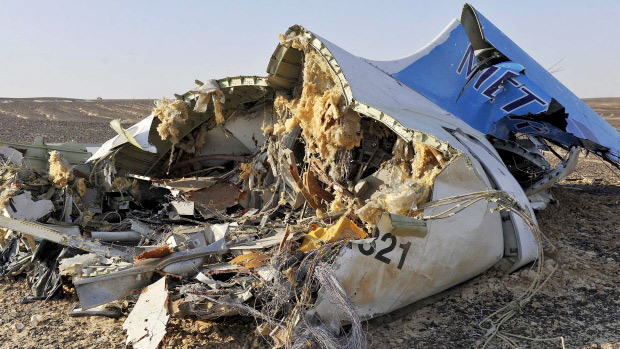
One thing that usually unites all conspiracy theories is that they lack logical coherence. At the broadest level, it is doubtful that so many entities would be conspiring to be against you specifically Similarly, it is often doubtful whether others would go to such extreme lengths to put you down. It is unfortunate that both are operational in modern-day Egypt after the downing of a Russian aircraft. Yes, it's apparently being called a Western plot to defame Egypt's leadership. While even Russian authorities have now concluded that the plane was brought down by a bomb, Egyptian ones are still in denial:
Instead, Mr. Sisi and his supporters have shut down any discussion of possible terrorism, and rallied patriotic passions against the idea, portraying Western alarms as a plot against Egypt. “Of course we are talking about a conspiracy,” Dr. Alaa Abdel Wahab, an adviser to the minister of tourism, said Thursday in a telephone call to a morning talk show. Dr. Wahab argued that Western governments were trying to harm Egypt because they resented “the popular support for President Sisi.”
This sort of pattern has a long history:
Egyptian officials have invoked similar themes for decades in response to crises, from Egypt’s defeat in the Arab-Israeli War in 1967, blamed on the United States and Britain, to the deadly floods this fall in Alexandria, blamed on the plugging of sewers in the city by Islamists.

But with so many jobs at stake — and so many other countries watching the investigation — some say the government’s response to the crash may be testing the limits of Egyptians’ willingness to suspend their criticism and to unite against an ambiguous foreign threat. After Mr. Sisi’s bellicose talk of going without food, “people are just making fun of him,” said Hisham Kassem, a veteran Egyptian journalist sympathetic to the president. “I am disappointed.”

The government has approached every crisis as a shadow war against foreign enemies, Mr. Kassem said, perhaps reflecting Mr. Sisi’s years in military intelligence before he led the ouster of President Mohamed Morsi of the Muslim Brotherhood two years ago. “The president and all of his advisers are from the security services,” Mr. Kassem said, but “if you are going to handle a P.R. crisis using the security services, you are going to bungle.”
If you devote even a smidgen of thought to the matter, it is easy to poke holes in this conspiracy. The most basic one is: if Egyptian leaders hate vile, conspiring Westerners so much, then why do they lament the loss of Western tourists? Theirs is Eddie Murphy logic all over again: kill the white people / but buy my record first. Except here it's...screw the white people / but visit my tourist traps first.

Should you really hate Europeans and all the rest, well, perhaps you shouldn't attempt make a living catering to their tourists to begin with.

PS: Also see Rob Brotherton's new book on the Psychology of Conspiracy Theories that is rather more forgiving of their logical inadequacies as a byproduct of cognitive limitations.

French-Built Warships for Russia: Sold to Egypt

♠ Posted by Emmanuel in ,,, at 9/28/2015 02:50:00 PM
From scaring Russia's neighbors to fighting ISIS: a new role for the star-crossed Mistral-class warships.
I almost forgot to post about the continued travails of warships originally built by France for the Russians. With the outbreak of hostilities over Ukraine, the French government canceled the sale since the Mistral amphibious assault ships could be used to support Russian--how do we say it--excursions in neighboring countries. These warships are helicopter carriers that can also land troops during...adventures in others' territories. So, they have sat in French ports for a long time over what Russia will use them for nowadays. That is, until just recently when they were instead sold to Egypt of all countries:
Egypt will buy two warships that France originally built for Russia but refused to deliver because of Moscow’s role in the conflict in Ukraine, French President François Hollande said...Egypt will pay €950 million ($1.06 billion) for the two Mistral class warships, French defense officials said, speaking on condition of anonymity. Russia agreed to pay €1.2 billion for the Mistrals, but the officials said the two contracts aren’t identical: Notably, France was supposed to help Moscow build future models of the ships in Russia. Transferring that capability isn’t part of the deal with Egypt, the officials said.

The vessels would add powerful capabilities to Egypt’s military arsenal, as President Abdel Fattah Al Sisi battles Islamist militant threats to his government in places such as the Sinai Peninsula and from across Egypt’s western border in Libya. For France, the deal closes an uncomfortable chapter in Mr. Hollande’s presidency that forced him to choose between cultivating Russia as a major customer of the French defense industry or severing ties because of Moscow’s support for pro-Russian rebels in Ukraine.
Actually, Egypt and other Arab governments have been moving closer to the Europeans for supplying their military equipment requirements. You can probably chalk that down to the United States' warmer relations with Iran. Plus, the US hasn't exactly cottoned up to the current Egyptian government which took the place of an elected (albeit Islamist) regime:
The accord is also a further sign that Egypt and other Arab governments have been moving to reduce their dependence on the U.S. as a military supplier. France has been eager to step in. Earlier this year, Egypt bought 24 Rafale fighter jets, made by France’s Dassault Aviation SA, AM -1.59 % for around €5 billion.
Using the warships for fending off ISIS seems to be a much less controversial purpose to put these warships to instead of, say, threatening former Soviet satellites (and Baltic states too). Moreover, selling the vessels to a Middle Eastern authoritarian regime instead of another in Europe hardly represents a step forward in rewarding "good governance."

At the end of the day, though, the ships had to be paid for somehow, in this instance by a (marginally) less odious buyer.

You Pretend to Work, Putin Pretends to Pay You

♠ Posted by Emmanuel in , at 8/25/2015 01:30:00 AM
The "resilient" Russian job market.
The self-deprecating joke among the lumpenproletariat in the USSR near its end was that they pretended to work, while the Soviet Union pretended to pay them. I suppose that not much has changed with the supposed end of the Communist era: as oil and commodities prices have fallen, so too have the fortunes of today's Russia. Then, as now, there remains an urge to put on a brave face in front of the [insert your choice of usually foreign villains here] who are blamed for its misfortunes.

Hence the curious case of rosy employment figures in today's Russia amid a commodities bust:
Soviet workers knew they got a raw deal, and they played along. “We pretend to work, and they pretend to pay us,” went a popular saying. About a million job gains into Russia’s recession, the bargain still holds, with salaries plunging at a pace unprecedented under President Vladimir Putin. Data set to be released this week will probably show unemployment holding at less than half the rate in the euro region, which has had nine consecutive quarters of growth. It’s a sign of a tacit deal that has ravaged productivity and limited economic flexibility.
The way to buoy Russian employment figures is to disguise underemployment, abetted by some of the toughest laws for letting workers go:
With Russia in the clutches of an economic crisis as domestic demand implodes after a currency collapse and sanctions over Ukraine, the jobless rate is less than it was before the neighboring country’s conflict erupted last year. Instead of easing the consumer plight, the stretched labor market betrays an economy geared toward ensuring social stability and ill-prepared to meet the challenges of an aging and shrinking workforce, content to punt the issue until the next crisis. “Choosing between radical reforms and stability, the government will favor stability,” said Vladimir Tikhomirov, chief economist at BCS Financial Group in Moscow. “That’s a Soviet-like choice--to conserve the current system with its problems, though to provide stability.”

During communism, unemployment was all but outlawed. What Putin has now are some of Europe’s most restrictive labor rules and employers still stinging from the dressing-down received for idling plants during the last recession six year ago. Protections against firing individual workers are among the strictest in Europe, according to the Organization for Economic Cooperation and Development.
The resulting resilience of the labor market is doing little to make up for a plunge in people’s spending power, reinforcing vulnerabilities that include the lowest productivity in Europe. Employers are opting for salary cuts, part-time work and unpaid vacations.

During the crisis in 2008-2009, unemployment peaked at 9.4 percent. While it has now risen from a record low of 4.8 percent a year ago, the effect is less dramatic. The rate grew to 5.5 percent in July from 5.4 percent a month earlier, according to the median of 18 estimates in a Bloomberg survey. The statistics office may report the data on Wednesday.
I guess old habits die hard. The hammer and sickle never really went away. 

Gold & Euros: Is Russia's Central Banker Really That Dumb?

♠ Posted by Emmanuel in ,, at 7/31/2015 01:30:00 AM
For everything there is a season, a time for every activity under heaven - Ecclesiastes 3:1.
If you had loaded up on gold and euros during, say, the pre-global financial crisis time frame, I suppose you'd have done well as both increased significantly in value. China's voracious demand buoyed gold and the euro as well as the commodity supercycle approached its peak. However, in the run-up to a Federal Reserve rate hike--the first in a long time since rates were slashed to zero during the aforementioned financial crisis--you'd be a fool to go long on gold and euros. Unfortunately for Russia, that's exactly what its central bank governor Elvira Nabuillina has done:
Bank of Russia Governor Elvira Nabiullina picked the wrong time to load up on gold and the euro. The miscalculation means Russia is now down $200 million in its quest to raise international reserves, an effort it suspended Tuesday amid a rout in the ruble, after it spent about $10 billion on foreign currency since mid-May.

What the 51-year-old central banker was up against is this year’s slide of 9.5 percent in the euro against the dollar and gold’s 8.4 percent tumble in 2015. Both declines hurt because Russian reserves last year contained more euros than dollars for the first time since 2008 and its bullion hoard has tripled since 2005.

“It’s very strange for me that no one has yet put a question to the central bank over the results of its reserves management,” Alexander Losev, chief executive officer at Sputnik Asset Management in Moscow, said by e-mail.
Losev, in a democracy in name only, no one dares question the actions of Putin acolytes like Nabiullina.
Ravaged by a crash in oil prices and almost $90 billion in interventions to rescue the ruble last year, Russia’s reserves were at $358.3 billion on July 24, down almost 30 percent from last year’s peak. The central bank shifted to a free-floating exchange rate ahead of schedule in November as Putin said the country won’t “mindlessly burn up” reserves to defend its currency.
However, Leonid Bershidsky suggests that Russia's actions are not as stupid as they may seem if these actions are seen from a political rather than an economic lens:
The dramatic drop in the price of gold makes Russia look like a classic sucker: As the price went down, it expanded its gold reserves. The Russian central bank is getting punished for betting on gold rather than U.S. assets as the Cold War seemed to restart last year. But it's not that simple -- the gold that Russia's buying is domestically produced and paid for with devalued rubles...

One reason Russia's otherwise highly competent central bankers did this was political. Last year, after the Crimea invasion, the fear of Western financial sanctions made them dump U.S. treasuries, reducing holdings to $86 billion in December from $126.2 billion in February, and seek a safe haven in neutral, albeit unfashionable gold. It bought 171 metric tons, or 5.5 million ounces, in 2014.
The gold lobby has been particularly strong in pushing their cause wit h the central bank:
The reason for this strange behavior lies in the dependency of Russia's gold industry on central bank purchases. Last year, according to the Moscow-based Gold Mining Union, Russia became the world's second-biggest producer of the precious metal, extracting 288 tons. Producers are not allowed to export their output directly. Instead, they have to sell it to banks, which are authorized to deal with foreign buyers and the Russian central bank.

Last year, European banks bought 76 tons -- they have long-standing trading arrangements with state-owned Russian banks, the biggest buyers on the domestic market -- but the central bank dwarfed that, snapping up 59 percent of all output.

At the end of February, the Gold Mining Union, worried that its members' biggest customer was showing no interest, wrote a letter to the central bank, asking it to expand purchases by 30 percent this year compared with 2014 as compensation for sharply increased interest rates (the key rate had gone up to 17 percent in December to prop up the free-falling ruble) and to balance the domestic market. In response, deputy governor Dmitri Tulin promised to keep buying but said the central bank "considers it impossible to replace all domestic market buyers including domestic industries."
So, there may be an element of the central bank being held hostage by special interests, i.e., the gold lobby. That said, Bershidsky's version does not fully explain why the Russians have swapped large amounts of dollar- for (depreciating) euro-denominated assets. I think it's partly both behind Russia loading up on assets of diminishing value: special interests making themselves known and plain old wishful thinking.

Besides, I do not fully understand why Russia would consider holding euros rather than dollars "safer" from a security standpoint when the Europeans have been as keen on hitting Russia with sanctions as the Americans. Go figure.

I [Heart] Comedy: Russia 'Rescuing' Greece; Other Idiocies

♠ Posted by Emmanuel in ,, at 6/19/2015 02:44:00 PM
"Psst...Tsipras! I've got you covered if you really want to finish off Greece."
I am utterly entertained by the idea that Russia can help bail out Greece. True, the so-called Greek "socialist" government full of Burberry scarf-wearing and Paris Match magazine-hogging amateurs threaten Western European powers by cottoning up to Vladimir Putin. Still, the idea of Greece becoming a Russian satellite is definitely among the more amusing Syriza rants including asking for WWII reparations from Germany and styling the IMF as a criminal organization. (Remind me to try that last one on people I borrow money from in the future.)

Let's start off with Foreign Policy and its usual sort of unsubstantiated sensationalism about Russia coming to the rescue of Greece:
So far, Russia has largely stayed out of the European financial crisis. But the Greek conundrum provides a tasty incentive to dive in. If Moscow does, it would transform a five-year economic crisis into a geopolitical one. “You don’t want Europe to have to deal with Greece, who is a member of NATO, all of the sudden cozying up to Russia,” Sebastian Mallaby, a senior fellow for international economics at the Council on Foreign Relations said Thursday.

Ahead of the Friday meeting, Russian Deputy Prime Minister Arkady Dvorkovich said he “cannot comment on specific decisions” when asked if Moscow would rescue Athens.
The reliably yellow Daily Telegraph loves reheating this sort of Cold War nonsense:
A communist Greek revolution today may seem a laughable idea. Just as with the Baltic, we like to imagine that the West’s ideological victory in the land of tavernas and so many British summer holidays is irreversible. But it is not. Earlier this year Russia signed an agreement with Cyprus to give Russian naval vessels access to Cypriot ports. On the beaches of Greece’s islands this year you will hear Russian everywhere. The West’s sphere of influence cannot be taken for granted, neither in Greece nor the Balkan peninsular which it caps. We must not be complacent. 
But, back to the real world. Fantasy-loving hacks aside, let's take a look at some hard numbers. Even with upgraded forecasts, the one-trick Russian economy--dependent as it is on energy exports--will shrink a lot this year and barely grown next:
The World Bank has raised its GDP growth forecasts for Russia "to reflect a further stabilization of global oil prices". It lifted its forecast for 2015 to a contraction of 2.7 per cent, up from the contraction of 3.8 per cent it predicted in April. In addition, it has bumped up its growth forecast for 2016 to 0.7 per cent from the decline of 0.3 per cent it forecast a month ago.

Oil prices have stabilised and recovered slightly this year after plummeting in the second half of 2014. The rouble has followed a similar trajectory, falling hard in the second half of 2014 as oil prices dropped and the west imposed sanctions on the Russian economy for its role in the conflict in Ukraine, before the currency staged a recovery in the first half of this year.
Greece's total public debt amounts to some EUR 305 billion, of which it owes Europe's crisis fighters EUR 195 B in emergency funding incurred since 2010. If Greece were truly "going socialist," they would of course choose to repudiate all its debts to European lenders post-crisis or, at the very least, give them a major haircut. You must be joking if the Greeks are counting on the Russians to pay the hated Western Europeans back.

So, the real question then is whether Greece becoming a Russian satellite would compensate for it being subjected to the same sorts of economic sanctions that Russia now faces as a result of debt repudiation or unilaterally erasing between, say, half to two-thirds of its debts. Actually, trade with Russia is around 5% of Greece's total trade--most of which are energy and raw materials. Unless Greece can import a wide range of everyday products from Russia, alienating Western Europe won't solve matters. That Russia itself isn't importing a whole lot of useful things right now it can re-export to Greece doesn't bode well for Greece following the de-globalization route.

Bottom line: Sure Greece and Russia can get together to thumb their noses at the West, but it's an empty gesture. Nobody doubts that Russia is worse off now after going rogue, and Greece is more than welcome to follow its example. But, if it thinks Russia can "replace" the EU as a major sponsor, think again. Russia doesn't have a wide range of goods to sell to Greece. Nor would Russia spend any considerable amount of money bailing out Greece to benefit Western powers who are its ultimate foes.

As the saying goes, how can Russia help Greece when it can't even help itself?

Groovy Kind of Customs Union: Kazakhstan v Russia

♠ Posted by Emmanuel in , at 5/01/2015 01:30:00 AM
Screw Russia, "Buy Kazakh."
We haven't had a trade-related post in quite some time now, so I have one for you right here. And what a story it is! In fact, it's my early candidate for 2015's dumb-but-true story in a year not exactly lacking for logically-challenged events. With apologies to Phil Collins, ever heard of an internally discriminatory free trade agreement? Neither have I--until now. It seems Kazakhstan has been heavily promoting a "buy Kazakh" drive immediately after a customs union with Russia came into effect at the start of the year.
Shelves in supermarkets across the ex-Soviet republic of Kazakhstan teem with bright signs championing locally-produced goods over Russian alternatives.The push to buy local is part of the government's "Made in Kazakhstan" initiative to support domestic producers struggling to match cheap imports from neighbouring Russia, which have enjoyed the competitive benefits of the sanction-battered ruble's dramatic slide in value.

The campaign was launched despite Kazakhstan and Russia having entered the Eurasian Economic Union earlier this year -- the trade bloc backed by both countries' authoritarian presidents. The blue "KZ" labels of the Buy Kazakh campaign appear to be achieving their objective with some patriotic shoppers...

Authorities in Astana have recently slapped bans on fuel and foods -- from chocolate to pork products -- imported from its strategic Russian partner, citing alleged sanitary breaches [...] Following complaints by Kazakh confectionery giant Rakhat that its sales have plummeted 20-30 percent this year due to Russian competitors selling their products up to 60 percent cheaper, Astana moved to bolster the company's fortunes this month by banning Russian chocolate.

Prohibitions are also roiling fuel products after Kazakhstan suspended imports for 45 days on March 5, citing a domestic surplus. Last week the Kazakh government renewed restrictions on Russian diesel imports, with local refiners standing to benefit as farmers prepare for the spring sowing season.
Not to be outdone in "liberalizing trade," the Russians have been blocking their Kazakh counterparts with trade barriers of their own as both sides deny that anything is amiss:
Moscow has responded with tit-for-tat measures as both government seek to protect affected businesses.

Officials in both countries deny problems in bilateral relations, with Putin's spokesman Dmitry Peskov recently calling talk of a trade war an "exaggeration". Kazakhstan's Deputy Economy Minister Kairbek Uskenbaev said the bans concerned "specific companies," and would not damage the country's "most friendly" relations with Russia.
With "free trade agreement partners" like these, who needs protectionism?

Cold War II, Really: EU Sues Gazprom for Antitrust

♠ Posted by Emmanuel in ,, at 4/23/2015 01:30:00 AM
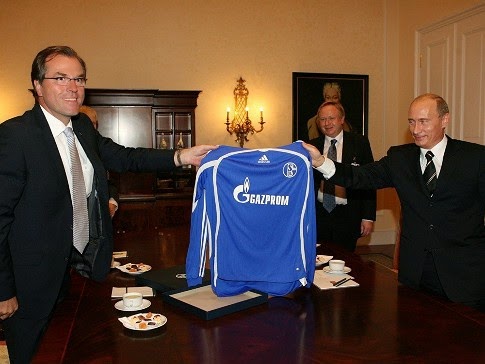
Is it just me or is Schalke 04 having Gazprom as its sponsor similar to having an "I [HEART] SATAN'S WORKS" jersey?
 I had rolled my eyes over the hyperbole about the current freeze in Russia-Western relations being "Cold War II"--until now, that is. Activist EU regulators have long been accused of being busybodies: first with the Microsoft case (which resulted in much ado about nothing) and now, interestingly enough, Microsoft prodding the EU to do something about Google's dominance in cell phone operating systems via Android and its bundling of various apps. To me it's an open-and-shut case of Microsoft's OS being uncompetitive, but hey, I am not an EU competition regulator.

Something I am fairly assured of is that Google will copy the Microsoft playbook in wearing down EU regulators and eventually making token changes. (USA Today's Michael Wolff offers excellent commentary on the upcoming EU v Google case.) However, a reasonable response is not what I'd expect from another case EU regulators are making against the Russian gas giant Gazprom. Having applied all sorts of sanctions that have resulted in doubts about the financial viability of Russian, mostly state-owned firms, to survive without access to Western capital markets, they are now going for Russia's throat.

If Gazprom is not allowed to conduct normal business activities in Western Europe, that is the absolute last straw. What else recourse will Russia have? Other markets are not readily accessible without pipelines, and LNG facilities that will allow Russia to ship gas overseas are not yet fully operational. Go ask the French. Anyway, onto the story:
The European Commission (EC) has charged Gazprom with abusing its dominant market position in Central and Eastern European gas markets. The Commission said its preliminary view was that the Russian energy giant was breaking EU anti-trust rules. It added Gazprom may have limited its customers' ability to resell gas, potentially allowing it to charge unfair prices in some EU member states.

Gazprom rejected the Commission's objections, calling them "unfounded". "Gazprom strictly adheres to all the norms of international law and national legislation in the countries where the Gazprom Group conducts business," the company said in a statement...Brussels began investigating state-controlled Gazprom three years ago, but Moscow says the Commission's allegations are politically motivated.
Yeah, sure, Gazprom. I am sure your activities are not "politically motivated" in the least[nudge-nudge, wink-wink].
The EU's new anti-monopoly chief, Margrethe Vestager, said the Commission had found that Gazprom "may have built artificial barriers preventing gas from flowing from certain Central European countries to others, hindering cross-border competition. "Keeping national gas markets separate also allowed Gazprom to charge prices that we, at this stage, consider to be unfair. "If our concerns were confirmed, Gazprom would have to face the legal consequences of its behaviour." Brussels' competition authority has the power to impose fines of up to 10% of Gazprom's global turnover.

The Commission questioned the formulae the energy giant used to come up with the different prices at which it sold gas to individual countries. "Gazprom's specific price formulae, which link the price of gas to the price of oil products, seem to have largely favoured Gazprom over its customers," it said.

The Commission said that, in its preliminary view, Gazprom was hindering competition in the gas markets in eight Central and Eastern European member states - Bulgaria, the Czech Republic, Estonia, Hungary, Latvia, Lithuania, Poland and Slovakia. Russia supplies about a third of the EU's gas requirements, with half that amount going through pipelines that cross Ukraine.
When cornered, Russia will lash back...and boy does it have a lot of ways to do so. On one hand, I am fairly certain that Gazprom has all sorts of anti-competitive practices. On the other hand, the timing of this case with arch-regulator Margethe Vestager at the controls is most unfortunate and suspicious.

I fear this episode won't end well, to be honest. 

Greece and Russia's Fruit 'n' Veg-for-Gas Deal (Sort Of)

♠ Posted by Emmanuel in ,,, at 4/10/2015 01:30:00 AM
Not quite the Commanding Heights: Citrus for the Putin.
A lack of export diversity characterizes any number of economically troubled nations, and that holds for Greece and Russia. On Tuesday, Greek PM Alexis Tsipras took his neo-communist stylings to Russia to meet with President Vladimir Putin who openly wishes that the Soviet Union were still around. Actually, what transpired was not the Marxist-Leninist love-in some Western commentators were expecting, but both protagonists making limited moves to thumb their noses at Western (European) powers-that-be: Russia cannot splurge on foreign aid for Greece with energy prices this low, while Greece cannot cut off its EU lifeline absent any other major creditors.

On the part of Russia, it said it would consider lifting sanctions on Greece's fruit and vegetable exports in exchange for more cooperation on energy matters:
Russia was among Greece's leading trade partners before sanctions on its energy industry and Greece's own economic difficulties reduced trade between the two countries by 40%.  Mr Putin called for trade relations to be restored, and said the two leaders had discussed "various ways of co-operating, including major projects in energy".

"Under these plans, we could provide loans for certain projects," he said, adding that it was not a question of aid. One of those plans is for a pipeline called "Turkish Stream", to channel natural gas from the Turkish-Greek border into Greece.
So there were many vague, unspecified mutterings about future cooperation. Big deal. Actually--and this is why the post has the "sort of" qualifier--the mooted pipeline is something of a pipe dream at present with the EU unwilling and the Russians unable to fund it. Moreover, its capacity would be well in excess of what the downstream countries could use:
The Budapest communique underlines that it's a statement of “political intent only, and that further exchange of views and dialogue is needed”. The Turkish minister, Bozkir, told Hungarian media that “after the project’s feasibility studies are over, we’ll be able to give it a more qualitative estimate”.
The caveats come amid Turkish scepticism that Turkish Stream will be built because Russia lacks money and because its capacity exceeds the region's requirements. “Frankly, nobody in Turkey is taking it very seriously,” a Turkish source told EUobserver shortly after Putin unveiled Turkish Stream in Ankara last year.
So it's a lot of bluster in the meantime meant to create a wedge between wealthier EU states and those that are harder up like Greece to possibly get some breathing space for Russia when sanctions against it come up for deliberation again:
Russian leader Vladimir Putin last year in Ankara said he'll build Turkish Stream, a pipeline under the Black Sea to Turkey, after the EU blocked construction of South Stream, a pipeline under the Black Sea to Bulgaria, Serbia, and Hungary. He said Turkish Stream will terminate at a new gas trading hub on the Greek-Turkish border...

Russia is courting Cyprus, Greece, Hungary, and Italy as potential veto-wielders on EU plans to extend economic sanctions before they expire in July. The Greek PM, Alexis Tsipras, is to meet Putin in Moscow on Wednesday, following earlier Putin meetings with Cypriot, Hungarian, and Italian leaders.

Dmitry Peskov, Putin’s spokesman, told the Tass news agency on Tuesday that Russia might exempt Greece from Russian sanctions on EU food exports. “We co-operate in agriculture, and we can fix a decline in trade in this sphere linked to the forced introduction [by Russia] of retaliatory measures”, he said. Nikolay Fyodorov, Russia’s agriculture minister, told Tass that Cyprus and Hungary might also get exemptions.
And before I forget... to the vegatapolitics [sorry]. Trade figures indicate that Greece's exports of agricultural products have fallen significantly at a time it can least afford them due to Russia imposing counter-sanctions on EU members like Greece. From Eurofruit [!]:
In the January-to-October period last year [2014], Greek exports of fresh fruit and vegetables fell by 4 per cent in value terms to €765m compared with the same period in 2013. This despite an increase of around 8 per cent in overall volumes exported. Unable to enter the Russian market, Greek produce has instead been shipped to countries including Serbia, Macedonia and Albania, at considerably reduced prices.

According to Freshmarket.eu, exports of Greek fruit and vegetables to Russia during the January-to-October period last year fell by 31.1 per cent in volume terms and 35.1 per cent in value terms. According to Moscow, although the country is keen to soften the ban’s impact on Greece, a full Greek exemption could be impossible due to global trade rules.
All things considered, the Tsipras-Putin was much ado about not much of anything. At most, we will see a partial lifting of limits placed by Russia on agricultural exports from Greece in exchange for the gas flowing slightly more freely to Greece. That's all, really.

Nuclear Option: UK Says Kick Russia Out of SWIFT

♠ Posted by Emmanuel in ,, at 2/26/2015 01:30:00 AM
To be cut off from SWIFT is to be cut off from international finance.
Here we go again: a few months ago I wrote about Western powers having designs on kicking Russia out of the Society for Worldwide Interbank Financial Telecommunication system or SWIFT. Since it handles most of the international transfers for trade, investment, and simply moving money around, SWIFT is a must-have for conducting commerce in the modern world. Yes, Russia has actually forecast a scenario wherein it would be kicked out of SWIFT due to its various shenanigans in Ukraine (see the link above). However, coming up with a financial transfer system of its own is not exactly viable at present since an interbank system of one nation doesn't quite cut it for obvious reasons.

Citing the perceived effectiveness of bringing Iran back in line after cutting it off from SWIFT, the British are now mulling the EU doing the same to recalcitrant Russia since SWIFT is based in Brussels, Belgium:
Excluding Russia from the SWIFT banking system should be an option in lieu of sanctions if a truce in Ukraine is not respected, British Prime Minister David Cameron said. Russia last month said it would retaliate strongly if it were to be cut off from SWIFT, the international financial industry's secure messaging system that facilitates transactions. 
Speaking to a parliament committee on Tuesday, Prime Minister David Cameron vowed that Britain would push for tougher sanctions against Moscow if a tattered truce between pro-Russian rebels and Ukrainian forces falls apart. "I would hope that the European Union collectively would respond very robustly with new sanctions, including so-called 'tier three' sanctions, really hitting the economy of Russia," Cameron said.
British PM Cameron's argument is that if Russia wants to behave like a rogue state, then it might as well not participate in the global financial system (an estimated 90% or more of Russian banks' international transactions are coursed through SWIFT):
"But were that not possible then, of course, we should look at other avenues as well -- obviously looking at the SWIFT banking issues is a big decision but there is a logic for it."

"If Russia is going to leave the rules-based system of the 21st century, then they have to start thinking about whether it's going to be in the 21st century system when it comes to investment, when it comes to banking, when it comes to clearinghouses."
It is, of course, easy for the UK's leader to suggest this course of action since it does not rely much on Russia for natural gas supplies. Unfortunately for him, the real Europeans--those on the mainland using the euro currency--are quite reliant on Russia for gas supplies. The UK relies on Russia for less than ten percent of its gas needs; Belgium, for instance, relies on Russia for over 40%. With 30% or so of total EU gas consumption met by Gazprom alone, Russia has a fairly big gun whose trigger it can pull on the EU if push comes to shove. You don't have to be a genius to figure out that Russia will wield the gas weapon for leverage over this matter.

Bottom line? I would be surprised if the EU even considers cutting Russia out of the Belgium-based SWIFT since it would probably mean being cut off from Russian gas supplies in turn. Unless relations deteriorate to such an extreme extent, that is.

Ruble & Exodus from Russia of the Stans' Migrants

♠ Posted by Emmanuel in , at 2/24/2015 01:30:00 AM
Only in Moscow is Tajikistan so far away.
Here's another one of those interesting side stories to Russia's ongoing economies woes. In the past, workers--both documented and undocumented--used to flock there from the Central Asian republics or the "Stans" in search of work. You should be familiar with these: Kazakhstan, Kyrgyzstan, Tajikistan, Turkmenistan, and Uzbekistan. The factors which drove this migration are also well-known: they used to be part of the USSR after all, wages in Russia were comparatively higher, and employment opportunities back home were fewer. However, a new AFP article implies that workers from the Stans are fleeing Russia as the combined weight of Western sanctions, diminished energy prices, higher inflation and the loss of work opportunities for migrant workers are keeping them home in greater numbers:
"Almost 30 percent of the workers who left to spend New Year's as usual with their families in Uzbekistan or Tajikistan have not come back," said the head of a street cleaning company, who asked not to be named. The deputy governor of Saint Petersburg, Igor Albin, said recently that the city had lost half the migrant workers who do this type of manual labour.

Migrants from the ex-Soviet states in Central Asia used to flock to Russia to work as street sweepers, gypsy cab drivers or restaurant cleaners. Even the low wages seemed better than conditions back home. But many are returning to their countries as the Russian economy is choked by crippling Western sanctions over the Ukraine crisis and plunging oil prices. That has caused the ruble to lose half its value against the dollar, hitting migrants' paychecks hard.
It is not only economics but also politics keeping away more Stan residents away as migration officials have become stricter with migrant workers. (I would attribute this to natives becoming more hostile to migrants when they themselves cannot find jobs at home):
Almost three million people from Tajikistan, Kyrgyzstan and Uzbekistan live legally in Russia, while many more are there below the radar of the authorities. They are mostly unskilled workers who are paid off the books. The money they send to their families back home accounts for up to half their countries' gross domestic product. Galloping inflation in Russia is also eating into how much Central Asian workers can send home, and once the weaker rubles are converted into local currency their remittances are now worth much less.

She said that out of the current average monthly wage of 30,000 rubles ($460), migrant workers are no longer able to send more than $200 home each month. "It's not worth living a very harsh life in Saint Petersburg for such a meagre sum."

Russia has also increased the burden of red tape and fees, recently introducing a compulsory test on Russian language and history as well as new permits from the migration service. 
Tajik authorities concur that the numbers of those leaving from Russia are declining, too:
In Tajikistan, the poorest ex-Soviet country, the authorities confirmed that many migrant workers have returned from Russia. An immigration service official, Anvar Boboyev, told AFP that the number of Tajiks now leaving to work in Russia is half that of the same period last year. In January 2014, more than 60,000 Tajiks travelled to Russia, while last month it was only around 30,000, he said.

The Tajik government has vowed to create 200,000 jobs this year but experts say it will be far too little to meet the demands of returning migrants. Between 700,000 and one million Tajiks are thought to work in Russia.
Ultimately, that's probably setting the lower bound to how much migration from the Stans will slow: as bad as things are in Russia, they may be worse in the various Stans.

How the Ruble Became This Month's Best Currency

♠ Posted by Emmanuel in , at 2/23/2015 01:30:00 AM

The ruble rises again (somehow).
So much for the BRICs jibba-jabba: Russia has been downgraded back to junk status by Moody's, from the last investment-grade rating (Baa3) to the highest non-investment-investment grade rating (Ba1). This has prompted accusations of sinister machinations by the West [surprise!] from Russian authorities. However, it may indeed surprise you to know that, despite the downgrade, the ruble has actually been the best-performing currency of February 2015. How did this surprising performance happen? Also, is it for real? The answer is that the Russian government has asked the "help" of commodity-exporting firms to buoy the ruble by immediately changing foreign exchange earnings--dollars, euros, etc.--into the local currency:
Russian exporters are piling up rubles after President Vladimir Putin’s government asked their help in supporting the currency last year. OAO GMK Norilsk Nickel, Russia’s largest miner, and steelmaker PAO Severstal are among exporters converting more of their dollars and euros into local currency, according to company filings and people with knowledge of the situation. It’s a policy encouraged by the government to help stabilize the ruble after its 47 percent plunge last year.

As the currency crashed, Putin called on Russian companies to coordinate foreign exchange deals with the central bank. That some of the country’s largest businesses appear to be complying shows the growing influence of the state over the economy as Russia contends with lower oil prices, currency devaluation and sanctions. Russia’s central bank said it monitors currency sales by companies, though sets no targets for transactions. 
Ah, gentle persuasion from today's Russian government, i.e., they do not really have a choice lest they be ostracized by Putin and Co. With most of the current set of raw material-exporting oligarchs being Putin-friendly characters to begin with since they would have been long gone Khodorkovsky-style if not, there was not much persuasion needed. Rather, what's eyebrow-raising is that this artifice seems to be working so far:
“The serious work with exporters was important in December and the beginning of January when the currency market was very narrow and the volatility was high,” the bank’s press service said on Thursday in response to questions from Bloomberg. “Now the market is recovering and is not that dependent on the exporter revenue sales.”

The ruble has been the world’s best-performing emerging market currency this month, gaining 12 percent versus the U.S. dollar [my emphasis]. “Export revenue sales, which increased since the end of last year, give significant support to ruble and they are also one of the major reasons for the ruble’s plunge slowing down,” [said] Anton Tabakh, a director at RusRating, a Russian credit-rating firm.
Norilsk, controlled by billionaire Vladimir Potanin, sold foreign currency for about 30 billion rubles ($483 million) in cash since the end of December, after the government encouraged companies to switch export earnings into local currency, two people with the knowledge of situation said, asking not to be named because the information isn’t public.
To be sure, it's partly due to oil prices not dropping any further from the $50/bbl handle and the Ukraine crisis being tamped down somewhat. That said, "Russian ruble, February 2015's best-performing currency" takes some time getting used to.

Bleeding Forex Reserves: Russia & the 'Fragile Five'

♠ Posted by Emmanuel in ,,,,, at 1/19/2015 01:30:00 AM
The 90s "connected" developing countries through contagion . How about now?
Whether through coincidence or not, this article on developing countries quickly losing foreign exchange reserves from the Nikkei Asian Review--fast becoming my Asian periodical of choice after the demise of the late, lamented Far Eastern Economic Review--comes from an issue whose cover story is..."Living With Terror"[!] Having been a onetime foreign exchange trader during the height of the Asian financial crisis in a crisis-affected nation, I can sympathize with the feeling of being subject to fear-inspiring events I'd much rather avoid.

But the day of reckoning has come for these nations--again for a handful like Brazil, Indonesia, Russia and Thailand that were particularly hard-hit by the events near the turn of the millennium. There's an unmistakeable sense of deja vu for developing countries. Like in the aftermath of the Asian financial crisis, commodity exporters are taking it on the chin as the world economy slows down while the US seemingly does better. The combination of a developing world slowdown and dollar strength was bad then and is ominous now. A surefire sign of distress is of the aforementioned developing countries drawing down foreign exchange reserves to defend their currencies from further depreciation (the opposite of the Swiss situation in which excessive strength is the problem):
The foreign currency reserves of Brazil, Russia and four other big emerging countries fell 6% in the second half of 2014 from the preceding six months. The fall came as the countries' monetary authorities attempted to defend their home currencies in the foreign exchange market.

The decrease was the second largest since the 17% plunge in the latter half of 2008, when the global financial crisis led to emerging nations' currencies being dumped. The values of those currencies have been spiraling downward due to plummeting crude oil prices and increased dollar buying now that the U.S. Federal Reserve appears poised to raise interest rates.
Yet while the drawdowns on foreign exchange reserves have been substantial, so are the reserves these countries accumulated during the years after the Asian financial crisis. They feared a rehash during troubled times, and it appears the rainy days they saved for are upon us:
The total foreign reserves of Russia and the so-called fragile five -- Brazil, India, Indonesia, South Africa and Turkey -- stood at $1.36 trillion as of the end of December, down $92.8 billion in six months. The decline in the latter half of 2008 was $218.1 billion.

Russia suffered the largest decline, with a decrease of $89.7 billion, or 18%. Turkey recorded a 5% decline; Brazil also logged a slight drop. The Turkish lira and the Russian ruble plunged to record lows against the dollar in December, while the Brazilian real hit its lowest point in roughly nine years. The South African rand dropped to a roughly six-year low, the Indonesian rupiah to a 16-year low and the Indian rupee to a one-year low.

It is unlikely, however, that these six countries will run out of foreign reserves anytime soon; they have expanded these reserves by roughly 200% in the past decade. The market largely expects these countries will not spark a currency crisis or go into default -- at least not for the time being. Thailand, Indonesia, South Korea and even Russia experienced currency and foreign reserve crises in the 1990s. Monetary authorities have apparently learned a lesson from that era.
It's time to hang tough, then. Judging from their leadership, I'm relatively more sanguine about the prospects of India and Indonesia, but you never know how these things pan out.

Star Wars: USA vs Russia Aboard the ISS

♠ Posted by Emmanuel in at 1/05/2015 01:30:00 AM
Geopolitics (astropolitics?) 400 km above Earth.
Space, the final frontier. These are the very last few voyages of American astronauts to the International Space Station (ISS)[sic]. As Russia and the United States bash each other in every field of international endeavor, it was perhaps inevitable that cooperation in manned space flights would be another victim. Before I get to that, however, some background on what's coming up in 2015. The most recent issue of TIME features NASA's latest experiment in how living in space for an extended period causes changes human physiology. To accomplish this experiment, they are sending astronaut Scott Kelly to stay aboard ISS for one year beginning in March, while his identical twin brother (and erstwhile astronaut) Mark Kelly will serve as the "control" specimen. What is interesting in this day and age of mutual US/Russian distrust is that Russian cosmonaut--this term has been used since the Soviet era and has stuck ever since--Mikhail Korienko will be assisting in the experiment:
But most of all, Mark, 50, knows Scott, 50—which is how it is with brothers, especially when they’re identical twins, born factory-loaded with the exact same genetic operating system. The brothers’ connection will be more important than ever beginning in March, when Scott takes off for a one-year stay aboard the space station, setting a single-mission record for a U.S. astronaut.

Scott will be partnered in his marathon mission with Russian cosmonaut Mikhail Kornienko. They, in turn, will be joined by a rotating cast of 13 other crew members, all of whom will be aboard for anywhere from 10 days to six months, conducting experiments and reconfiguring various station modules for the arrival of privately built crew vehicles, which could come early as 2017...

Here, the science must yield a bit to the wild card of human emotion, and even a veteran like Scott may have trouble wrapping his mind around the scope of the mission he’s about to undertake. His flight begins on March 28, but he has to leave the U.S. on Feb. 16, since he will take off from the Russians’ Baikonur launch complex. 
OK, there are two striking things in the above excerpt. First, that the Russians are still willing to help out shows that cosmonauts and astronauts share a camaraderie their earthbound equivalents do not. From space, we are reminded of how fragile our shared planet is, etc. Second, note how Scott Kelly needs to head to Russia to reach ISS. This part is easy to explain. With the discontinuation of the space shuttle program in 2011, the NASA has relied on Russia to get its astronauts to the ISS. (Incidentally, Mark Kelly was aboard the last space shuttle flight.) In another tit-for-tat action, Russia has indicated that it will no longer permit American astronauts to reach the station in 2020:
Russia, for its part, does not have the economic clout to play tit-for-tat with the United States on economic sanctions, but it has moved to hurt the United States’ space program by denying the United States access to the International Space Station (ISS) beyond 2020.

The ISS is the single most expensive structure constructed by humanity, at a cost of around $150 billion. The United States’ National Aeronautics and Space Administration (NASA) footed a plurality of the cost to construct the ISS, contributing around $58.7 billion plus the costs of the 36 space shuttle flights that were required to construct the installation. Russia footed $12 billion of the ISS’s budget. Despite the United States’ contributions to the ISS, Russia is able to bar the United States from accessing the station by denying NASA access to Russian rocket engines, which are used to transport goods and personnel into space and back. In particular, the only way to reach the station right now is Russia’s Soyuz spacecraft. After discontinuing its own space shuttle program, NASA has no immediate way of reaching the ISS without years of research and development of a new space-travel platform.
Hence the added attention given to NASA programs already in the pipeline at the USS like the experiment with identical twins. Needless to say, the arrangement with Russia has become increasingly uncomfortable in recent months:
Since NASA retired its space shuttles in 2011, it has been paying the Russian government about $70 million a seat to transport U.S. astronauts to the space station. That arrangement, which was always intended to be temporary, has become strained in recent months amid tensions between Russia and the West over the situation in Ukraine and Crimea.
Hence NASA has contracted Boeing and Elon Musk's Space X to make manned flights to ISS. Mind you, Space X already makes unmanned cargo deliveries to Space X, so sending astronauts appears to be an incremental activity. What is new here is that manned space flight will be contracted out to a private provider for the first time in US history. If things go according to plan, this should be accomplished by 2017--two years from now:
NASA plans to choose Boeing and SpaceX for multibillion-dollar contracts to lift astronauts to the International Space Station, NASA announced Tuesday. NASA expects to certify the capsules in 2017. The $6.8 billion contract includes two to six missions to the space station. NASA has paid Russia to ferry astronauts to the space station since retiring the final space shuttle in 2011. SpaceX and Orbital Sciences Corp. have already started carrying cargo to the station.
Interesting stuff-someone should write an extended analysis of it for Space Policy.