Showing posts with label Economic Diplomacy. Show all posts

Asia's Giant US-Free FTA, RCEP, is a Go

♠ Posted by Emmanuel in , at 11/15/2020 06:14:00 PM

Spot the missing country during this mother of all virtual meetings (read more below).
 

This just in: After being on the drawing board for eight years, the Regional Comprehensive Economic Partnership (RCEP) has been agreed to at the regional level.  Featuring 15 countries with a combined GDP of over $26 trillion and a third of humanity, its dimensions exceed all those that came before. Befitting the vast expanse of the "Asia-Pacific," its pan-regional free trade agreement was destined to be geographically expansive as well.

Fitting the times, the region's countries agreed to it during a meeting hosted by the Vietnamese in a virtual Hanoi. RCEP will include China, Japan and South Korea in East Asia; Brunei, Cambodia, Indonesia, Laos, Malaysia, Myanmar, Philippines, Singapore, Thailand and Vietnam in Southeast Asia; and Australia and New Zealand in Oceania. We are 15 all in all, a mix of developing and developed (Japan, South Korea, Australia and New Zealand specifically) countries. With the US spinning its wheels in the trade negotiation realm--Trump is more interested in leaving than negotiating them--the spearhead for RCEP is, unsurprisingly, China:

Amid questions over Washington’s engagement in Asia, RCEP may cement China’s position more firmly as an economic partner with Southeast Asia, Japan and Korea, putting the world’s second-biggest economy in a better position to shape the region’s trade rules. The United States is absent from both RCEP and the successor to the Obama-led Trans-Pacific Partnership (TPP), leaving the world’s biggest economy out of two trade groups that span the fastest-growing region on earth.

By contrast, RCEP could help Beijing cut its dependence on overseas markets and technology, a shift accelerated by a deepening rift with Washington, said Iris Pang, ING chief economist for Greater China. RCEP groups the 10-member Association of Southeast Asian Nations (ASEAN), China, Japan, South Korea, Australia and New Zealand. It aims in coming years to progressively lower tariffs across many areas.

It bears repeating that while news reports emphasize the US falling even further back in the regional FTA sweepstakes having spurned the Trans-Pacific Partnership (TPP), it was never a party to the RCEP negotiations. What's more, the current US "president" is too preoccupied with cooking up inane conspiracy theories about his recent election defeat that he's missed his third straight Association of Southeast Asian Nations (ASEAN) shindig. And considering all Trump the Plump had to do was ask his toadies to set up a virtual attendance this time. Such an exemplary [non-]work ethic:

President Donald Trump skipped summits with his Asian counterparts for the third year in a row on Saturday, even as rival China is set to expand its influence with a massive free trade deal in the region. National Security Adviser Robert O’Brien said Trump regretted he was unable to attend the online summit with the 10 members of the Association of Southeast Asian Nations, but stressed the importance of ties with the region.

Trump attended the ASEAN summit in 2017, but sent only representatives during the last two meetings. A special summit with ASEAN that he was supposed to host in Las Vegas in March was called off due to the pandemic.

Another notable non-RCEP participant (for now) was India. As I've noted elsewhere before, RCEP actually just consolidates free trade agreements ASEAN has with the three aforementioned East Asian nations as well as Australia/New Zealand (ANZ). In this sense, RCEP is actually missing a country, India, which ASEAN also has an FTA with. The Times of India identifies a number of sticking points for Indian negotiators that were not resolved to their linking, making it pull out of RCEP last year: unfavorable rules of origin, large and rising deficits with other negotiating parties, and inadequate protections for its service industries:

India pulled out of the China-backed trade agreement as negotiations failed to address its core concerns. These were threat of circumvention of rules of origin due to tariff differential, inclusion of fair agreement to address the issues of trade deficits and opening of services. 

The deal would have brought down import duties on 80% to 90% of the goods, along with easier service and investment rules. Some in Indian industry feared that reduced customs duty would result in a flood of imports, especially from China with which it has a massive trade deficit. India’s trade deficit with other RCEP countries were also rising.  

If I were uncharitable, I'd put it down to domestic protectionism. The current leadership's allusion to swadeshi (self-reliance) is unmistakable:

For India, it will be an opportunity to strengthen its domestic industries and move towards its dream of becoming self-reliant. A large number of sectors including dairy, agriculture, steel, plastics, copper, aluminium, machine tools, paper, automobiles, chemicals and others had expressed serious apprehensions on RCEP citing dominance of cheap foreign goods would dampen its businesses.

Oh well; India may still join at a later date if it believes it's losing out to the others due to trade diversion effects. Already, there's talk of the US rejoining the TPP's successor, the Comprehensive and Progressive Agreement for Trans-Pacific Partnership (CPTPP). Maybe RCEP coming into effect will spur President-Elect Joe Biden--a joiner, not a leaver. 

India pulled out of the China-backed trade agreement as nego ..

US-China Trade Negos: The 'Rashomon' Effect

♠ Posted by Emmanuel in , at 5/09/2019 10:45:00 AM
This guy looks about as crazy as Trump, which is no mean feat. How Rashomon explains international economic diplomacy.
Blame in on Akira Kurosawa. The famed Japanese director's acclaimed film Rashomon featured the same event--a murder--as narrated by four different parties, to vastly different versions. Today, we have the same thing going on with trade negotiations that have been occurring between Chinese and American negotiators. The accounts are so vastly different that the rest of us aren't exactly sure whose version is accurate given that there is so little overlap. As the late film critic Roger Ebert keenly observed about Rashomon, there are four accounts offered, but no apparent solution. And so it is with the China-US trade negotiations. Let's begin with the more widely-publicized, American version of these events:
In a Reuters report published Wednesday and attributed principally to three U.S. government sources, the Chinese had been on the brink of an unconditional surrender before trying to wriggle out of it at the last minute. A nearly 150-page, seven-chapter draft had included binding legal language to change its legislation on intellectual property theft, forced technology transfers, competition policy, currency manipulation and access to financial services, Reuters reported, alongside an enforcement regime similar to those imposed on troublesome countries like North Korea and Iran. Beijing tried to reverse all that in a series of last-minute edits, according to the report.

That backs up an earlier report by Jenny Leonard, Saleha Mohsin and Jennifer Jacobs of Bloomberg News citing people familiar with the matter saying that the Chinese went back on promises to include changes to its laws in the text of the deal.
In short, "the Chinese reneged" is the Yankee take on events. How about for the Chinese?
An article in the Wall Street Journal, sourced to “people familiar with the thinking of the Chinese side,”  had a vastly different read. President Donald Trump’s tweets about his friendship with President Xi Jinping; praise of China’s economic stimulus; criticism of the U.S. Federal Reserve; and positive statements about planned Chinese purchases of U.S. soybeans – all were taken as evidence that Washington’s resolve was weakening along with its economy, according to the report. Beijing never had any intention of specifying which laws it was prepared to change to get a deal over the finish line, and didn’t take seriously hints from the U.S. that time was running out, it said.

The Chinese, on the other hand, never explicitly said that they would revise their national laws to comply with the Americans' wishes in their version of events.
Having studied and taught some material on cross-cultural communication, could it all have been a case of mutual misunderstanding?
Still, the risks of such misinterpretation are a familiar hazard of diplomacy, especially in discussions between negotiators with different languages and cultural contexts, so it’s somewhat astonishing to see such a gap still yawning between the two sides after all the talking that’s been done over the past year.
Maybe there should be experts in cross-cultural communication participating in these sorts of high-stakes discussions? It's only the fate of the world economy that hangs in the balance, after all. 

Asia Pivot? Singapore Warns US on TPP Non-Ratification

♠ Posted by Emmanuel in , at 8/03/2016 03:16:00 PM
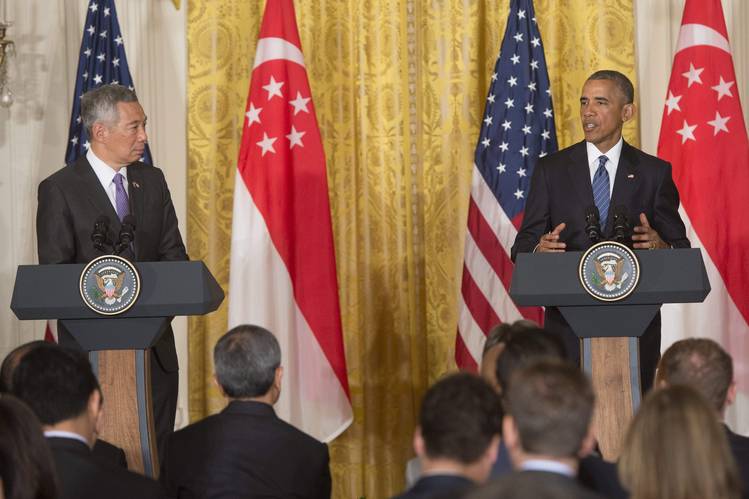
You have been warned: Singaporean PM Lee puts Obama on notice regarding US TPP non-ratification.
The Trans-Pacific Partnership is in imminent danger of becoming a non-entity in a manner all too familiar to observers by now: The Yanks rope you into protracted and therefore expensive international negotiations held all around the world. After years and years of negotiations, a deal may even be inked. Then, when the time comes for signatories to these treaties or international trade deals to ratify them at home, the Americans are unable to deliver despite being those who thought up and championed them all along.

Exhibit A remains Democrat President Woodrow Wilson and the stillborn League of Nations which was his brainchild, yet floundered in the face of Republican opposition to ratification of US membership in 1918. Fast-forward a century and we have yet another Democrat in office Barack Obama, fighting for ratification of the Trans-Pacific Partnership (TPP)--this time largely in the face of opposition within his own party [more on this later].

After assiduously courting the likes of Japan and Malaysia to participate, the US-promoted TPP is in imminent danger of not being ratified by the US, LoN-style. Both US presidential front-runners express wariness about pushing for its ratification at home, leaving the lame duck Obama with ever fewer opportunities to work with his Republican counterparts before the window of opportunity closes and the new president assumes office.

Because of the wall-to-wall coverage of the US presidential elections, something important happened over the last few days which the media did not report on which is nonetheless of great significance--especially to us Asians. Singaporean Prime Minister Lee Shien Loong--son of the late Lee Kuan Yew, of course--told Barack Obama in no uncertain words that US credibility was on the line over its ratification of TPP (which was an American creation to begin with):
U.S. credibility is on the line over a Pacific trade pact that faces a tough approval process in Congress, Singapore’s Prime Minister said Monday, warning about risks to the U.S.’s reputation in Asia if the deal falls through.

As well as being an “economic game-changer,” the U.S.-led Trans-Pacific Partnership, which does not include China, could “add substance to America’s engagement in the Asia Pacific” region, Lee Hsien Loong said in a speech in Washington D.C. The pact has been signed by the 12 member nations but is yet to be ratified by most of them.

“For America’s friends and partners, ratifying the TPP is a litmus test of your credibility and seriousness of purpose,” Lee said. “Every one of the TPP signatories has had to make sacrifices in order to accept the TPP agreement, and jointly bring about this win-win outcome.”

As the U.S. presidential election draws closer, the TPP is at risk of being caught up in the wash of a growing anti-trade mood, which has seen both two candidates for the White House state publicly they oppose the pact. If ratified and implemented, it would cover around 40 percent of the global economy.
Singaporean PM Lee understands the dynamics of US politics, but insists on a tangible outcome nonetheless:
The Obama administration has said it’s committed to ratification and has highlighted a brief window after the election and before the new Congress takes effect as the best chance to get it through. The TPP is the centerpiece of President Barack Obama’s broader economic and military rebalancing to Asia as China’s clout grows. Lee is on a state visit to the U.S. and will meet Obama...

U.S. trade representative Michael Froman last week said tweaking the deal is not an option as it “is a carefully balanced agreement.” Lee reinforced the point that TPP must pass as it stands, saying that “nobody wants to reopen negotiations.”

“We know this has been politically difficult, it’s a very tough election year,” Lee said. “Economic uncertainty has led to concerns about jobs, worries about competition from overseas.” Those are “understandable, even valid concerns, but we hope all parties will focus on the longer term, bigger picture,” he said.
Lee's annoyance at this turn of events was evident:
Lee said that while he was wary of wading into domestic politics, the U.S. has "put your reputation on the line" with TPP. "Your partners, your friends who have come to the table and negotiated, each one of them has overcome some domestic political objection, some costs to come to the table to make this deal," Lee said.

"If at the end, waiting at the altar the bride doesn’t arrive, I think there are going to be people who are going to be very hurt not just emotionally but damaged for a long time to come," Lee said.
Edward Luce of the FT says the TPP is the last stand for "US-led globalism," but the same could have arguably been said for the League of Nations in 1918. For the Asian countries that participated, the possibility is very real that the US could not deliver on a trade agreement which they've been at since 2008.

If nothing it happens, it will have all been wasted time, money and effort negotiating an agreement that could not be ratified in the home nation of its main proponent. I would not necessarily be the end of "US-led globalism," but rather a major setback for the US in gaining the trust of Asian nations on economic and other issues. It almost goes without saying that China would instead benefit from a US loss of face in the Asia-Pacific.

It's Officially Over: WTO Kills Doha Round (2001-Never)

♠ Posted by Emmanuel in , at 12/23/2015 03:53:00 PM
Never again: nobody will be meeting to discuss Doha anymore.
During the last WTO meeting, its members decided to discontinue reaffirming the Doha Development Agenda's mandate, effectively killing it off. What's especially notable is that the country which was most adamant in launching it and styling it as a "development agenda" instead of a "round"--the United States--has been wishing to kill it off for quite some time now:
The World Trade Organisation is facing the biggest shake-up of its agenda in a generation after its members in effect abandoned the long-stalled Doha round. For the first time since the round was launched amid great fanfare in 2001, the WTO’s 164 members, ending a conference in Nairobi at the weekend, declined to “reaffirm” Doha’s mandate.
They also opened the door to discussing new issues and focusing more on delivering smaller packages of trade reforms. Agreements included a global ban on farming export subsidies that Roberto Azevêdo, the WTO’s director-general, called the “most significant” achievement on agriculture in the organisation’s history. The new line in Nairobi, said one senior trade official, amounted to “the death of Doha and the birth of a new WTO”.

It also marked a victory for the US and EU, who alongside other developed economies have argued that clinging to the long-stalled Doha negotiations was making the institution irrelevant in a changing global econom. Instead of aiming to complete these vast, cross-cutting rounds like before, the WTO is moving towards more tractable issue-focused negotiations, which probably makes more sense in this day and age when there are so many different parties with differing interests. Moreover, delegates the world over tired of meeting on something which became moribund quite some time ago:
Doha was launched in 2001, two months after the September 11 attacks, with much rhetoric about gestures of global unity but too little support from businesses to keep it going. It was also oversold as a “development round”, with the aim of helping poorer countries trade their way out of poverty, with a particular focus on agriculture.

Three problems rapidly became evident. One, behind the mask of solidarity between developing countries lay deep divisions, for example between agricultural net importers and exporters, preventing constructive proposals for liberalisation. Two, countries such as China transformed beyond recognition during the round, becoming global export powerhouses yet continuing to plead developing country status. Three, the US in particular proved to be largely spineless in taking on its own farm lobby, which demanded improbable amounts of market access abroad in return for subsidy cuts at home.
The mistake globophobes make it to assume that because the Doha Round is dead, so is the WTO. Actually, it's just attempts to push through vast, broadly inclusive trade rounds that's over, not the WTO which is actually moving forward on sectoral interests such as the Information Technology Agreement (ITA). Whatever you think of it, the WTO goes on after Doha.

Me Too! Do S Korea & Indonesia Want to Join TPP?

♠ Posted by Emmanuel in ,,, at 11/05/2015 12:10:00 PM
Indonesia and S Korea apparently seek a seat at this table now.
It appears as though the United States is gaining the upper hand in signing FTAs in the Asia-Pacific after the TPP enlargement. With China's pan-Pacific equivalent not gaining any traction, the undecideds--countries that sat out the TPP negotiations to see how matters progress--appear to be more favorably disposed now to the American effort. Chalk this one up to the "bandwagon" effect: non-participants in the TPP negotiations fear being left out will cause their exports to be less competitive as those within the FTA benefit from lower tariffs. Make no mistake that the US swaying Japan greatly involved the former playing up the latter's fears about China:
[Former US trade negotiatior Ira Shapiro] believes that it was the rise of China that ultimately convinced Japanese Prime Minister Shinzo Abe to pursue TPP. If the TPP becomes reality, "China will have a choice of either making the changes necessary to join TPP or intensify its leadership of competing arrangements, as we've seen with the Asian Infrastructure Investment Bank," he said. "For the U.S. and Japan, it is important to set a model."
Let's begin with South Korea. Like Japan, it has traditionally been very careful about the terms of FTAs given the mandate not to offend domestic agricultural interests. However, with Japan making such concessions already with TPP, the Koreans are now more willing to do the same--at least slightly. In particular, the Japanese seek more automobile exports to Korea. In a manner of speaking, Japan got a head start over Korea and can now help dictate the terms for the latter's entry to its advantage:
South Korea's effort to be welcomed into the Trans-Pacific Partnership trade pact will provide Japan with an opportunity to regain lost ground in that country's automobile market. South Korean President Park Geun-hye expressed hopes that Japan will cooperate on this matter during her meeting with Japanese Prime Minister Shinzo Abe on Monday.

By cooperation, she is presumed to have meant Japan's quick approval, since all 12 TPP members need to agree to the entry of new members. Japan's stance is that it welcomes South Korea, since Abe has said before that he hopes to broaden the TPP's reach in Asia as a high-level trade pact. Japan had to promise that it will open up its market to the U.S. before joining the TPP.

Likewise, "South Korea will need to promise to drop tariffs on Japanese industrial products in exchange for approval of its participation," said a Japanese TPP negotiator. Currently, South Korea levies a tariff of 8% on Japanese autos and around 6.5% on Japanese chemical products.
Meanwhile, Indonesia's new President Joko Widodo is also in a semi-rush to get in after the conclusion of the aforementioned deal:
On his first official visit to Washington, however, Widodo pulled a surprise out of his hat. "Indonesia is an open economy," he was quoted as telling U.S. President Barack Obama. "We are the largest economy in Southeast Asia, and Indonesia intends to join the TPP..."

Indonesia, which has the world's fourth-largest population, has long been wary of free trade. This is largely because natural resources are its only major exports. When it comes to big multilateral deals, Jakarta has favored the Regional Comprehensive Economic Partnership -- a proposed agreement involving the Association of Southeast Asian Nations, China and India -- over the TPP due to its lower degree of trade liberalization.

But Widodo, recognizing the global liberalization momentum, appears concerned that staying out of the TPP would put Indonesia at a disadvantage. When he travels abroad, Widodo urges foreign businesses to invest in Indonesia as an export base. The TPP, though, will increase the appeal of member countries by reducing or eliminating tariffs on goods, provided a certain ratio of parts are made within the zone.
Nuff said: advantage America. China, what's your counter-proposal?

Early Winners and Losers From TPP Enlargement

♠ Posted by Emmanuel in ,,, at 10/06/2015 08:15:00 PM
Get ready to see lots more of these sorts of plants in Vietnam (read why below).
Bloomberg has an initial rundown of countries expected to win and lose from the conclusion of the Trans-Pacific Partnership (TPP) enlargement. When I pointed out earlier that there is a potential for very significant carve-outs for important TPP participants, I definitely had Japan in mind. True enough, one of the remarkable bits of agricultural protectionism that remains intact concerns rice. Despite the staple food becoming an ever-smaller part of the Japanese diet, rice farmers remain a core Liberal Democratic Party constituency. How so? Try a 1%--I am not joking--non-tariff import quota. Yippee, 1% tariff-free market access! With concessions like these....Anyway, here is the list together with some of my thoughts about the other countries:

Japan:

*Japanese car and auto-parts makers may be the biggest winners, as they get cheaper access to the U.S., the industry’s biggest export market
* Japan was forced to reduce some of the protections granted to its rice farmers, creating a non-tariff import quota of one percent of its total consumption
* Livestock farmers may be harder hit as tariffs on beef will be cut to 9 percent over 16 years from 38.5 percent, while pork tariffs will also be slashed

Australia:

* The deal will remove about A$9 billion of import taxes from Australian trade, Prime Minister Malcolm Turnbull said
* Australia will gain access to the U.S. sugar market while Japan will also reduce levies on the product and the cut in the beef tariff will help Australian ranchers
* Seafood and most horticulture products will see tariffs dropped, while preferential quota access will be created for grains, cereals and rice
* Australia and New Zealand successfully pressured the U.S. to compromise on the amount of time pharmaceutical companies would get protection for new biotech drugs, granting companies a minimum of five years rather than the 12 years of protection pushed by the U.S. That could lead to cheaper drug prices and more competition
* Reduced tariffs on everything from iron and steel products, to pharmaceuticals, machinery, paper and auto parts will help Australian manufacturers

COMMENT: Biotechnology stocks stateside are being driven down Tuesday as a result of the biotech provisions. 

New Zealand:

* Tariffs due to be eliminated on 93 percent of New Zealand’s trade with its TPP partners representing annual savings of about NZ$259 million ($168 million), Trade Minister Tim Groser said.
* The dairy industry, which accounts for about a quarter of exports, will see savings of about NZ$102 million a year. Some tariffs to remain in key markets such as the U.S., Japan, Canada and Mexico. Though New Zealand will get preferential access to new quotas, Canada only agreed to set foreign quotas for 3.3 percent of it dairy market over five years
* Tariffs on beef exports will be eliminated with the exception of Japan where they will drop to 9 percent from 38.5 percent, he said. Tariffs on all other exports including fruit, seafood, wine and sheep meat will be eliminated
* “While I am very disappointed that the deal falls far short of TPP’s original ambition to eliminate all tariffs, there will be some useful gains for New Zealand dairy exporters in key TPP markets such as the U.S., Canada and Japan,”  John Wilson, chairman of Fonterra Cooperative Group Ltd., the world’s biggest dairy exporter, said in a statement.

COMMENT: Canada and Japan's unwillingness to open up their agricultural markets significantly when faced with this agricultural exporter's wishes demonstrates the value the Americans placed on their participation. Remember also that New Zealand was an original TPP member before the United States thought about expanding it. In agricultural terms, however, it is a watered-down agreement on matter how the Yanks claim it is a "high quality" and "comprehensive" agreement.

Vietnam:

* Vietnam to be among the biggest winners, according to the Eurasia Group, with the agreement potentially boosting GDP by 11 percent by 2025, with exports growing 28 percent in the period as companies move factories to the low-wage country, the report said.
* Reduced import duties in the U.S. and Japan will benefit country’s apparel manufacturers, whose low labor costs have enabled them to grab business from China. Still, impact may be limited as Vietnam will still face strict rules-of-origin on materials.
* Fishing industry to benefit from elimination of import tax on shrimp, squid and tuna, now averaging 6.4%-7.2%
* Eliminating import taxes on pharmaceutical products from the current average of about 2.5% will lead to tougher competition between Vietnamese domestic companies and foreign companies. TPP will also increase patent protection, restricting Vietnam companies access to new products as well their ability to produce new drugs.

COMMENT: Low-cost assembly work in Vietnamese factories is set to get a boost since few of the other participants offer the same sort of comparative advantage. Maybe they'll diversify from Samsung phones as a result.

Malaysia:

* Malaysia’s state-owned enterprises may suffer from the deal which calls for equal access to government procurement
* Electronics, chemical products, palm oil and rubber exporters are among beneficiaries. Malaysia is the world’s second-biggest palm oil producer and one of the biggest growers of rubber

China:

* The world’s second-biggest economy may be among the biggest losers as it failed to join the TPP, allowing the U.S. to tighten trade ties across the region and advance the Obama administration’s so-called pivot to Asia. After initially dismissing TPP, Chinese officials have now indicated some interest in possibly joining in the future
* "China has an open attitude towards system building that complies with WTO rules and is conducive to economic integration in the Asia-Pacific region, and hopes the agreement and other free trade arrangements in the region can be mutually beneficial, so that they can make contributions to trade, investment and economic growth in the Asia-Pacific region," China’s Foreign Ministry said in a statement.
* Chinese exporters may lose some market share in the U.S. and Japan to developing countries such as Vietnam, according to Bloomberg economist Fielding Chen
* China will push its "one belt, one road" strategy of resurrecting trade routes from Asia to Europe and its new development bank and try to reach more free-trade deals with other countries, especially in Asia, Chen said. “While opening up its own door, China doesn’t want to see other countries are closing their doors,” Chen said.

COMMENT: Yes, yes, China is not a TPP signatory. To me, the real litmus test of whether TPP matters is if China loses enough business in the medium-term to want in despite the United States having thought up the TPP enlargement in the first place. China has alternative preferential blocs in mind, but it has lost out already in getting them inked.

A Done Deal? Trans-Pacific Partnership is Inked

♠ Posted by Emmanuel in , at 10/05/2015 05:09:00 PM
The international trade deal is signed; individual nations ratifying it remains.
This comes as a bit of a surprise to me: the Trans-Pacific Partnership has, at long last, been completed. I had expected divisive issues to hold it up--agriculture and automobiles especially--but it seems I was mistaken. There are APEC economies starved for further trade deals including, much to my surprise, Japan, which I had expected to complicate matters over its closed markets for the aforementioned goods. While the full text of TPP is yet to be released, here is the summary from the USTR:
On October 4, 2015, Ministers of the 12 Trans-Pacific Partnership (TPP) countries – Australia, Brunei Darussalam, Canada, Chile, Japan, Malaysia, Mexico, New Zealand, Peru, Singapore, United States, and Vietnam – announced conclusion of their negotiations.  The result is a high-standard, ambitious, comprehensive, and balanced agreement that will promote economic growth; support the creation and retention of jobs; enhance innovation, productivity and competitiveness; raise living standards; reduce poverty in our countries; and promote transparency, good governance, and enhanced labor and environmental protections.  We envision conclusion of this agreement, with its new and high standards for trade and investment in the Asia Pacific, as an important step toward our ultimate goal of open trade and regional integration across the region.
The USTR also touts five key features, although these talking points should be familiar by now:

Five defining features make the Trans-Pacific Partnership a landmark 21st-century agreement, setting a new standard for global trade while taking up next-generation issues.  These features include:
  • Comprehensive market access.  The TPP eliminates or reduces tariff and non-tariff barriers across substantially all trade in goods and services and covers the full spectrum of trade, including goods and services trade and investment, so as to create new opportunities and benefits for our businesses, workers, and consumers.
     
  • Regional approach to commitments.   The TPP facilitates the development of production and supply chains, and seamless trade, enhancing efficiency and supporting our goal of creating and supporting jobs, raising living standards, enhancing conservation efforts, and facilitating cross-border integration, as well as opening domestic markets.
     
  • Addressing new trade challenges.  The TPP promotes innovation, productivity, and competitiveness by addressing new issues, including the development of the digital economy, and the role of state-owned enterprises in the global economy.
     
  • Inclusive trade.  The TPP includes new elements that seek to ensure that economies at all levels of development and businesses of all sizes can benefit from trade.  It includes commitments to help small- and medium-sized businesses understand the Agreement, take advantage of its opportunities, and bring their unique challenges to the attention of the TPP governments.  It also includes specific commitments on development and trade capacity building, to ensure that all Parties are able to meet the commitments in the Agreement and take full advantage of its benefits.
     
  • Platform for regional integration.  The TPP is intended as a platform for regional economic integration and designed to include additional economies across the Asia-Pacific region.
Attention now turns to the specifics: what sorts of concessions were offered to the likes of Japan...or even Canada? Beyond that, this international agreement needs to be ratified by all of the 12 participants in the negotiations. So there is still quite some ways to go.

Egads, a WTO Deal...on Expanding IT Goods

♠ Posted by Emmanuel in , at 7/20/2015 01:30:00 AM
Coming soon to your country: duty-free PlayStations.
OK, so it isn't the completion of the Doha Round (in progress from 2001 to, well, never evermore it seems). I suppose that it's still an achievement that the Information Technology Agreement (ITA) has been moved expanded to include more kinds of electronics--including game consoles [!]--and more tariff reductions. In this day and age where skepticism about the benefits of trade are evident around the world, any sort of multilateral deal is worth mentioning:
Trade negotiators on Saturday tentatively agreed to eliminate tariffs on an array of technology products valued at US$1 trillion worth of global commerce. The breakthrough toward the WTO’s Information Technology Agreement (ITA) took place at an ambassadors’ meeting at the EU embassy in Geneva.

“Very optimistic that we’ll have a final successful deal by the end of next week,” WTO Director-General Roberto Azevedo said on Twitter. “We have the basis for an agreement.”

US Trade Representative Michael Froman hailed a “major breakthrough” in what would be the first significant tariff-cutting deal at the WTO in 18 years. “This will open overseas markets for some of America’s most competitive companies and workers,” he said in an e-mailed statement. “We are confident that all parties will now give formal approval to their participation.”
And of course, what would this news be without mentioning cutting tariffs on game consoles to zero along with optimistic trade creation figures being bandied about:
Tariffs on semiconductors, magnetic resonance imaging machines, global positioning system devices, printer ink cartridges, video game consoles and other products would be cut to zero under the deal, according to the US Trade Representative office.

The expanded product list will now undergo consideration from trade ministers at their various capitals. “We have the basis for an understanding,” Azevedo told reporters in Geneva after the meeting. “The list is out, members are going to consult their capitals, and we will know by Friday whether we have final approval on the list of products and the declaration itself.”

The product list could pave the way for a finalized deal that would contribute as much as $US190 billion to global GDP and support 60,000 US jobs...The 80 WTO countries that participate in the ITA talks account for about 97 percent of global trade in IT products.
Hope springs eternal for the WTO.

FTAs: Democrats' Battle Against TPP, Obama & Co.

♠ Posted by Emmanuel in , at 5/05/2015 01:30:00 AM
It's deja vu all over again.
I hate to say it, but it's patently obvious that so many aspects of global governance are held hostage by the political processes of just one country--the United States. Reforms of the World Bank and the IMF have not proceeded because the US Congress cannot get its collective mind around to recognizing our changed world where America does not play the same role it once did. Hence the Chinese gaining adherents after proposing the creation of an Asian Infrastructure Investment Bank (AIIB). But there's more...much more.

Despite the previous Bush 43 and current Obama administrations being the main proponents of forging a free-trade agreement among members of the Asia-Pacific Economic Cooperation (APEC) via the Trans-Pacific Partnership (TPP) expansion negotiations, a fact remains: TPP will probably not be concluded if American lawmakers do not ratify it. Later in Bush 43's second term--2007 to be exact--he lost fast-track authority, or that to negotiate FTAs internationally and have the US Congress vote on them on a yes/no basis. Not having this authority allows lawmakers to open up and re-write texts of negotiated FTAs, leaving endless room for second-guessing of these trade deals. The resulting meddling would likely scupper any number of trade deals as other countries balk at the waste of time writing deals that the US will not pass.

Traditionally the more trade-phobic of the two major parties, the Democrats have become more so as of late. To be sure, declining living standards and falling wages Stateside have not exactly provided a fruitful economic backdrop to signing more FTAs. After all, if all those old FTAs failed to meaningfully lift living standards, why sign more? We can certainly debate how much trade is at "fault" for the new normal of a moribund US economy, but Democrats in Congress need no help making this connection, to the detriment of TPP:
Two decades ago, President Bill Clinton needed Republican support to win a bitter battle over the North American Free Trade Agreement. He also garnered 40 percent of congressional Democrats, including almost half the party's senators. President Barack Obama may also win some close trade votes -- first with the approval of a bill giving him so-called fast-track authority to negotiate the huge Trans-Pacific Partnership and then when the deal itself moves through Congress. This time, more than 80 percent of congressional Democrats will oppose the president.

Democrats have turned decidedly protectionist in the decades since the passage of Nafta, a period that coincides with increasing globalization and steep losses of U.S. manufacturing jobs. Even Hillary Clinton is breaking with her husband's free trade record, hinting she may oppose the TPP, which would bind the U.S. and 11 other Pacific Rim nations.

Obama and his unaccustomed allies, Republican congressional leaders, want to pass fast-track authorization -- which assures a straight up or down vote on TPP and other trade deals -- by the end of the month. It's a slog. For now, fewer than 20 House Democrats are on board, and Obama will get no more than 30; 10 Senate Democrats may go along, but no more than 15.
It will be interesting to see if Hillary Clinton expressing skepticism about TPP is a political ploy that will pay off. Like her husband and Obama after him, she is campaigning on a "trade skeptic" stance to appease union supporters of the Democratic Party, but will likely abandon it if and when she becomes president. Besides, making anti-trade a top campaigning point may not work. Consider John Connally:
The protectionist pressure has reached Hillary Clinton. Signaling she may oppose TPP may be good primary politics but it may not be as popular a stance in a general election. Although conditions have changed markedly, it's instructive to remember John Connally, the one-time Democrat who, more than Ronald Reagan, became the most dynamic Republican candidate in the 1980 presidential race. He ran on a get tough on trade platform, warning the Japanese that they "better be ready to sit on the docks of Yokohama in their own Toyotas, watching their own Sonys."

The Texan spent $12 million -- the equivalent of $39 million today -- and got one delegate, Ada Mills of Arkansas. He had to drop out after only the third primary.
I guess there's only one way to find out. And I remain pessimistic about TPP's prospects anyway.

EU-Canada FTA as a Precursor to an EU-US Deal

♠ Posted by Emmanuel in ,, at 12/03/2014 01:30:00 AM
European activists believe stopping Canada precedes stopping America.
It appears that the EU-Canada FTA, a.k.a. the Comprehensive Economic and Trade Agreement (CETA), may soon be a done deal with Germany's SPD junior coalition partners indicating that they will let it push through despite initial misgivings about investment protection clauses that many left-leaning folks believe infringe on national sovereignty in the interests of global capital. Actually, bilateral EU-Canada negotiations were wrapped up a few months ago; these clauses and what to do with them have been among the principal sticking points:

German Vice Chancellor Sigmar Gabriel said he expected his Social Democrat party (SPD) would back Europe's free trade agreement with Canada (CETA), which has faced opposition from party left-wingers due to its investment protection clause. The deal, which could increase bilateral trade by a fifth to 26 billion euros ($34 billion) and is widely seen as a template for a larger trade pact between the EU and the United States, was wrapped up in August after five years of tricky negotiations.
However, critics say the investor protection clause, allowing companies to bring claims against a state if it breached the treaty, would give multinationals too much power and could lead to governments being pressured into ignoring laws on labor, the environment, data protection or food standards.
It is unclear whether all 28 EU states will have to ratify CETA. The EU Commission believes it is not necessary, but member states want a say, which means the dispute may have to be settled by the European Court.
The concern of European anti-globalization activists is not so much Canada as it is the United States. For, US firms with Canadian operations may use these investment protection clauses to sue EU nations over unfavorable state policies even if the EU-US FTA--a.k.a. the Transatlantic Trade and Investment Partnership (TTIP)--does not have them:
American multinationals could use investor-state dispute settlement (ISDS) provisions in the European Union-Canada trade deal to sue EU governments in costly legal battles that could stymie policymaking, campaigners have warned.

Corporations with Canadian subsidiaries and holdings could use the Comprehensive Economic and Trade Agreement (CETA) to take countries to international arbitration tribunals, even if the ISDS clause is dropped from the EU-US Transatlantic Trade and Investment Partnership (TTIP). US companies with “substantial business interests” in Canada would be able to use the CETA ISDS mechanism, if it is ultimately cleared by European and national parliaments.

They include ExxonMobil Investments, which used ISDS in the North American Free Trade Agreement (NAFTA) between Canada, the US and Mexico, to successfully sue Canada in 2007. The energy giant’s investment arm with Murphy Oil claimed about €49 million, but their final award was never made public. US food processing company Cargill would also qualify. In 2004, Cargill sued Mexico through NAFTA ISDS, winning €71.8 million. Mexico had tried to introduce a tax on drinks containing high fructose corn syrup. The syrup is linked to obesity.
American multinational conglomerates raise fears seldom matched by few others.  Uncle Sam is always the big, bad guy.

APEC Vaporware: Free Trade Area of the Asia-Pacific

♠ Posted by Emmanuel in ,, at 11/11/2014 02:57:00 PM
Put 'er there, pal, put 'er there (which is precisely nowhere).
This is a quick interjection since I've already made a lengthier post on the unlikely resurrection of an APEC-based Free Trade Area of the Asia-Pacific (FTAAP) proposal originally dreamed up by the Americans that got nowhere...only to be revived by the Chinese to counter another American-led FTA initiative in APEC, the Trans-Pacific Partnership (TPP). To be sure, Beijing has scored some cheap PR points that the media has mistakenly picked up by flogging FTAAP anew: "APEC Leaders Endorse China-Led Free Trade Zone" says the Voice of America. "APEC Summit: Chinese Trade Pact Plan Backed by Leaders," the British Broadcasting Corporation chimes in.

If you actually read the text of the leaders' declarations, however, the FTAAP reality is much more modest. What APEC leaders have actually said is that they will commission a study that will be done by 2016 on the prospects for an FTAAP:
Launch a collective strategic study on issues related to the realization of the FTAAP by building on and updating existing studies and past work, providing an analysis of potential economic and social benefits and costs, performing a stocktake of RTAs/FTAs in force in the region, analyzing the various pathways towards the FTAAP, assessing impacts of the “spaghetti bowl” phenomenon on economies, identifying trade and investment barriers, identifying challenges economies may face in realizing the FTAAP, and considering any recommendations based on the study’s findings. The CTI Friends of the Chair Group on Strengthening REI and Advancing FTAAP, led by member economies, will organize and lead a task force to undertake the study and will seek contributions from interested APEC economies, the APEC Policy Support Unit, ABAC [APEC Business Advisory Council], PECC [Pacific Economic Cooperation Council] and APEC Study Centers. The linkage with the second term review of Bogor Goals will be strengthened while carrying out this study. The CTI and SOM will review progress annually, finalize the report, along with any recommendations, arrived at by consensus, and submit them to Ministers and Leaders by the end of 2016.
All the APEC honchos agreed to, then, is to ask a bunch of folks in an alphabet soup of APEC-related bodies to write some report due at the end of 2016. Big deal. There is no guarantee that they will act on the completed report, let alone begin negotiations for an FTAAP. To consider this statement on the FTAAP as a "victory" for China is stretching matters very far indeed.

Actually, the FTAAP proposal is not only rather ineffectual but does not necessarily favor either the US or China's visions for a pan-regional FTA. Instead, the text does the diplomatic thing in stating that either the US-led Trans-Pacific Partnership or the China-led Regional Comprehensive Economic Partnership (RCEP) may be building blocks to including all member economies in an FTAAP:
The FTAAP should aim to minimize any negative effects resulting from the proliferation of regional and bilateral RTAs/FTAs, and will be pursued by building on current and developing regional architectures. Greater efforts should be made to concluding the possible pathways to the FTAAP, including the TPP and RCEP.
It beats me how they'll avoid trade diversion by doing nothing to discourage the proliferation of pan-regional FTAs, but for FTAAP itself, it's much ado about nothing. It's APEC pencil-pushing--vaporware--at its finest.

APEC Fight Club, US v China, FTAAP Edition

♠ Posted by Emmanuel in , at 11/04/2014 01:30:00 AM
APEC, where Pacific Rim leaders play fancy dress...and that's about it.
The Asia-Pacific Economic Cooperation (APEC) is rightly regarded as a "talk shop" that does not really have much policy impact in the region. Like the yahoos who keeps yelling "Free Bird!" at rock concerts, a recurrent--and repeatedly failed, it must be said--battle cry is establishing a free trade area within APEC. At the moment the US is having a hellishly hard time establishing a wider, US-dominated Trans-Pacific Partnership (TPP). As with the WTO Doha round, TPP negotiations are stalled as the number of would-be members increases and so does the difficulty of concluding negotiations. From a recent WSJ blog entry:
Despite a joint statement of “significant progress” from the trade ministers of 12 countries negotiating the TPP trade agreement, no one pointed to a major advance in any key issue during the recent talks in Sydney, including anything that would resolve the deadlock between the U.S. and Japan over agricultural and other barriers.
See an earlier post of mine on Japan throwing a monkey wrench into proceedings. Before continuing, let's have a brief history of failed FTAs in APEC. Sometime ago, Fred Bergsten of the Peterson Institute of International Economics was championing another idea, the (surprise!) US-led Free Trade Area of the Asia-Pacific that also got precisely nowhere:
The FTAAP idea has been actively promoted by APEC’s Business Advisory Council (ABAC)[which is dominated by Bergsten, it must be said] since 2004 as the only means by which APEC could achieve its signature Bogor goals, adopted in 1993 and reaffirmed every year since (including at Sydney), of achieving “free and open trade and investment in the region.” It has suddenly become a focal point of official activity because of major shifts in policy positions by several key member economies.

The United States took the lead in promoting the initiative, and the leaders unanimously endorsed President George W. Bush’s call to give it “serious consideration” in a speech in Singapore just before the [2006] summit. Japan welcomed the idea along with its own recent proposal for an “economic partnership agreement” among the 16 leading Asian countries (including India, which is not a member of APEC). Australia, which played a key role as chairman of APEC over the past year, reiterated its support. So did Canada and Mexico, two of the six largest APEC economies and traders, along with several of the smaller members.
Friends, there is apparently nothing new under the sun since the FTAAP idea is now being revived...by China! Whereas FTAAP used to be an American counterproposal to whatever pan-regional grouping the Chinese were proposing outside of APEC, it has now become a "Chinese" initiative after the Americans moved on to pimping the TPP expansion. It sounds ridiculous because it is...yet it is also true:
The U.S. has blocked China’s efforts to use a leaders’ summit to begin negotiations on a free-trade zone spanning the Pacific, people close to the matter said, as the world’s two largest economies tussle over influence in the region and billions of dollars in trade. China, the host of this year’s Asia-Pacific Economic Cooperation forum on Nov. 10-11, has sought to highlight its expanding international role by pressing for a pact known as the Free Trade Area of the Asia Pacific.

Beijing’s free-trade zone has been on the agenda of APEC for years—and was initially pushed by the U.S.—but has been relegated to the back burner as the U.S. has poured its efforts into the Trans-Pacific Partnership, a trade pact it is negotiating with 11 nations that include Japan but not China. For Beijing, the FTAAP would offer a way to ensure that it continues to get preferential access to some of its largest trading partners. A TPP deal would cost China about $100 billion a year in lost exports as the partners trade more among themselves and less with China, according to an estimate by the Peterson Institute for International Economics, in Washington.
China reviving the lame FTAAP idea which the Americans (like Bergsten) dreamed up anyway in order to fight the United States' current TPP expansion negotiations sounds daft IMHO. Nevertheless, I am intrigued by this "competitive vaporware" aspect to the US and China vying to ink signatures of other APEC members in an FTA of some sort. In the end, both probably know that interest among other countries is negligible, and that it's simply gamesmanship between the two in "showing" how much support they have from other members for bragging rights. Therefore, I would not take figures offered about how much China would "lose" from being frozen out of TPP seriously since its prospects for meaningful completion are low.

Rightly enough, the others correctly regard these APEC-based FTAs as the pointless exercises they are by staying away by and large.

US Bastardizes APEC, PRC Bastardizes Boao Forum

♠ Posted by Emmanuel in , at 4/11/2014 02:56:00 PM
There's interesting commentary over at The Diplomat concerning the ongoing Boao Forum, formerly China's World Economic Forum wannabe/knock-off featuring the movers and shakers in politics and business in Asia. Supposedly a non-government organization to discuss economic issues in Asia, its role is evolving to become a mouthpiece for its largest backers. Namely, the Communist Party.

There's a lot of interesting stuff in the article, but I am particularly struck by it dropping its veneer of being a pan-Asian initiative and nakedly pursuing topics and discussion points favored by the PRC leadership:
One of the perks of being the forum’s perpetual host is setting the agenda: on the docket for discussion were several hot topics of great interest to Beijing, including sessions on “Reviving the Silk Road” and “Urbanization of People.”
However, recently the Boao Forum has been moving beyond purely economic topics to discuss other regional issues. Given China’s leading role in the Boao Forum, the expansion of the forum’s agenda reflects China’s regional leadership ambitions. In 2013, the forum introduced non-economic topics to its agenda for the first time, including food safety and America-Asia relations (not coincidentally, those two topics are of major interest to Beijing). This year, the forum has expanded its scope yet again, with plans to include discussions on potential cooperation in South China Sea, a code of conduct for cyberspace [re: NSA spying], and China-U.S. relations in the Asia-Pacific region.
So yes, China is using the Boao Forum to fry its favorite fishes. Then again, the same has been going on in the Asia-Pacific Economic Cooperation (APEC)--the United States' favored venue for (mis?)characterizing itself as an "Asia-Pacific" economy and politicizing an "economic" gathering:
Chinese officials have raised similar complaints about the U.S. reshaping APEC to take on regional security issues rather than remaining a purely economic forum. Apparently, China has decided that “if you can’t beat ‘em, join ‘em” — and Beijing is now slowly turning the China-led economic forum into a platform for discussion on major regional issues. The U.S. has had success framing conversations on sensitive issues like conduct in cyber-space and how to handle the South China Sea disputes. By raising these same issues in its own forum, Beijing can set the agenda for a change.
I guess sometimes it's not the economy (stupid).

UPDATE: ECNS has a summary of the talks given at the event. 

Pssst...Anyone Notice Done Japan-Australia FTA?

♠ Posted by Emmanuel in ,, at 4/07/2014 04:48:00 PM
 While the Trans-Pacific Partnership is on hold partly due to Japanese intransigence--more on this later--two TPP negotiators have nevertheless concluded a bilateral deal. The Japanese get improved market access for manufactured goods to Australia including those old standbys consumer electronics and automobiles. In exchange, the Australians will gain improved (selective) agricultural market access. Yes, rice is off the table--this is Japan after all--as are certain varieties of beef sacred to Japanese farmers. However, less sensitive agricultural product categories in Japan have been opened to Australian exports. The headlines make it sound like a (sorry) cars-for-cows deal:
Japanese media reported Australia would drop its five percent duty on small and mid-sized Japanese cars, while Tokyo had agreed to cut its steep tariff of 38.5 percent on Australian beef by up to half for some varieties.
For some reason, most news coverage is emanating from Australia and very little from Japan. Still, sentiment in Oz is fairly positive towards the FTA:
News Corp Australia revealed this morning that the price of an average imported Japanese car in Australia will drop by up to $1500 with the existing five per cent tariffs on imported cars axed. A similar FTA recently secured with Korea was estimated to be worth savings of $700 a year for the average Australian family....

Australian agriculture will also be allowed unprecedented access to Japanese markets with tariffs eliminated on the majority of horticultural products. Cheese and wine makers and sea food producers will also be given greater access to sell products into Japan with tariffs cut on some while others will benefit from a lifting in quotas. As expected, rice was excluded from the deal.
From my point of view, it's simply the Japanese strategically making agricultural concessions to keep up with the Koreans who inked a soon-to-be-implemented deal with Australia and feared being left at a competitive disadvantage down under. It's largely to maintain competitive parity since the tariff reductions will largely duplicate those given to the Koreans:
Australia will abolish a five-percent import tariff on most South Korea-made cars while a five percent tariff on other South Korean exports such as TVs, refrigerators and machinery would also be eliminated immediately. Tariffs will also go on resources, energy and manufactured goods, while the deal will open the door to new market opportunities for Australian services in education and telecommunications.

Did Harry Reid KO Obama's Asian, European FTAs?

♠ Posted by Emmanuel in , at 2/02/2014 11:28:00 AM
Reid Floors Obama with Lethal 1-2 Combination
The traditional constituency of the United States' Democratic Party has always included organized labor. Despite union membership continuing to fall, organized labor remains crucial to the fortunes of many Democratic candidates come election time given their organizational strengths in mounting get-out-the-vote efforts. Tensions have always existed in the Democratic Party about the benefits of "modernizing" in the Reaganite, investor-friendly sense: fewer worker benefits, easier to hire and fire, etc.

Both Democratic presidents of recent memory, Bill Clinton and Barack Obama, have made it a standard ploy to court organized labor during election time and then ditch it after elections are won. However, it is not that easy for rank-and-file members in the legislature who do not have term limits to pull off this about-face. What's more, these can be quite powerful politicians.

A sign of Obama's lame duck status--he cannot have another term as president--is of Senate Majority Leader Harry Reid (D-NV) hitting Obama with massive blows on trade. A few days ago, the one-time boxer Reid reiterated that he will not grant Obama fast-track status for negotiated free trade agreements. At the moment, the major US initiatives are expanding the Trans-Pacific Partnership (TPP) in Asia and forming the Transatlantic Trade and Investment Partnership (TTIP) with the European Union. I've already mentioned how it will be quite challenging for either to be concluded unless significantly watered-down, but Harry Reid adds another complication. Without granting fast-track status to his president, Reid makes it possible for lawmakers to change the contents of the negotiated agreements with Asian or European counterparts instead of the legislature simply voting for or against these FTAs as hammered out during international negotiations:
Senate Majority Leader Harry Reid broke publicly with the White House Wednesday on trade policy, instantly imperiling two major international trade deals and punching a hole in one piece of the economic agenda the president outlined in his State of the Union address a day earlier. Mr. Reid told reporters he opposed legislation aimed at smoothing the passage of free-trade agreements, a vital component to negotiating any deal, and pointedly said supporters should back down.

"I'm against fast track," Mr. Reid (D., Nev.) said, using the shorthand term for legislation that prevents overseas trade agreements from being amended during the congressional approval process. "I think everyone would be well-advised just not to push this right now."

The move spells trouble for two sets of complicated talks, one with the European Union and the other with countries in the Asia-Pacific region. Both deals likely would have required such a "fast track" approval to clear the Congress. The U.S.'s negotiating partners wouldn't likely commit to a final agreement that could be unpopular back home without assurances that it couldn't be modified by U.S. lawmakers. 
And lest we forget, there's organized labor lurking...
Mr. Reid, whose state has a heavy union presence, has long opposed trade deals. He also represents a caucus with several vulnerable Democrats up for election in November who might have been forced to choose between Mr. Obama and the unions that help finance campaigns.
"I think there's a lot of dubiousness in our caucus to fast track, given that every time we sign a free-trade agreement it seems other countries violate the rules and we don't," said Sen. Chuck Schumer (D., N.Y.), a member of the Senate Democratic leadership.
So much for party discipline as Reid hits Obama immediately after his SOTU address. Reid is probably calculating that Obama's days are already numbered anyway, and that it's better to offend the president than traditional Democratic constituencies. Can the party afford to lose its majority in the Senate? Especially during sour economic times like the present, the Democrats' protectionist streak usually comes to the forefront. Republicans are usually more in favor of free trade and vote for such deals, but the current political situation may be inauspicious as Tea Party Republicans seemingly vote against Obama on anything--even expanding trade which is a traditional Republican advocacy.

Moreover, George W. Bush had fast track authority for most of his presidency but was unable to get any major FTAs completed, so its efficacy in concluding deals is very much dependent on first having successful negotiations at the international level.

Which US-Led FTA Nego is Lamer, TPP or TTIP?

♠ Posted by Emmanuel in ,,, at 1/14/2014 02:58:00 PM
You say "TPP," I say "TTIP"; let's call both things off

One of the many reasons why the Doha Round of WTO trade negotiations has been put on indefinite pause is due to Americans holding out for stronger intellectual property protections. Typically hard-headed, the Yanquis have not really given up on their pet causes. Instead, they have merely resurrected them in plutilateral arrangements being touted by the US Trade Representative.

(1) Let us begin with the much-ballyhooed expansion of the Trans-Pacific Partnership (TPP). Originally a grouping of trade-willing APEC member countries Brunei, Chile, New Zealand and Singapore. the US is seeking to crash into their party. With the release of more leaked documents, the secretive TPP negotiations apparently involve the US barging into someone else's FTA and attempting to shape it to its own ends. Surprise, surprise. In simple terms, it aims to revive its failed Doha wish list with suck...I mean, "Asia-Pacific countries keen on concluding a high-quality FTA." Joseph Stiglitz, for one, is wary of its goals of extending medicine patents of American Big Pharma into near-eternity and circumscribing the ability of developing countries to manufacture generic versions--especially if they are needed due to health crises (i.e., "compulsory licensing"):
The IP chapter is also worrisome to others. Joseph Stiglitz, an economist, Nobel Prize winner and professor at the Columbia University School of Business, asked negotiators in an open letter sent Friday to resist proposals to weaken consumer rights in intellectual property. The letter was published by Knowledge Ecology International (KEI), a group lobbying for fairer distribution of information, which has taken a close interest in the TPP and was also concerned by the contents of the leaked treaty draft.

Negotiators should resist mandating extensions of patents terms, narrowing the grounds for granting compulsory license on patents and increasing damages for infringements of patents and copyrights, Stiglitz wrote. Moreover, they should also oppose mandating excessive enforcement measures for digital information and requiring more than 70 years of copyright protection, among other proposals, Stiglitz wrote.
Damn Yanquis. They keep yapping about freedom and transparency Obama-the-hypocrite style when, in reality, they seek to pull a fast one on a large chunk of the world's population.  Considering that the TPP expansion participants are generally a coalition of American sycophants, toadies, yes-men and hangers-on, it is remarkable how little traction US negotiators have gained. Can't cow the cowed, eh? American negotiators hoped for a end-of-2013 completion; I think events have shown them to be unrealistically optimistic about concluding a deal, let alone one so lopsided in favor of US interests. Either nothing is concluded, or one is that is watered-down and riddled with opt-outs.

(2) There is also the so-called Transatlantic Trade and Investment Partnership (TTIP) between the US and EU underway. However, alike TPP, it appears to be a US-led attempt to introduce its favored IP regimes first and a trade agreement second. Ho-hum, what else is new, Sammy?

TTIP negotiations last year were already going nowhere in particular rather quickly, and that was before the US was revealed to be a massive spy on European citizens and leaders. Why are we to believe that Europeans are so interested in further protecting the intellectual property rights of those who are so callously indifferent to violating European privacy rights on an unprecedented scale? Beats me, pal.
---

For both the TPP and TTIP, intellectual property is far from the only point of contention. Agriculture in particular is a tough nut to crack with many sensitivities in Asia and Europe. Which is lamer, then? It's hard to say since both negotiations don't seem to be heading anywhere at the moment, so call it a draw.

Message to the US: Did you simply think you could take the least popular items on your Doha wish list and get them accepted elsewhere? Think again.

WTO Welcomes Its 160th Member, Yemen

♠ Posted by Emmanuel in ,, at 12/08/2013 08:57:00 AM
Yemen, there's no need to feel down
I said Yemen, pick yourself off the ground...

A little neglected in the hullabaloo surrounding the conclusion of the "Bali package" at WTO negotiations in the eponymous Indonesian resort location has been the organization's acceptance of its 160th member. A stop on the Silk Route of centuries past, to say Yemen has fallen under hard times due to religious extremists and assorted nutcases taking up their various dubious causes is an understatement. However, it now joins the growing ranks of least-developed country members:
Immediately after the heads of delegations’ meeting, members formally accepted Yemen as a new WTO member — its “accession” to the WTO. At a ceremony to celebrate the decision, Mr Azevêdo congratulated the Yemen government for the domestic reforms it is undertaking after 13 years to finally become a WTO member. “We celebrate accessions both because of what it means for the individual country, but also because of what it means for this organization,” he said

The Republic of Yemen will be the 35th least developed country in the WTO. “This group makes up a fifth of the whole WTO membership. It is an important constituency — and, as we have seen in recent days, it is one that is increasingly making its voice heard,” said the Director-General. Yemen’s Industry and Trade Minister Sa’aduddin Bin Taleb expressed his country’s gratitude and excitement at finally becoming a WTO member.

“Sometimes things change for countries and fortunes change. But the very essence of a country and the history and the civilisation remains. Ours has been trading for the last at least five or six hundred years, in fact, since the spice route," he told the assembled ministers from the WTO’s current membership.“We aim to take back that road again and to connect with everybody in the world. ... I hope that after a few months, we will have a new Yemen born." The Yemeni Parliament will have six months, until 2 June 2014, to ratify its accession package. It will then inform the WTO and 30 days later it will officially become a member.
What can I say? Yemen's membership comes just in time to enjoy duty-free, quota-free access by least-developed countries to richer ones as well as preferential rules of origin. Meanwhile, the domestic debate is awfully similar to what countries considering joining the WTO have--we will be inundated with imports, our domestic industries will be wiped out as a consequence, domestic firms are not yet ready, etcIts :
Sana’a University economics professor Salah Al-Maqtari said the move was a bad one for Yemen. “Yemen already has no customs restraints, and international products have invaded its markets, even before accession to the WTO,” he said. Al-Maqtari said Yemen imports 85 percent of its food commodities from abroad and does not produce many goods for export.

“Yemen is on the losing side because its consumption [of imports] is higher than its production [of goods for export],” he said. Car importer Sami Sabiha said the Yemeni government has not made any preparations to help industries or the economy deal with the difficulties they will face as a result of joining the organization. 

Last Chance Saloon: WTO's Fate & This Week's Bali Meet

♠ Posted by Emmanuel in ,, at 12/01/2013 03:55:00 PM
I just wanted to share the ICTSD's useful primer on the upcoming WTO meetings in Bali, Indonesia where the organization's fate as a credible negotiating forum hangs in the balance. The full report is available as a PDF file; below is the introduction to this crucial event:
Trade ministers are set to meet in the Indonesian island province of Bali from 3-6 December for the WTO’s Ninth Ministerial Conference, in a meeting that has been touted - for better or worse - as a turning point for the 159-member organisation. Yet on the eve of the conference, what will actually be on the agenda in Bali remains fluid.

Geneva-based negotiators have spent the last several months feverishly negotiating a small package of concessions [see my earlier post on it meager contents] that, if achieved, would mark the first multilateral trade deal since the WTO was formed in 1995. A deal in Bali, officials and observers alike had said throughout the year, would provide a major boost to the organisation’s credibility at what many have deemed to be a critical moment in its history. 
Days before the ministerial, however, WTO Director-General Roberto Azevêdo confirmed that, despite a “tremendous effort” on behalf of the membership and some significant advances, they had not yet agreed on a deal to present to their ministers - leaving the fate of the Bali conference hanging in the balance.
Alike five years ago, India may play the spoiler by sinking the entire deal through kowtowing to its domestic agricultural lobbies:
Chief among those is India’s demand – affirmed at a cabinet meeting in New Delhi on Thursday – for a “peace clause”, intended to give another four years to negotiators to come up with new WTO rules for farm subsidies and the prices paid for staples bought as part of government programmes to supply food to the poor.

Other participants have accused India of backing down from an agreement struck earlier in November over that peace clause and thereby putting at risk a broader deal that would set about removing red tape at borders around the world and, advocates claim, add as must as $1tn to international trade. 
Cautious optimism holds going into next week; no outcome would result in outright despair, while an outcome would result in a welcome development. Still, prospects for a wider Doha deal are remote twelve years after it began.

Trade Deals: Ukraine Jilts EU, Returns to Russian Fold

♠ Posted by Emmanuel in , at 11/22/2013 08:07:00 AM
When we last talked about Ukraine, it had elected a pro-Russian leader in Viktor Yanukovych--the same Russia-aligned "bad guy" the so-called Orange Revolution supposedly got rid of. Hard economic times (brought on by the global financial crisis) soured the partnership of his opponents Yulia Tymoshenko and Viktor Yushchenko. in their place he offered, well, "change." Ukraine is a rather divided nation with its Eastern Russian-speaking portion favoring closer ties with Russia (and thus Yanukovych) and its Western portion which is warier of the giant neighbor's residual influence post-Soviet Union.

It was thus interesting to note that Yanukovych remained keen on concluding a Deep and Comprehensive Free Trade Agreement (DCFTA) with the EU that his ostensibly more Western-leaning predecessors had initiated negotiations on. In recent weeks, the EU had been pressing Ukraine to finally get this FTA done, but it wanted Yulia Tymoshenko released from prison. Jailed over corruption charges, many (especially Europeans) believe she is a political prisoner of the incumbent.

And so things came to a head at the Ukranian legislature. Yanukovych's allies would not let Tymoshenko go for medical treatment in Germany lest she mount a comeback in time for the elections in 2015. Unable to stomach her release, Ukraine has now gone a step further by not only ditching the FTA with the EU but signaling its intentions to revive economic links with Russia:
Ukraine abruptly abandoned a historic new alliance with its western neighbours on Thursday, halting plans for an imminent trade pact with the European Union and saying it would instead revive talks with Russia. EU officials, who had been preparing to sign the long-negotiated deal at the end of next week, said President Viktor Yanukovich cited fears of losing massive trade with Russia when he told an EU envoy this week that he could not agree terms.

Yanukovich's prime minister issued the dramatic order to suspend the process in the interests of "national security" and renew "active dialogue" with Moscow. EU officials, who had hoped the president's complaints in recent days were a last-minute bargaining tactic, saw little chance of saving the deal...
Ukraine's parliament, dominated by Yanukovich's allies, rejected a series of bills earlier on Thursday that would have satisfied the EU by letting opposition leader Yulia Tymoshenko out of prison to travel to Germany for medical treatment [for a back problem]. Shortly afterwards Prime Minister Mykola Azarov issued the order on suspending the EU process and reviving talks with Russia, other members of a Moscow-led customs union and the former Soviet Commonwealth of Independent States.
Is the power of their neighbors such that Ukraine would so feebly accede to Russian pressure? Perhaps it was just Yanukovych playing Russia off with the EU in seeing who would give it more economic concessions. In the end, however, the Russians seemingly offered a better deal--at least to Yanukovych who was always inclined towards Russia to begin with. It was a feint that EU officialdom perhaps bought too eagerly.

However, this story is not yet finished since another Ukranian leader less receptive to its eastern neighbors may yet ink the DCFTA since s/he will have little at stake with regard to releasing Tymoshenko.

Meanwhile, we can pass time figuring out how to get Tymoshenko's famous braided hairstyle...

UPDATE: Yulia Tymoshenko has now declared a hunger strike until her country signs the EU FTA.