Showing posts with label Travel. Show all posts

Visit USA? You Must Be Joking Pt I

♠ Posted by Emmanuel in at 4/03/2018 04:53:00 PM
Avast ye coloreds! You're not wanted in Trumpland...go back to your s__thole country, etc.

There's good stuff over at Politico on how the number of visas to the United States--including the tourist visas I am emphasizing here--has fallen significantly since Trump became president.  No real explanation is required about why this is happening since his bigotry knows few bounds--against people of dissimilar color, creed, gender, gender identity, or other non-Trumpian elements. In short, if you're not a white male, you're not wanted in Trump's America.

I will have more on the reduction of tourism to the United States--its largest export sector, mind you. It's always struck me as novel that someone who supposedly made a fortune (or at least purports to have made one--we can't tell as Trump famously won't release his tax records) has done more than any American president in living memory to make others unwelcome.

Suffice to say for now that the number of those eligible to visit America are dwindling. Not that many necessarily want to nowadays but...
It’s unclear whether the drop is due to fewer people applying or more rejections of [visa] applications. The cause is likely some combination of both. The State Department furnishes data on how many visitor visas are granted per country, but releases only limited information on how many applications are received or refused.
The timing is informative though as Trump's hateful bigotry has escalated:
But the decline comes as Trump is once again underscoring his hard-line views on immigration. Over the weekend, the president used Twitter to blame Democrats and the Mexican government for a “dangerous” flow of migrants over the border. The Republican president blasted America’s “dumb immigration laws” and threatened to abandon legislative talks on how to deal with undocumented immigrants brought to the United States as children.

Evidence plainly indicates that Trump’s desire to restrict foreigners’ access to the U.S. has become a reality. Critics say that, by imposing new procedural and security hurdles, Trump and his aides are building a figurative wall to keep people out of America, even those who just want to come for a brief visit. The critics fear the drop in visas could damage industries, ranging from tourism to higher education. 
Is there an exchange-traded fund [ETF] for the American tourism sector? Given current trends, betting against it is a no-brainer in the age of Trump. Believe it or not, and Trump supporters may have difficulty believing this, white supremacist policies are not quite welcoming.

World's Loneliest ATM Machines...in North Korea

♠ Posted by Emmanuel in at 5/01/2017 01:06:00 PM
"Those are just props, right?" The ATM at North Korea's brand-new "international airport".
A recent New York Times article claims that, actually, North Korea is experimenting with economic liberalization on a controlled basis. That is, small markets featuring wares made by local traders are popping up all over the country. What's more, it claims that the totalitarian dominance of the Kim regime is lessened as more of these merchants pop up and become more affluent.

Unless you're a communist diehard, you'd probably agree that something that could really spur this nascent turn towards entrepreneurship is international economic integration. Unfortunately, however, that appears to be something that is well beyond what is allowable by the Kim regime. What evidence do we have to back up this statement? Consider the world's loneliest ATM machines...at North Korea's airport. Apparently, these devices were not meant for local consumption but by Chinese tourists. With North Korea in China's doghouse at the moment for nuclear tests and (comically failed) missile launches, these ATMs do not look to become operational anytime soon. From the Associated Press:
ATMs are an alien enough concept in North Korea that those in the capital's shiny new Sunan International Airport have a video screen near the top showing how they work and how to set up an account to use them. The explanatory video is in Korean, but the machines, which are meant primarily for Chinese businesspeople and tourists, don't give out cash in the North Korean currency. ATMs are not entirely new to the North.

Years ago, the Ryugyong Commercial Bank installed one in a midrange tourist hotel in central Pyongyang frequented by Chinese. Another ATM was spotted at the airport last year, but it never appeared to be turned on. Additionally, customers who flash the bank's gold or silver ATM cards at two upscale stores that sell a wide array of imported foods and luxury items qualify for discounts. How much North Korea's ATMs have actually been used is a matter of debate.

Booking office employees said the ATMs at the airport's international terminal were installed a few months ago but are still in a "test phase." According to tellers at the bank's small office in the hotel where it has its other ATM, none of the machines are working because of Chinese sanctions that they said kicked in last month.
So North Korea is experimenting with accoutrements of the running dogs of capitalism...but ATMs are still too much of a step into the unknown at this point in time.

Beat-Up Travelers: Estimating Trump's Hit to US Tourism

♠ Posted by Emmanuel in at 4/17/2017 04:00:00 PM
(White) natives-only policy: Trump repels legions of foreigners from US travel, AKA self-inflicted torture.
It won't be long now until we have a reasonably accurate read on how much travel to the US has been affected so far by the rampant xenophobia incited by Donald Trump. At month's end, GDP for first-quarter 2017 should indicate the hit to tourism-related trade: food services, accommodations, recreation/entertainment/shopping, and transportation.  What's there to like about traveling to the US unless you're a masochist? You've got Muslim Ban 1.0 and 2.0, extreme vetting, being forced to give up device passwords (or get waterboarded?), invasive pat-downs, Indian nationals being shot and killed, Vietnamese migrants being forcibly dragged off planes...the list goes on and on.

Foreigners being sensible people who don't appreciate being discriminated against, shot, dragged, detained, having their private parts fondled and so forth, it's no surprise that news reports about falling tourist arrivals in the US have been plentiful. Here are two more guesstimates on the negative impact as we await the month-end GDP figure. First, the Washington Post:
Demand for flights to the United States has fallen in nearly every country since January, ­according to Hopper, a travel-booking app that analyzes more than 10 billion daily airfare price quotes to derive its data. Searches for U.S. flights from China and Iraq have dropped 40 percent since Trump’s inauguration, while demand in Ireland and New Zealand is down about 35 percent.

The result could be an estimated 4.3 million fewer people coming to the United States this year, resulting in $7.4 billion in lost revenue, according to Tourism Economics, a Philadelphia-based analytics firm. Next year, the fallout is expected to be even larger, with 6.3 million fewer tourists and $10.8 billion in losses. Miami is expected to be hit hardest, followed by San Francisco and New York, the firm said.       
It may be 9/11 all over again for an industry just recently recovered from the United States' initial foray into enhanced foreign traveler harassment:
The result could be an estimated 4.3 million fewer people coming to the United States this year, resulting in $7.4 billion in lost revenue, according to Tourism Economics, a Philadelphia-based analytics firm. Next year, the fallout is expected to be even larger, with 6.3 million fewer tourists and $10.8 billion in losses. Miami is expected to be hit hardest, followed by San Francisco and New York, the firm said.       

The administration’s travel ban deals a blow to an industry that has only recently recovered from a $600 billion loss following the Sept. 11, 2001, attacks.

“In the aftermath of 9/11, at first people didn’t feel safe coming here, and then they didn’t feel welcome,” said Jonathan Grella, an executive vice president at the U.S. Travel Association. “Our industry still refers to that as ‘the lost decade.’ There is a very real risk that that could happen again.”
Good job, Trumpy, good job. Meanwhile, the World Travel and Tourism Council predicts declining tourism activity, partly due to the stronger dollar:
The WTTC’s annual report forecast that the travel and tourism sector, which contributed $1.5tn to the US economy, or 8.1 per cent of its GDP, will grow at 2.3 per cent in 2017 — a contraction of 0.5 percentage points compared with last year. Spending by foreign visitors in the US is predicted to fall 0.6 per cent, mainly due to the strength of the dollar that is making the country a less attractive spending destination. The WTTC said that travellers would seek alternative travel destinations, with “the most likely beneficiaries” being Canada, Mexico, the Caribbean and Mediterranean.
Unless your idea of a good time is getting molested at a US airport, I think us foreigners have better things to do. Roll on the US Q1 GDP figures; with travel constituting 8.1% of the US economy, I don't think it's going to look very good for the first quarter. Or the rest of Trump's term for that matter unless he realizes that, hey, US travel is often discretionary for the rest of us and can be put off indefinitely.

UPDATE: Perhaps due to Trump's election, travel in the last quarter of 2016 already slumped. More of the same to come? I think so.

How Much US Tourism Will Trump the Xenophobe Kill?

♠ Posted by Emmanuel in at 3/01/2017 05:38:00 PM
Pre-Trump America used to welcome other people (like us coloreds); not anymore I guess.
My oh my, the price of Trumpism: Having indicated to the rest of the world that the United States of America is now only interested in the welfare of its citizens--the non-colored Trump-voting variety, at least--intentions to visit the Land of Bigotry have been dropping. The interesting part is that even countries not affected by Trump's Muslim ban have been greatly turned off. Various gauges of interest in visiting the USA such as Internet travel searches have shown considerable drops:
The travel research site ForwardKeys found a 6.5 percent drop in international flight searches to the United States after Trump signed the order, compared with the same eight-day stretch in 2016. “The data forces a compelling conclusion that Donald Trump’s travel ban immediately caused a significant drop in bookings . . . and an immediate impact on future travel,” said Olivier Jager, CEO of ForwardKeys. The British company monitors travel patterns by analyzing 16 million flight reservation transactions a day.
The percentages may not sound large, but specialists caution that a drop in the 77.5 million international tourists who come to the United States, spending $133 billion here, could have far-reaching consequences for the economy. According to US Travel, tourism directly supported more than 8.1 million US jobs in 2015.

“I’ll tell you quite honestly, when I saw these reports my reaction was, ‘Oh, my God,’ ” said Douglas Quinby of PhocusWright, a travel-market research company. “To see a decline in search and booking volume in the 6- to 8-percent range is a profound shift.”
The question is, how much will declines in online searches result in declines in actual travel to the US?
Interest in travel to the US has “fallen off a cliff” since Donald Trump’s election, according to travel companies who have reported a significant drop in flight searches and bookings since his inauguration and controversial travel ban.

Data released this week by travel search engine Kayak reported a 58% decline in searches for flights to Tampa and Orlando from the UK, and a 52% decline in searches for Miami. Searches for San Diego were also down 43%, Las Vegas by 36% and Los Angeles 32%.

Though flight prices are holding firm (they usually take weeks rather than days to adjust to consumer trends), Kayak has identified a knock-on effect on average hotel prices. It found prices in Las Vegas are down by 39% and New York City by 32%.

It is the latest in a string of reports from the travel industry that suggests a “Trump slump”, with the Global Business Travel Association (GBTA) estimating that since being elected President Trump has cost the US travel industry $185m in lost revenue.
Despite US stock markets reaching record highs on a daily basis now, many of the mainstays driving the US economy appear to be negatively affected by Trumpism: housing, retail, tourism, etc. To me at least, it's a stretch to believe that a con man is the economic savior of America.The signs are not looking good in any number of industries.

Remembering When Concordes Flew to Venezuela

♠ Posted by Emmanuel in , at 8/21/2016 03:57:00 PM
Remembering when Venezuela wasn't a Chavista hellhole: Of Concordes and oil wealth.
The international humiliation of Venezuela illustrates how far it has fallen in the global pecking order in terms of economic significance. A few months ago, I wrote about how international airlines have begun dropping flights from Caracas paid for in local currency since the government is not exchanging (near worthless) bolivars into foreign exchange--namely, US dollars. Contrary to what is happening to the rest of the world, international flights to Venezuela are disappearing fast. Once a gateway to the region, it's now shunned by most of the world's airlines:
Perched on a coastal plain at the very northern tip of South America, Caracas’s Simón Bolívar International Airport was once the aviation gateway to the continent. Charles Lindbergh scouted the airport’s location in 1929, according to Venezuelan aviation lore, and by 1959, Pan Am was routing its New York-Buenos Aires flights with a stop in Caracas. By the late 1970s, Venezuela was so rich in oil wealth that Concorde jets were swooping in to whisk shoppers off to Paris.

These days, the Caracas airport is a depressing, lonely place, and Venezuelan air travel has shriveled. International carriers have about $4 billion stuck in virtually worthless Venezuelan bolivars that government banks won’t let them convert into hard currency, so they are cutting their losses and dropping Caracas flights. LATAM, the largest carrier in Latin America, took off down the runway this week and isn’t coming back.

By most accounts, Venezuela’s economy is the worst-performing in the world, with the International Monetary Fund predicting a 10 percent contraction this year[...]Since 2013, when the bolivar started its steep drop, the number of passengers traveling to and from Venezuela has fallen nearly 30 percent, according the International Air Transport Association, a leading airline trade group. That is an especially large drop, according to spokesman Jason Sinclair, given that commercial air travel is rapidly increasing almost everywhere else.
I was particularly intrigued by the Concorde stopping over in what has since become a pinko wasteland. Did the world's fastest passenger jets really go to Caracas once upon a time? It's true; they did. Adding to the exotica, the famously range-limited, fuel-hungry jets made stopovers in the Azores:
In 1976 BA launched the jet to Bahrain on a convoluted route down the Mediterranean, while Air France began with Rio – but not non-stop. Due to the distance and Concorde's commercially debilitating lack of range, it had to refuel at Dakar in Senegal. A few months later, the people of the Azores found themselves on the route map; the island of Ponta Delgada served as a pit stop between Paris and Caracas – which was in the middle of an oil boom.
Nowadays, of course, the country is reliant on forced labor in the absence of any real incentives to work. From Concordes to slavery--that doesn't seem like progress, but maybe that's just me. 

Can 'Bikini Airline' VietJet Dominate Cheap Flights?

♠ Posted by Emmanuel in , at 3/11/2016 10:15:00 AM
I'll bet you don't get this in Emirates marketing materials: VietJet as a Southeast Asian force in budget carriers.
Here's a rather unexpected love letter to the positives of both market socialism and Southeast Asian economic integration. Although doi moi policies opening Vietnam up to the rest of the world were implemented during the mid-1980s, it's taken some time for the Vietnamese to catch up in terms of market development with the rest of the region. Its total stock market capitalization is around $46.01B according to World Bank figures. However, that may change soon.

Civil aviation has been a noteworthy industry for Vietnamese development. For a long time, folks there obviously couldn't travel so freely--to other Southeast Asian destinations especially. However, various integration initiatives in the region like 'Open Skies' have played a part in expanding the market in newer accession countries Cambodia, Laos, Myanmar, and of course Vietnam:
The Vietnamese airline industry is currently quite small, but it is poised for massive growth with the domestic airlines planning to either double or even triple their fleets as they seek to service the country’s 90 million plus citizens over the next few years. Further, the fast growing tourist industry has been increasing at a 20 percent rate year-on-year.

Industry analyst Brendan Sobie said Vietnam – along with Laos and Burma – are considered “frontier markets” with enormous potential for growth. As a result, international aircraft manufacturers such as Boeing and Airbus are finding Vietnam to be an increasingly attractive market.

An example of this growth can be seen in the case of Vietnam’s first private airline, VietJet Aviation Joint Stock Co, which has just placed an order worth US$9 billion for 92 Airbus jets. The airline is also looking to list itself on either the Hong Kong or Singapore stock exchanges in order to help its expansion.
This of course brings us to VietJet. While budget carriers have proliferated in the region, some as low-cost subsidiaries of existing airlines, others have been established by budding entrepreneurs. To the rest of the world, VietJet is best-known for its gimmick of parading bikini-clad stewardesses in fight cabins. Lest you think this is a "sexist" airline, let it be known that its CEO is actually female, Madam Nguyen Thi Phuong Thao. (Political correctness aside, she probably sees a good marketing gimmick to reel in male customers.)

Perhaps unfortunately, the 'bikini airline' image has obscured the more important point that VietJet is poised to become a regional force--especially in low-cost carriers. The Vietnamese market is booming; of that there is no doubt. With its initial public offering (IPO) or share sale soon, some expect its valuation to surpass even that of longstanding Southeast Asian national carriers like those of Malaysia, Indonesia and Thailand:
VietJet, which featured dancing flight attendants clad in bikinis on an inaugural route and bikini models on its airplanes for a desktop calendar, carried 9.3 million passengers in 2015, an increase of 66 percent from 2014. Revenue soared 205 percent last year to 10.9 trillion dong ($488 million) while net income rose to almost 1 trillion dong, according to the company. The airline expects revenue to double this year and passenger capacity to reach 15 million this year.

The airline is aiming to seek a valuation of at least $1 billion for the initial stock sale, according to two people with knowledge of the plan, who asked not to be named because the information is private. That would make VietJet a more valuable company than Malaysia’s AirAsia Bhd., PT Garuda Indonesia or Thai Airways International Pcl.

VietJet will probably surpass national carrier Vietnam Airlines as the nation’s biggest domestic carrier this year, according to CAPA Centre for Aviation. Vietnam is expected to rank among the world’s 10 fastest-growing aviation markets in the next two decades, according to the International Air Transport Association.

“It’s an ideal market for low-cost carriers,” or LCCs, said Brendan Sobie, Singapore-based chief analyst at CAPA Centre for Aviation. “This makes VietJet an attractive scenario for investors. They don’t have the risks other LCCs have in terms of over-capacity and competition.”
I can still hardly believe it: VietJet only begun operations in 2007, and yet it's now being expected to surpass the market capitalization of several established regional carriers that have been plying their trade for decades. The Bloomberg article goes on to say that VietJet wants to be the Emirates of Southeast Asia. I say: 'perhaps.'  While Emirates is another relative upstart which has garnered a lot of market share, let's just say that Emirates flight attendants are rather more fully attired even if they too are rather attractive.

As i said, it's two cheers for market socialism and Southeast Asian economic integration.

3/24 UPDATE: Bloomberg now has a profile of VietJEt founder Nguyen Thi Phuong Thao, who is posied to become Vietnam;s first female billionaire.

If Egypt Hates Foreigners, Why Not Tourists Too?

♠ Posted by Emmanuel in ,, at 11/19/2015 02:36:00 PM
It's all part of a vast conspiracy to defame Egypt's leaders according to, er, Egypt's leaders.
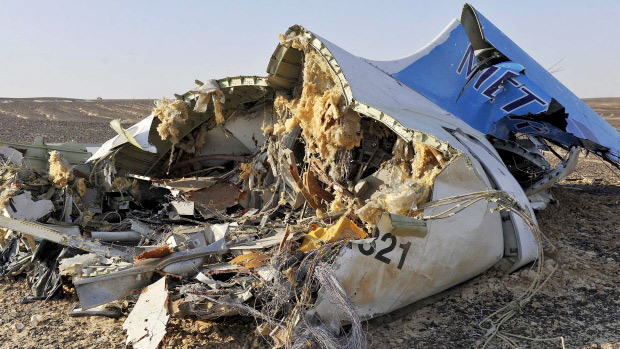
One thing that usually unites all conspiracy theories is that they lack logical coherence. At the broadest level, it is doubtful that so many entities would be conspiring to be against you specifically Similarly, it is often doubtful whether others would go to such extreme lengths to put you down. It is unfortunate that both are operational in modern-day Egypt after the downing of a Russian aircraft. Yes, it's apparently being called a Western plot to defame Egypt's leadership. While even Russian authorities have now concluded that the plane was brought down by a bomb, Egyptian ones are still in denial:
Instead, Mr. Sisi and his supporters have shut down any discussion of possible terrorism, and rallied patriotic passions against the idea, portraying Western alarms as a plot against Egypt. “Of course we are talking about a conspiracy,” Dr. Alaa Abdel Wahab, an adviser to the minister of tourism, said Thursday in a telephone call to a morning talk show. Dr. Wahab argued that Western governments were trying to harm Egypt because they resented “the popular support for President Sisi.”
This sort of pattern has a long history:
Egyptian officials have invoked similar themes for decades in response to crises, from Egypt’s defeat in the Arab-Israeli War in 1967, blamed on the United States and Britain, to the deadly floods this fall in Alexandria, blamed on the plugging of sewers in the city by Islamists.

But with so many jobs at stake — and so many other countries watching the investigation — some say the government’s response to the crash may be testing the limits of Egyptians’ willingness to suspend their criticism and to unite against an ambiguous foreign threat. After Mr. Sisi’s bellicose talk of going without food, “people are just making fun of him,” said Hisham Kassem, a veteran Egyptian journalist sympathetic to the president. “I am disappointed.”

The government has approached every crisis as a shadow war against foreign enemies, Mr. Kassem said, perhaps reflecting Mr. Sisi’s years in military intelligence before he led the ouster of President Mohamed Morsi of the Muslim Brotherhood two years ago. “The president and all of his advisers are from the security services,” Mr. Kassem said, but “if you are going to handle a P.R. crisis using the security services, you are going to bungle.”
If you devote even a smidgen of thought to the matter, it is easy to poke holes in this conspiracy. The most basic one is: if Egyptian leaders hate vile, conspiring Westerners so much, then why do they lament the loss of Western tourists? Theirs is Eddie Murphy logic all over again: kill the white people / but buy my record first. Except here it's...screw the white people / but visit my tourist traps first.

Should you really hate Europeans and all the rest, well, perhaps you shouldn't attempt make a living catering to their tourists to begin with.

PS: Also see Rob Brotherton's new book on the Psychology of Conspiracy Theories that is rather more forgiving of their logical inadequacies as a byproduct of cognitive limitations.

Weak Euro? Europe as a Retirement Destination

♠ Posted by Emmanuel in , at 8/03/2015 01:30:00 AM
Affordable living and scenic beauty--the promise of European retirement destinations.
With the euro commanding $1.10 as opposed to, say, $1.54 right before the global financial crisis hit, many things European have become affordable. Consider retirement: not so long ago retiring in Europe was thought to be prohibitive by most Americans. Nowadays, it's within reach thanks to the slumping euro. MarketWatch has a neat feature on this new possibility. Yes, we know--the United States' landscape full of fatsos 'n' strip malls is hardly the most attractive place to retire. So, why not go to where the culture is higher (and real)?

Consider France--at least outside of traditional tourist traps:
“Outside of high-glamor zones like Paris, Provence, and the sun-soaked towns of the Riviera, the cost of living and real estate in France can be surprisingly reasonable,” says InternationalLiving.com’s France correspondent Barbara Diggs. “Yet the quality of life remains very high.”

But there’s another reason France makes life easy to enjoy: The country treats people as if they matter. France offers universal health care to its citizens and legal residents who qualify (it takes five years of permanent residence to become eligible). Pre-existing medical conditions are irrelevant to your ability to be covered and out-of-pocket costs are extremely low.

Even if you aren’t a part of the national system, reasonably-priced private health insurance is available. For example, at the Association of American Residents Overseas, 50- to 59-year-olds can buy gold-standard medical coverage for about $5,000 a year. Diggs says expats in France she’s spoken to report paying $6 for medications that would cost $180 in the U.S.
Spain, too is looking good. Never a big-ticket destination, it's even more affordable now:
Spain has long been one of the least-expensive countries in Europe and today, with real-estate prices at their lowest in decades and the euro weaker than in years, this country is a bargain for full- or part-time living. Along many of Spain’s coasts, one-bedroom apartments sell for under $100,000. More spacious one- and two-bedrooms go for $150,000 or so. Comfortable, furnished, long-term apartment rentals run as little as $550 a month.

Day-to-day expenses are low, too. In season, many fruits and vegetables now sell for a paltry 50 cents a pound and the quality is superb. Spain’s fixed-price lunch specials — the menú del día — are famous for their good value. Two filling courses, plus beverage and sometimes dessert, a menú generally runs about $10 to $17. If you plan to live in Spain full-time, you’ll need private health insurance to get your residence visa; plans start at under $200 a month. Once you’re a resident, you can apply to join Spain’s public health care system.
Italy too is affordable as long as you stay away from the usual tourist traps:
“Leaving aside hot spots like Capri and Sorrento, the farther south you go, the more prices fall,” says InternationalLiving.com’s Europe editor Steenie Harvey. “The average monthly rent for a one-bedroom apartment in Lecce, a flamboyantly baroque city in the Apulia region of Italy’s deep south is $436,” Harvey notes. Utility bills are low is this area of the country too, thanks to its long summers and milder winters, averaging around $76 a month. Apulia is the stiletto heel of Italy’s elegant “boot,” a place of rustic beauty. With around 500 miles of coastline, the area is washed by the Adriatic as well as the Ionian Sea.
Potugal is cheaper yet, with an old-world flair to it:
Portugal is the last true bastion of Old World living in Western Europe. It’s small (no bigger than Indiana) but diverse, with each region distinct. You can loll about an olive grove burrowing your toes into daisy-strewn grass, linger in southern beach towns or travel on clattering trains into medieval towns.

In the whitewashed villages and walled towns of the southern Alentejo region, time is still measured in church bells. That’s not to say Portugal is backward. You can get free Wi-Fi in public places and you’ll find a glitzy mall or two. English is widely spoken. International Living’s Eoin Bassett says: Think of Portugal as life with modern convenience and none of the hassles, stress and traffic.

If you have $1,600 to $1,700 a month, you’ll live well. That includes rent, which can be as little as $300 a month for a centrally-located apartment in a pleasant provincial city.
It's never too late to flee America since retirees are spoiled for choice nowadays with Southeast Asia also making a strong case.

Will Obama Boycott (Now PRC-Owned) Waldorf-Astoria?

♠ Posted by Emmanuel in ,, at 6/25/2015 01:30:00 AM
Reds' listening devices under the bed at the now Chinese-owned New York Waldorf-Astoria?
One of the best-known hotels in the world is the Waldorf-Astoria in New York. Its fame stems from world leaders, celebrities, and movers and shakers in the world of business patronizing this venerable institution for decades. A source of its renown has been American presidents staying there whenever in the Big Apple. Like, for instance, while delivering addresses at the United Nations. If only these rooms could speak, they could tell us about persons who have shaped our world. Consider the presidential suite:
The Waldorf Towers, which bills itself as a hotel atop a hotel and has its own drive-through entrance on East 50th Street, has 26 “presidential style” suites. The presidential suite itself isn’t even the biggest or the most expensive. (It is surpassed by the Cole Porter, with five bedrooms; the royal, where the Duke and Duchess of Windsor lived; and the penthouse.)

Still, it’s roomy, with a foyer, a living room with a decorative fireplace, a dining room that seats 10, a kitchen and a boudoir off the marble master bathroom. It is spacious enough, at 2,245 square feet, to accommodate 50 guests. (The suite can also be converted into a more economical one-bedroom.) Originally fitted with colonial-style furnishings, it was redecorated in a Georgian style in 1969, “to be evocative of the White House, without trying to copy it,” said Matt Zolbe, the hotel’s director of sales and marketing.

There’s no great original art to speak of, but the living room is graced by an upholstered rocking chair that belonged to John F. Kennedy; wall sconces donated by Richard M. Nixon; and books by Homer, Shakespeare, Lewis Carroll and J. K. Rowling (she stayed there). Facing the king-size bed and Serta Perfect Sleeper mattress (with 400-thread-count sheets from Anichini) is a desk owned by Gen. Douglas MacArthur, who had a suite at the hotel.
If you're rich enough, you too can stay at the presidential suite. However, it may not deserve its name for much longer if rumors are true that Barack Obama will not be staying there for the upcoming UN general assembly:
Every president since Franklin D. Roosevelt has stayed in the presidential suite on the 35th floor of the Waldorf Astoria New York in Manhattan. The accommodations run $4,000-$6,000 per night, hotel officials say, and feature souvenirs collected from past commanders in chief and security measures like bulletproof glass windows. Current and former White House officials have long considered the hotel and its staff as the best in the world at hosting the most powerful man in the world. That may all be about to change. President Barack Obama is on track to skip the Waldorf this fall when he heads to New York for the annual United Nations General Assembly, several officials told Yahoo News. 
Is Obama boycotting this Hilton-managed property over the antics of heiress Paris Hilton? Hell no! Reportedly, the PRC-based Anbang insurance group buying the property has resulted in [my eyes are rolling here] "security" issues. What if the presidential suite is now riddled with listening devices? At least that's the argument of those steering Obama away from the Waldorf-Astoria:
While the officials would not say so explicitly, they strongly indicated that the decision to reevaluate the historic relationship with the Waldorf was tied to the hotel’s sale to China’s Anbang Insurance Group, approved by U.S. regulators earlier this year. While Hilton will continue to operate the property for 100 years, one U.S. official linked the American decision to relocate the president to worries about Chinese espionage and to the announcement of an upcoming “major renovation” at the hotel that could provide an opportunity to install surveillance gear. The recent theft of millions of federal workers’ personal information, pinned on China, has fed the sense of alarm in Washington. China denies responsibility for the breach.
What's this, hotel protectionism? Having passed Committee on Foreign Investment in the US (CFIUS) scrutiny, you would think that security-related concerns have been assuaged since the American president has always stayed at the Waldorf-Astoria. I guess not. 

Air India, From Losing Money to Pilot Fisticuffs

♠ Posted by Emmanuel in , at 4/14/2015 01:30:00 AM
Captain said knock you out: aboard not-so-amazing Air India.
Oh dear, these national carriers keep coming to our attention with their unprofitability and headline-grabbing incidents. After Malaysia Airlines and Lufthansa, we now have India's flag-bearer, Air India. Like the two others mentioned earlier, Air India is saddled with "legacy" costs being the flag carrier. Moreover, militant unions will oppose any sort of rationalization or, indeed, privatization. Still, plans were mooted late last year to do just that in the face of expected opposition from vested interests despite the money-losing airline hemorrhaging cash that the government needs to keep replenishing:
The government will form a committee within the next fortnight comprising bankers, aviation experts and technocrats to help turn around and look at privatizing money-losing national airline Air India, two government officials aware of the matter said on Thursday...

It’s the latest effort by the central government to turn around Air India, which made a loss estimated at Rs.5,389 crore in the year ended 31 March and has accumulated losses of $5 billion in addition to total debt of Rs.40,000 crore. The government, in 2012, promised an equity infusion of Rs.30,000 crore till 2021 to bail out the airline. Of this, it has already infused nearly 18,000 crore.
Air India’s woes date back to a failed merger with Indian Airlines, another state-owned airline (the latter flew domestic routes and a few international ones in the neighbourhood; the old Air India flew only international routes) in 2007 and laxity on the part of India’s aviation ministry that effectively allowed international airlines to expand their presence in India without any reciprocal benefit for Air India. “Air India is bleeding the country. Every year we have to pump in Rs.6000 crore,” one of the two government officials cited above said on condition of anonymity, adding that the mandate of the committee would be to “look at making the airline better—cut costs and increase revenues, before privatization”.
Fortunately for Air India, its headline-grabbing event is not a spectacular air crash or a flight disappearance. Then again, the event hardly paints a flattering portrait of the carrier as pilots on a flight had a fistfight [!] before taking off:
Struggling state-run carrier Air India has grounded two of its pilots after a fight erupted between the pair just before takeoff, reports said Monday. The co-pilot allegedly assaulted the captain inside the cockpit as they were preparing the passenger plane for takeoff from the Indian tourist city of Jaipur to New Delhi on Sunday night, the Hindustan Times newspaper said.

The co-pilot was irritated by his superior's request to write down critical information for the flight, such as the number of passengers on board, take off weight and fuel uptake, the Times Of India reported." The co-pilot took offence at this and reportedly beat up the captain," the newspaper said, quoting unnamed sources...

Air India -- which has not reported an annual profit since 2007 -- has been hit by a string of technical glitches and other embarrassing incidents, including staff turning up late for flights.
The unprofessionalism is beyond belief. It's been a long series of hijinks that give Air India a bad image, and the latest incident certainly doesn't help. Given keep competition on international routes from Middle East-based carriers having the advantage of straddling Euroep and Asia, comic episodes aren't bound to inspire consumer confidence.

Lufthansa and the German Reputation for Efficiency

♠ Posted by Emmanuel in , at 4/06/2015 01:30:00 AM
Lufthansa is still mostly German-owned, but it varies.
The adjective "German" evokes mostly positive images in the minds of modern consumers: efficient, high-tech, and even lovable. While the first two are well-established parts of German renown for engineering, the third is somewhat newer as recent BBC and GfK polls have shown Germany cementing its grip as the world's best-loved country. In large part Germany's popularity is attributable to excelling in nearly all fields of human endeavor: From selling name-brand manufactures ranging from apparel to automobiles; punching above its weight in sports by winning the World Cup in 2014 for the fourth time for instance; and generally acting as a good global citizen, Germany excels. (Although the Greeks may take exception.)

Then we come to Lufthansa. The airline industry should fascinate IPE scholars for two reasons: First, the industry is truly a globalized one impacted by fuel costs, jetliner acquisitions, and international competition. In recent years, I have discussed the emergence of low-cost airlines and Middle Eastern carriers alongside mixed fortunes for flag carriers--most notably the crisis-hit Malaysia Airlines. Today, unfortunately, the mantle falls to Lufthansa. The deliberate crash of one of its low-cost affiliate's jets by a suicidal co-pilot has brought it to worldwide attention. However, like Malaysia Airlines, trouble was already brewing beforehand:
But Lufthansa has been criticised for its apparent ignorance of co-pilot Andreas Lubitz’s previous history of severe depression — a problem that worsened on Tuesday when the airline conceded that Lubitz had told its pilot training school about his condition in an email. Lufthansa can ill-afford that kind of bad press as safety is the cornerstone of its brand. “They are potentially vulnerable in the short term to the as yet unproven allegation that something went wrong in pilot selection and care," says Mr Grossbongardt.

Even before last week’s horror, that reputation for reliability had taken a knock. As a result of 15 days of strikes, Lufthansa had to cancel 8,600 flights last year at a cost of €222m, about half of which the airline attributed to lost future bookings. In the week before the Alps crash, pilots had gone on strike for an additional four days in a row. Management wrote to customers to apologise.
Lufthansa does not yet know whether the strikes will have a long-term affect, nor has the airline published any data on bookings in the wake of the crash. But the company — which spans the no-frills Germanwings and Eurowings carriers plus cargo, maintenance and catering units — last year fell to a €732m net loss under German accounting rules. Net debt doubled to €3.4bn and it was forced to scrap its dividend for the second time in three years.
The crash has negatively affected the airline's image and profitability, but there's more. Like Malaysia Airlines, Lufthansa needs to deal with "legacy" costs in the form of fat pensions. Competition is also intense from budget carriers Germanwings was partly meant to compete with. In effect, Lufthansa is squeezed from above and below. From below you obviously have the low-cost, no-frills carriers offering competition on European routes. From above, you also have Middle Eastern carriers on international routes with the advantage of being situated in the region between Asia and Europe offering intense competition not only on fares but also on the quality of service (including frills like limousine services):
This loss partly reflected higher pension liabilities but Lufthansa’s chief problem remains tough competition. Having underestimated the challenge from budget carriers Ryanair and easyJet, it finds itself being undercut on long-haul routes to Asia by the Gulf carriers.

Lufthansa hoped a cost-cutting plan that included shedding 3,500 administrative jobs (3 per cent of group headcount) would help transform its fortunes. But while the programme led to a €2.5bn gross improvement in Lufthansa’s results between 2012 and 2014, those savings were eaten up by cost inflation and lower fares.

With revenues stagnating, the airline has frozen the size of its fleet, even as the world aviation market continues to grow. “Our most important priority, apart from safety, is our future viability,” Mr Spohr told shareholders last month, before the crash.
Even for this proud German carrier, profits don't come easy. What can I say? It's a tough industry where nobody cares what your home country is. 

AirAsia & Dealing with Disaster's Aftermath

♠ Posted by Emmanuel in , at 1/12/2015 01:30:00 AM
Partly due to appropriate post-crisis response, AirAsia stock has retained much value post-December 28 (Sunday).
It behooves me that attention is seldom paid to businesses operating in Southeast Asia unless extraordinary things happen. Such was the case with Malaysia Airlines prior to the two tragic incidents that occurred last year [1, 2], and so it is now with budget carrier AirAsia. In terms of profitability, both have had differing trajectories as Malaysia Airlines had to deal with significant "legacy" costs whereas AirAsia has been relatively free from those in running a young, dynamic operation. Prior to recent incidents, both also had sterling safety records. Recall, too, that both were momentarily connected in 2011 until Malaysia Airlines' vested interests vetoed the idea of a slimmer, trimmer Malaysia Airlines that emulated AirAsia's business model.

With the crash of an AirAsia jet, we are unfortunately back to circumstances everyone would much rather avoid. Nobody likes these things to happen, but they do. An interesting if unusual topic of interest in this regard concerns airline responses to air disasters. How should executive leadership respond to such events? Also, how is firm performance affected by these responses in the aftermath? The Nikkei Asian Review has an article that sheds some light on the matter. Given the charismatic leadership of Tony Fernandes, it appears that his firm is responding better than Malaysia Airlines did in terms of promptly disclosing available information and empathizing with those affected. Taking responsibility has helped:
Fernandes has won praise and support for his proactive communication with relatives of the crash victims via Twitter soon after the jet was confirmed missing in the early morning of Dec. 28. He asked his employees to remain strong, consoled the families of the crew and passengers, and alerted the media to upcoming company statements. Fernandes also took care to reflect the solemnity of the incident, changing the airline's bright red logo to a somber gray online.

 "I, as your group CEO, will be there through these hard times," Fernandes wrote on Dec. 28. He flew to Surabaya from his base in Kuala Lumpur within hours after the flight vanished from Indonesian air traffic control. There he met the families of the passengers and crew, and later flew to Jakarta to meet with authorities overseeing the rescue operation.

 AirAsia's response stands in sharp contrast to that of Malaysia Airlines, the country's flag carrier, which lost two of its jets last year. In an incident on March 8, it took the airline several days to publish an accurate version of the passenger list on its Flight MH370, which vanished with with 239 people on board and is still missing.
Not being aloof helps, as well as interacting in a timely manner with various stakeholders:
A newcomer to the airline business when he started, Fernandes said the secret of AirAsia success has been his ability to get close to his staff. "Thirteen years ago 'till now, I am still the same, willing to meet the staff and hear their problems out," he told The Nikkei Asian Review days before the crash.

When one of the bodies was identified as a crew member, Fernandes wrote Jan. 2 that he would personally escort the body to its final resting place. "I'm arriving in Surabaya to take Nisa home to Palembang," he said. Many of Fernandes' nearly 1 million followers on Twitter have responded with praise and admiration.
To be sure, the facts are not yet fully known about the causes of this accident. That said, the performance of AirAsia stock seems to reflect the proprietor's conviction that AirAsia will remain a viable concern. Contrast this situation with Malaysia Airlines that had to be nationalized yet again in the aftermath of its 2014 accidents.

The narrative that seems to be emerging is this one: AirAsia was in relatively good shape financially prior to its accident, whereas Malaysia Airlines was not. In the face of adversity, the former is better able to deal with adversities that may arise in the form of paying indemnities to passengers and so forth. That AirAsia's public relations has handled its crisis better-=likely in response to what happened to its fellow Malaysian carrier--bodes well for its longer-term prospects. Successfully dealing with adversity, after all, distinguishes those who thrive from the also-rans.

Macau's Evolution: Life Beyond Gambling

♠ Posted by Emmanuel in , at 12/22/2014 09:03:00 AM
Xi says it's time for the shifting Sands.
By now everyone is aware that Macau is by far the world's largest gambling destination, dwarfing Las Vegas in terms of gaming revenues. Las Vegas only earns one-seventh of its revenues at this point. Yet, for all this success in attracting gamblers--high-rollers especially--there are downsides. The recent crackdown on PRC officialdom using state funds to gamble in Macau, initiated by President Xi Jinping, has resulted in a rather severe deterioration in the fortunes of casino operators in Macau? How severe, you ask? Try wiping out $75 billion in market capitalization, for starters:
Xi, who arrived today to mark the 15th anniversary of the former Portuguese enclave’s return to Chinese rule, is the man responsible for the two-year campaign against corruption in China, scaring away high rollers who have helped make Macau the world’s largest casino gambling hub and wiping out $75 billion of casino operators’ market value -- bigger than the entire economy of Luxembourg.

Macau, half of the size of Manhattan and the only place in China where casinos are legal, is viewed as a conduit for officials and businessmen to bypass currency controls and send money out of the mainland to safer havens. While anti-graft campaigns have been short-lived in the past, Xi is stepping up the effort in a bid to bolster the legitimacy of the ruling Communist Party.
 
“It’s more important for China’s government to see Macau in a healthy economic development, and the reliance on corrupted official gamblers is not healthy,” said Chen Guanghan, deputy director of the Chinese Association of Hong Kong and Macau Studies, a policy research institute backed by China’s government.
So, having long since surpassed Las Vegas in terms of gaming revenues, PRC leaders seemingly concede that much of Macau's recent gains have come from "the reliance on [PRC] corrupted official gamblers." In a case of do as I say and not what I do--the mainland certainly hasn't moved past manufacturing as its main source of growth--the likes of President Xi are telling Macau to diversify its sources of revenue. In other words, instead of pitying Las Vegas, Macau should be more like the US destination in gaining business from shows, sporting events and so on:
Chinese President Xi Jinping on Saturday urged the world's biggest gambling hub, Macau, to accelerate diversification away from its bread-and-butter casino industry... "It is important for Macau to adopt a global, nationwide, future-oriented and long-term perspective, formulate appropriate plans and blueprints for its development and promote sound economic and social development," Xi said, in comments carried on Chinese state television.

"Focus on building a global tourism and leisure centre ... promote the Macanese economy's appropriate diversification and sustainable development. This is of great importance for the interests of the people of Macau." 
Although he didn't mention casinos by name, what Macau should "diversify" from is plenty obvious. Nor does he acknowledge how his crackdown has imparted a sense of the PRC acting as Big Brother watching over the big spenders:
Xi's visit comes as Macau has been battered by his pervasive anti-corruption campaign, with revenues for 2014 expected to drop for the first time since casinos were liberalised over a decade ago. High-roller gamblers have increasingly steered clear of Macau, on the mouth of the Pearl River delta, unnerved by the increased scrutiny of the gaming industry as Xi's anti-graft drive shows no signs of let-up.
Hence Cirque de Soleil shows and Manny Pacquiao fights in Macau. While these sorts of marquee entertainment and sporting events have begun coming to Macau, it will need a lot more of them to wean Macau away from reliance mostly on gaming. In this respect Las Vegas is actually still way ahead of the game with its busy calendar for hosting business conventions and the like. Make no mistake: Macau still has catching up to do with Las Vegas in terms of becoming a well-rounded and, yes, diversified destination for business and leisure travelers.

Territorial Disputes & PRC Travel Warnings on Philippines

♠ Posted by Emmanuel in ,,, at 10/23/2014 01:30:00 AM
Good luck finding these sorts of wedding photo ops back in the PRC.
An area of study in international relations that nobody has looked at is this one: countries locked in disputes engaging in travel warnings against each other. Since most countries today are WTO members, using discriminatory measures against others' products and services is more difficult to do than in the per-WTO period. So, how are you going to get back at the offending party? Try travel advisories warning that the country in question is some kind of godforsaken hellhole where terrorism is rampant and the rule of law is an illusionary concept.

As it so happens, China has been a particularly avid user of travel warnings against all and sundry transgressors of the will of the Chinese people (or at least the Communist Party). Locked in territorial dispute with the Philippines over its, ah, expansive claims to huge swathes of the South China Sea, the PRC is hitting the Philippines where it hurts. You see, the Philippines is targeting 10 million visitors by 2016 and is using its "It's More Fun in the Philippines" campaign to ramp up foreign interest in it as a tourist destination. Anyway, back to the killjoys...
In its advisory, the Chinese Ministry of Foreign Affairs cited a "worsened security situation in the Philippines" that may see Chinese nationals targeted. It followed an alleged bomb plot against the Chinese embassy, the kidnapping of an 18-year-old man in the southern Philippines and general concern about criminal gangs.

The Philippine military has since dismissed the alleged bomb plot, noting that the man arrested was a fringe politician whose bombs were merely firecrackers, and the Chinese embassy has yet to determine if the kidnapped man was indeed a Chinese national.

Aileen Baviera, a professor who specialises in Philippine-China relations at the Asia Center of the University of the Philippines Diliman, said it seemed hard to justify the advisory. "There are so many Chinese in the Philippines, they're all over the country. So these are really isolated incidents," she said.
As you would guess, the reasons cited are, well, specious. The real reason, most commentators would agree, is to get back at the Philippines with minimal international repercussions over this tinpot banana republic taking it to court over territorial disputes. So, trade-related measures are out, but travel warnings are certainly fair play:
But the advisory was issued amid high tensions between Beijing and Manila over territorial disputes in the South China Sea and is widely seen in the Philippines as going beyond Beijing's security concerns for its tourists. "Hyping up the danger to their own nationals in the Philippines is one way that they [Beijing] put subtle pressure on the government," Ms Baviera said.
There's no doubt about it: the Chinese are playing hardball given the suspect timing:
China issued a similar travel advisory in 2012, at the height of a stand-off at the Scarborough Shoal - a reef claimed by both Beijing and Manila. That time, it cited a protest planned outside the Chinese embassy in Manila. Of the 1,000 protesters expected by the Chinese embassy, only about 200 showed up, and anti-Chinese violence did not materialise.

The new fall in tourists has already had an economic impact. China is the fourth largest source of foreign tourists in the Philippines, after South Korea, the United States and Japan. Chinese tourists spent 6.46bn pesos (£89.5m; $144.7m) in the country between January and August 2014, according to a report by the Philippine Department of Tourism.
Welcome to geopolitics, Asian style. 

Yank Boomers Needn't Delay Retiring...in SE Asia

♠ Posted by Emmanuel in ,, at 10/02/2014 01:30:00 AM
Need I say more?
To make an understatement, let's just say Yanks are not known for their long-term planning. As the earliest cohort of Baby Boomers is of retirement age, we are learning that years of debt-fueled overconsumption and secular declines in income have resulted in platoons of sixty- and seventy-somethings who barely have enough to live on. End result: they must continue working well into their so-called retirement years. They didn't save enough, their investments didn't pan out, or their expectations for living costs without real sources of income were on the optimistic side. Guess what's one of the faster-growing segments of the US labor force?

Short of borrowing the TARDIS from Doctor Who, I am afraid there's not much they can do about insufficient savings and poor returning investments (like housing). However, one thing they can actually do to retire before they reach the century mark or so is to go where the costs of living are lower than in the United States of America. For instance, they could retire in Southeast Asia. Given the popularity of sunny retirements destinations--Arizona, Florida, and Nevada come to mind--they can have all that and more in my backyard:
Southeast Asia is a remarkably beautiful and diverse region that is becoming much more welcoming to Western retirees. Southeast Asia's big appeal for foreign retirees is the cost of living. Several countries here are among the world's cheapest places to retire. Your money goes much further in this part of the world than in the United States or any other Western country, but that does not mean that the standard of living is necessarily lower. 

It is possible to stretch your retirement nest egg to enjoy a better lifestyle in Southeast Asia than you could afford anywhere else in the world. For example, in the United States you're probably paying at least $50 per month for reasonably fast Internet. In the Philippines Internet costs $12 per month, likely for faster speeds than you have now. In Thailand and Malaysia fast Internet is $18 per month.

Similar savings can be seen in the prices of everything from rent and phone service to cooking gas, electricity and groceries. A visit to the doctor costs less than $20 throughout most of the region, and the care you receive is likely to exceed your expectations. English-speaking doctors educated in Europe, Australia and North America are the norm. They work in hygienic offices with modern equipment and can be affiliated with modern internationally accredited hospitals. Thailand and Malaysia are among the top five countries in the world for medical tourism.
Speaking of which, just as many Southeast Asian countries are now promoting medical tourism, they are now also promoting themselves as retirement destinations for Westerners. They are aping Latin American countries in this respect:
Living in Southeast Asia full time is increasingly becoming an option for Western retirees. Several countries now offer user-friendly, affordable retirement residency programs, this region's answer to the pensionado programs that have attracted so many foreign retirees to key Latin American destinations. New programs offered by some countries in this part of the world directly appeal to foreigners looking for legal, long-term residency in retirement. Several countries waive any minimum monthly income requirements for long-term or permanent residency if you invest in a fixed-deposit account at a local bank. In countries where a monthly pension is required, the qualifying amount is often surprisingly low. 
The rest of the US News and World Report article goes into the specifics of retiring in Thailand and the Philippines in particular. To be honest, Westerners may find the law and order situation in Thailand and the Philippines wanting in some places, but hey, doesn't the same hold true for any number of locales Stateside? And, of course, retiring in the tropics sound rather more attractive than stocking shelves or flipping burgers at age 65. 

Lose Money Quick Scheme: EU Airlines in, er, Europe

♠ Posted by Emmanuel in ,, at 9/22/2014 01:30:00 AM
Those were the days, my friend: aboard Lufthansa in the Fifties.
My grandparents belonged to a generation when there was still novelty and romance associated with commercial flight. They would dress in their finest as they jetted off to American or European capitals for work or leisure. "Put on your finest suit, dear; we're flying to Vienna tonight." I am sure this memory was not something I made up: until the early Seventies, it really was like this. Since air travel was oh so very costly. you might as well live it up while airborne. For better or worse, deregulation and the accompanying democratization of flight has made air travel mundane. So much so that the shirtless, lardy American bloke you would rather avoid in public ends up next to you on the plane...snoring rather loudly...drooling on your shoulder. Yuck.

For many a flag carrier, glamour and now passenger civility are not the only things which have been jettisoned. Profitability is another thing as national carriers have found it hard to deal with legacy costs, unprofitable routes, and competition from low-cost carriers. Ask Malaysia Airlines. All things considered, things are even worse for European carriers that now find the most unprofitable routes to be those at home:
The biggest airlines across Europe are finding it tricky to make money in their own backyards. Air France-KLM said on Thursday it will transfer a major portion of its European flights to Transavia, a low-cost airline acquired by KLM 11 years ago, as part of a major restructuring aimed at reversing losses on short flights. The same strategy has been adopted in Germany with Lufthansa’s steady shift since 2012 of its European flying from Frankfurt and Munich to its lower-cost Germanwings unit.

The shunning of European routes by the global flag carriers reflects the cutthroat nature of fare competition in the continent, where airlines such as EasyJet, Ryanair, and Wizz Air dominate the short-flight market. Those carriers’ labor costs are substantially lower than at Lufthansa, Air France, and British Airways, which also have routes that don’t touch their hubs. Flying routes off their hubs offers very little revenue upside, says Seth Kaplan, managing partner of industry journal Airline Weekly, and this is one reason U.S. airlines have virtually eliminated flights that don’t involve one of their hubs. “Non-hub, short-haul flying is all a cost game, and that’s a game the true low-cost carriers like Ryanair and EasyJet will always win,” Kaplan says.
It appears unionized workers are still hanging on to a bygone age when cutthroat competition did not exist:
These flight-shifting and cost-cutting tactics have infuriated airline employees in Europe, with three pilot strikes against Lufthansa in the past two weeks. Air France, meanwhile, is now bracing for a weeklong pilot strike tentatively set to start on Sept. 15; the airline has urged customers to reschedule their trips. Air France-KLM pilots contend that Transavia cockpit crews should be paid the same as their peers across the company.
All I can say to these unionist-dreamers is this: Wake up, those days are gone and they will never come back. Ours is such an unglamorous age in so many ways. I am of two minds about this. Sure you can go to all sorts of places for much lower fares nowadays, but getting there is now such a chore that sometimes you'd rather wish you'd have stayed home.

Way back when, you actually looked forward to traveling to the destination.

Could Military Rule Work? Thai Junta & Phuket

♠ Posted by Emmanuel in ,, at 8/12/2014 01:30:00 AM
Cleaning up paradise.
As a pragmatist, I am not wedded to ideas that "democracy" and "free markets" are necessarily the best solutions in all places at all times. If you want simplistic, crusader-grade pontification, there are many other places for you to visit. For a case in point, consider what was happening to Thailand's famous beach resorts during the years when the Thaksinite red shirts were in power: wiseguys were abusing the system, making private what was public for their own gain. With the ouster of sister Yingluck Shinawatra's regime through a military coup, Westerners were ostensibly aghast at this violation of civil rights. A military coup? How barbaric! Me, I prefer to dwell on outcomes rather than processes, so here it goes.

The truth is that the restoration of order has done much to help shore Thailand's tourism industry after the tumult of the pro-Thaksinite era. Consider is the world-famous beach destination of Phuket. The military junta--there is no point calling it something else--has cracked down on abuses in the resort that made it resemble an overcommercialized tourust trap overcrowded with vendors and others encroaching on the beachfront that is supposed ot be public space:
Raddled by allegations of corruption and mismanagement by inept authorities, the Thai holiday island of Phuket looked destined within a few years to have its once-beautiful beaches destroyed by the side-effects of mass tourism. Since the 2004 tsunami made Phuket even more of a household name around the world, tourism boosters have catered to sharply increasing numbers of visitors, with the island's overwhelmed infrastructure deteriorating rapidly...

Along the foreshores at many beaches, illegal businesses sprang up and grew. Beach clubs predominated, but a visitor could spend hours in a beauty salon on the sand or even buy a time-share property. A constant stream of vendors left tourists little time to snooze. Paradise was evaporating, if it hadn't already.
The military has begun putting these slackers in their place:
Today, all that is changing, due to the arrival of khaki and camouflage-clad soldiers. They tromped Patong, Phuket's main west coast beach, enforcing the message that the hedonistic days of lazing on sunbeds were at an end, along with the vendors' privateering ways. Sand was making a comeback.

Though many Western countries have condemned Thailand's latest coup, it may just have saved Phuket from further decay -- also producing some useful social outcomes for similarly troubled holiday destinations in other parts of the country. All beaches in Thailand are public space by law. The prohibition of private business operations on these public beaches is without exception, but has been ignored on Phuket and some other tourism destinations.
Locals are beginning to understand these guys mean business:
Phuket locals interpreted the concept of public beaches as meaning anyone could use them, so first they added sunbeds, then built thatch and bamboo bars on the shore fronts. Over the years, entrepreneurs joined in, expanding the venues into large restaurants and beachclubs. Some businesses grew to the water's edge. There was no enforcement by authorities to force them off the beach.

Once the army took charge, though, local mayor Ma-Ann Samran, of Cherng Talay, says he began receiving daily visits from officers in civilian clothes. He had no hesitation in admitting he eventually acted to save the beaches in his district out of fear. ''I was genuinely scared,'' Ma-Ann said. ''The Army let me know I had to act.''

After decades of local ''law'' being applied, the Army transformation came at great speed, within days of the May 22 coup.  Graders toppled beach clubs and restaurants, while the sunbeds and umbrellas were carted off in pickup trucks, banned forever. Tourists on all Phuket beaches now sit on towels.
To be fair, it is true that the military junta has been more successful at restoring peace and order than generating economic growth. That said, providing a semblance of order is more likely a prerequisite for economic growth than chaos. So we'll see what happens, but tidying up the beaches is undoubtedly a step in the right direction.

Can Malaysia Airlines Be Rebranded?

♠ Posted by Emmanuel in , at 8/01/2014 01:30:00 AM
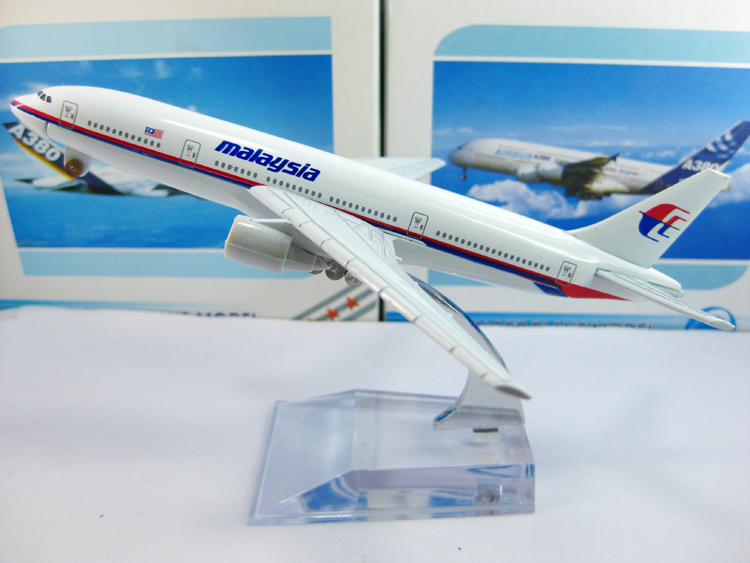
This model may soon become a historical item.
 Can a once-proud name like Malaysia Airlines be restored after two headline-grabbing accidents in 2014? I have written about how the carrier is already burdened with overstaffing, competition on domestic routes from low-cost carriers, and competition of international routes from Middle Eastern ones. On top of everything, it is a state-owned firm with all the (check-in) baggage that entails in terms of being politicized as a "flag carrier." Actually, Malaysia Airlines was briefly privatized, but it soon found itself in government hands as credit woes struck. Hence, 2014's incidences hit an airline that was already in financial trouble.

Now there is talk of rebranding the carrier. However, the problem for Malaysia Airlines for as long as it remains a government-owned firm is that it cannot bear a name which does not have "Malaysia" in it for obvious reasons. To show you how this principle works, recall the Korean Airlines 007 that was shot down for straying into Soviet airspace in 1983. The year after, its name was shortened to "Korean Air" and its livery was changed to different colors but that's about it. The options here are rather similar:
A government-led review of Malaysia Airlines – the carrier reeling from the disappearance of one aircraft and the alleged shooting down of another – is examining the case for renaming the company. Two people familiar with the situation said the Malaysian government – which through the country's sovereign wealth fund has a 69 per cent stake in Malaysia Airlines – was looking at a rebranding alongside other potentially far-reaching options to safeguard the carrier's future[...]
 
The person close to Malaysia Airlines said the government-led review would consider renaming the airline, founded in 1947, but stressed no decisions had been reached. Another person with knowledge of Malaysia Airlines cautioned that rebranding may not be straightforward because Malaysia's economy is partly built on tourism, and therefore it was important for the carrier to bear the country's name. The people familiar with the government-led review of the carrier said it could lead to a reshaping of the company – for example, its aircraft maintenance unit could be spun off.
Extraordinary circumstances aside, Malaysia Airlines has a reputation for well-maintained planes, and it may spin off these operations to make them available to other carriers (just as Lufthansa Technik does). With regard to rebranding, though, I think Malaysia Airlines' options are limited in having to bear the country's name. If the company is not divested by the government, I think the most it will do is change its paint scheme, logo and even the uniforms of cabin crew, but that's about it.

Here in Southeast Asia, we have yet to get past the notion that "nationhood" means having an identifiable national airlines. Yes, yes, I know: Garuda Airlines of Indonesia doesn't bear the country's name in the title, but its subtitle is "The Airline of Indonesia." For better or worse, it is what it is--Malaysia's national carrier.