When Tesco Comes to Town (Not)

♠ Posted by Emmanuel in at 11/04/2007 04:13:00 PM
For our non-UK readers, Tesco is Britain's largest retailer that invites nearly the same level of ire as America's Wal-Mart. The complaints against Tesco are much the same: the retailing giant kills off small stores when it comes to town, squeezes suppliers to the bone, etc. Many smaller retailers thus banded together and cajoled the British Competition Commission to investigate the reviled Tesco for its unfair business practices. The results are in, and they are not exactly what the complainants would have liked: Britain needs more, not less big stores. In addition, the regulators now want to relax restrictions on the size of stores that can be opened. They got the opposite of what they wanted. Unsurprisingly, this turn of events has the Federation of Small Businesses whose membership is made up of small retailers up in arms:

“The Competition Commission’s report seems to recognise problems such as below-cost selling and the shoddy treatment of suppliers, but claims that small independent retailers are not affected. This is absurd.

“Small independent retailers are closing at a rate of 2000 per year and you’ve only got to walk down your local high street to see the evidence of this.

“The suggestion that, to increase competition, the planning system should be relaxed to allow more supermarkets to be built is perverse.

“Consumers deserve more than a choice between four supermarkets selling the same products. The specialist retailers and independent stores that offer consumers real alternatives are suffering from the anti-competitive practices of the supermarkets. The Competition Commission’s latest report does nothing to address this.”

In any event, here is the Economist reporting on the findings of the Commission. It seems that the reviled Tesco now has the regulator's blessing to operate. Is England turning into a nation of Tescos from a nation of shopkeepers?
Be careful what you wish for. Two years ago, after vigorous campaigning and a judicial review, small shopkeepers forced competition authorities to look at the conduct of the biggest supermarket chains. They complained that the giants were abusing their market power, squeezing suppliers too hard and selling goods at a loss to drive mom-and-pop stores off the high street. Their hope was that regulators would stop new superstores being built. Instead, when the Competition Commission released its provisional recommendations on October 31st, it stunned many with proposals that are likely to result in still more supermarkets springing up.

The commission proposes to relax planning constraints on big new stores. It also wants to make retailers sell land to rivals, after finding that many have been buying up sites in towns where they are strong in order to keep out competitors.

Such proposals may seem counterintuitive, given widespread concern about the clout wielded by mammoth supermarket chains: the four biggest control almost 75% of the market and Tesco alone has 31%. The Federation of Small Businesses reckons the proposals are letting down both shoppers and small retailers, and the Association of Convenience Stores, which represents more than 33,000 shopkeepers, thinks they will entrench the dominance of existing big supermarkets.

Yet where many see cause for alarm, the competition regulator sees consumer choice in action. It thinks the rise of big supermarkets has been good for consumers, on the whole. Food prices have fallen a real 7% since 2000 (though they are rising again with higher international commodity prices), choice has widened as some 2,000 new products have been added to the shelves each year and most people in Britain live a short drive away from at least one large shop. “It's a free country and shoppers can shop where they like,” says Peter Freeman, the chairman of the commission. “The consumer is getting a reasonable deal from the retail industry.”

Crucially, however, the commission found that many of the benefits to consumers arise from competition between big supermarkets. In towns with few or just one, prices rise, or the range and quality of goods on offer decline. And the benefit of being the only big store in town can be substantial: such shops make an extra £25,000 profit a month, enough to create a clear incentive to try to prevent competitors from entering the market.

This would matter little if small shops could force supermarkets to pull up their socks. But although small shops compete vigorously with one another on price and quality, their influence on big supermarkets is negligible. This is worrying, for almost a quarter of all large supermarket stores have either no large competitor or just one within a 15-minute drive.

The commission's concern, then, is not that there are too many supermarkets, but that there are too few. One reason is Britain's sclerotic planning system, which keeps new entrants out of the market while encouraging the supermarkets already there to expand their existing stores. But it also found evidence that some big chains have been naughtily buying up land to keep out competitors. The four biggest are sitting on almost 900 undeveloped sites, half the number of the big supermarkets now operating.

Surprisingly, the commission also found evidence that supermarkets don't seem to hurt small stores as much as was previously thought, and perhaps not at all. Although lobbyists for small shops argue that their number is falling precipitously, the commission found a 70% increase in the number of convenience stores between 2000 and 2006, and more than half of the new ones were independents.

When a new supermarket enters an area, the watchdog found, although the number of small grocers fell, the number of bakers increased. And there was no discernible change in the number of butchers, fishmongers, delis and health-food stores. Whether they would survive a second supermarket nearby seems less certain. But they will have only themselves to blame if they are forced to find out.

Chinese Carmakers Aim at Toyota

♠ Posted by Emmanuel in , at 11/04/2007 02:55:00 PM
Should we scoff at the grand ambitions of comparatively puny automakers which aim to be the Toyota of the Chinese automotive industry? Not so long ago, America's automakers were laughing at Japanese cars which copied theirs, albeit not very well. Look where Japanese carmakers are now in comparison to Detroit's finest. Times have changed and many say there is lots of overcapacity already. It will be interesting to see how things evolve going forward, but I remain guarded about the prospects of Chinese carmakers staking a claim to global industry leadership in the near future. As always, I suggest that they get their marketing sorted out and stop coming up with head-scratching auto names like the "Chery Eastar" and "Chery Cowin." From the China Daily:

There's no tax on big talk, goes a Chinese saying. Many indigenous car brands seem to have taken that aphorism to heart.

BYD Auto, a small privately owned carmaker that recently graduated from making batteries, has grandly announced that it aims to be a global auto champion by 2025 by moving more than 13 million units a year. The only problem is the Hong Kong-listed BYD sold a mere 60,000 cars last year, less than 0.7 percent of that of Toyota, which has unseated General Motors to be the world's top carmaker this year.

Two years ago, Geely, another privately owned Chinese carmaker, declared that it expects to sell 2 million vehicles annually by 2015, with two-thirds abroad. The company's 2006 sales stood at 200,000 units.

Commenting on such pompous boasts, Yale Zhang, director of Greater China Vehicle Forecasts for US auto consultancy CSM Worldwide Corp, says: "They are only trying to grab publicity."

But Zhang is quick to add that it's just "a matter of time" before one or two local companies grow into globally competitive brands, even if not as big as Toyota. "Yet it will take them 20 to 30 years," Zhang predicts.

Most Chinese car brands have been making rapid progress in recent years as a result of rising prosperity and the consequent increase in vehicle demand in the world's most populous country.

According to Zhang, Chery, the top Chinese nameplate in the passenger car sector, is the most promising candidate to become a global player. The company, based in the eastern city of Wuhu, sold more than 300,000 units last year.

A partner of Chrysler and Fiat, Chery is widely seen to have the strongest research and development capability, with the biggest lineup among Chinese carmakers. It also enjoys strong backing of the central government and local authorities.

Chery has been researching the success of Toyota, from product portfolio, manufacturing, quality control and cost-cutting to marketing, sales and overseas expansion. "We will become a Chinese Toyota," it declares.

Chery aims to boost its annual sales to 1 million units by 2010, a much more realistic goal than that of BYD or Geely. It also plans to double the number of its overseas plants to 14 and lift its sales abroad to 400,000 units from 52,000 units last year.

Other Chinese brands are also trying to follow the path of Toyota. A top executive from Geely says: "In the long term, we will have plants in all regions of the world where Toyota has."

Despite fast growth, says Jia Xinguang, an independent auto industry analyst based in Beijing, indigenous brands are no match for global giants in terms of research and development, quality, financial power and internationalization. Jia predicts the nearest that the strongest Chinese brand will go to a global nameplate in the next one or two decades is French carmaker PSA Peugeot Citroen.

Chinese automakers mainly produce cheap cars that are looked down on abroad in terms of quality. Earlier this year, the Zhonghua sedan from Brilliance China Auto, partner of German luxury carmaker BMW, only achieved a rating of one star out of five in a crash test by Germany's ADAC auto club, making headlines in German newspapers. This could well affect Brilliance's plan to sell 158,000 own-brand sedans in Europe by 2011. Similarly, a Chery model has had a poor test record in Russia.

Chinese brands are also facing an increasing number of intellectual property issues. The most recent case is that of Shuanghuan Automobile, a small carmaker in the northern city of Baoding. It was sued last month in Germany by BMW, which claimed the Chinese company's CEO model closely resembles a previous version of its X5 sports utility vehicle.

Daimler also threatened to take legal action against Shuanghuan, saying the latter's Noble is a copy of its Smart Fortwo mini car.

In 2004, Chery was accused by General Motors of patent piracy. The previous year, Geely was sued by Toyota for an alleged trademark infringement.

"Domestic carmakers should take quality and intellectual property issues more seriously. Otherwise, their brand image will be ruined, especially in the Western market," Jia says.

Breaking new ground, BYD is betting big on electrical cars to dodge the fierce competition in conventional vehicles. The company says it will put a mid-sized F6 model with a petrol engine as well as rechargeable batteries into commercial production in the second half of next year. It will also start making purely electric cars in 2009.

"Electric cars will be the trump card for us in the global arena. We expect them to account for half of our total sales by 2015," says Xia Zhibing, BYD's sales chief.

According to the company's data, F6 will have a maximum mileage of 400 kilometers and a top speed of 160 kilometers per hour if it uses batteries only.

However, Jia warns BYD's drive to go electric runs a higher risk as the quality and reliability of electric cars are yet to be established and it's not clear how the buyers will accept such cars.

Water Wars in the US of A

♠ Posted by Emmanuel in at 11/03/2007 04:52:00 PM
The governors of Georgia, Alabama, and Florida have been engaged in a three-way smackdown over the drying up of Lake Lanier, a large artificial lake of considerable importance to all three states. Georgia needs it to supply the metropolis of Atlanta with water. Alabama needs it to help cool a nuclear plant which neighboring states also rely on. Meanwhile, the fishing industry in Florida claims it is being adversely affected by efforts to slow the flow of water downstream. Add these all up and you have one fine political-economic mess caused by environmental concerns. All three (Republican) governors are pressing their cases with President Bush, though there clearly isn't a win-win-win situation available given the ongoing drought. Economics, after all, deals with the allocation of scarce resources.

ABC News and CNN (whose home base is in Atlanta) have footage regarding the ongoing water wars among the three states. Below is a Reuters piece on the situation:
A large, man-made lake in north Georgia is at the center of a political storm over how to distribute water resources between three states in the face of the region's worst drought in decades.

Lake Lanier stands near the head of a watershed that feeds the booming city of Atlanta about 45 miles to the south, leading to accusations that the city is consuming more than its fair share of water.

Also relying on the lake are other towns, industries and power plants in parts of Georgia, Alabama and Florida before the water drains south into the Gulf of Mexico.

More than a year of low rainfall has reduced the lake's water level by about 14 feet from its seasonal norm and the situation is worse in lakes farther south, according to the U.S. Army Corps of Engineers. Atlanta has had 23.5 inches of rain this year compared to 39.1 inches in a normal year.

Experts dismiss as alarmist headlines predicting that Lanier could run dry in 90 days but the drought has reignited two-decade-old tensions over access to water.

Georgia's governor, Sonny Perdue, declared an emergency in parts of the state, imposed water restrictions and appealed to Washington for help for people hit by the shortage.

He also filed a federal lawsuit bid to force the Corps, which manages Lake Lanier, to reduce the amount of water it sends downstream each day.

Florida Gov. Charlie Crist strongly opposed the suit, arguing that the $200 million commercial fishing industry in Florida's northwestern Panhandle region already was threatened by reduced flows from Georgia.

Alabama Gov. Bob Riley said any reduction in flows from Lake Lanier would hinder cooling at the Farley nuclear plant in southeastern Alabama, jeopardizing electricity to 800,000 households across all three states.

For most of its 7.5 million annual visitors, Lake Lanier is a pleasure park close enough to Atlanta to provide a getaway from city life with nearly 700 miles of shoreline and 10,000 private boat docks. Now, the sight of stranded docks sticking out of the mud is the most visible symbol of the drought.

Buford Dam, a vast concrete structure hidden behind a wall of grass at the lake's southern end, is a symbol of the political battle the drought has set off.

By law the dam must release at least 650 cubic feet per second of water downstream to ensure water quality and, crucially, to supply other rivers and lakes, said Jonathan Davis, the Corps' operations project manager at the lake.

Given that water flowing into the lake from the Chattahoochee and Chestatee rivers is down by more than half, one might expect the outflow to be similarly reduced.

But water in the total river basin stands at 35 percent of normal and Davis said the Corps has been sending up to 3,000 cubic feet of water per second cascading south, raising water levels and churning the river.

In part, the Corps is responding to the demands of the Endangered Species Act, which stipulates a minimum outflow from the lake to protect mussels, sturgeon and other species in the Florida Panhandle.

But beyond that some scientists argue that the region's over-reliance on Lake Lanier is flawed.

"It's scientifically unsound to expect Lake Lanier to support the entire ... watershed as the Army Corp of Engineers is doing," said David Stooksbury, Georgia's state climatologist.

"They are artificially keeping the (Chattahoochee) river much higher than it would be if those (downstream) lakes were not there."

Atlanta, like cities such as Phoenix, Dallas and Denver, has experienced rapid growth without being based around a major water source, Stooksbury said.

For the region that depends in part on Lanier for water the situation is exacerbated because Atlanta, which has more than quadrupled in size since Lanier was built 50 years ago and is the largest city in the region, also happens to stand near the headwaters.

Ronald Payne, deputy commander of the Mobile district in Alabama for the Corps, said over-consumption did not play a significant part in creating the resource problem.

But Adam Snyder, executive director of Conservation Alabama, said poor water management planning -- as much as low rainfall -- was at the root of the dispute.

"The problem is that you have a high demand for water in the Atlanta area," he said. "They being at the headwaters of so many different streams and everyone else is at their mercy .... It is three states versus the Atlanta metropolitan area.

"Forty years ago Atlanta claimed they were 'too busy to hate,"' he said, referring to the city's slogan as a racially harmonious city. "Since then they have been too busy to plan and the rest of us are suffering as a result."

Kremlin Takes on Lufthansa

♠ Posted by Emmanuel in at 11/03/2007 04:01:00 PM
Russian President Vladmir Putin is famed for using strong-armed tactics to get neighboring countries to see Russia's way--witness the cutoff of natural gas supplies to former Soviet satellites in the dead of winter. Now, Russia is taking on an even bigger foe in Lufthansa, the second-largest carrier here in Europe. Though it has already backed down, Russia for a while suspended the carrier's rights to go through Russian airspace as part of a ploy to get it to relocate a refueling hub from the central Asian republic of Kazakhstan to one in Siberia. Germany temporarily banned Aeroflot flights from passing German aerospace in retaliation according to Der Spiegel, though it seems both sides have calmed down somewhat. (As an aside, there's a feature in Der Spiegel on the Nashi youth cult of Putin.)

This latest spat is part of an ongoing conflict between the EU and Russia over rights to go through Russian airspace. The EU seeks to abolish payments for these rights, though Russia lets the matter drag on as doing so is lucrative:
According to one EU report, European airlines pay roughly €300 million ($433 million) annually for the right to fly through Russian airspace. A debate between the EU and Russia over these fees has been dragging on for almost 20 years. In a compromise reached by both sides in 2006, but which Moscow has yet to ratify, Russia agreed to abolish the fee by the end of 2013. Legal experts say that fees levied for flyover rights can only be applied to flight safety and must not exceed these expenses.

"For decades, EU airlines have been required to pay fees to the Russian company Aeroflot for the right to use Russian airspace between the EU and Japan, China and South Korea. These are in addition to the standard flight navigation fees," states a European Union paper. Airlines from the EU are thus obliged to enter into a commercial contract with Aeroflot. According to the authorities in Brussels, this practice contravenes international law and, in particular, the Chicago Convention of 1944, which guarantees air carriers flyover rights at no or limited expense.

The European Commission made the abolition of the fees a pre-condition to Russia's entry into the World Trade Organization (WTO). And, in May 2004, Moscow committed to eliminating the fee. Starting in 2010, the rate is to be steadily reduced and airlines will no longer be required to enter into contractual agreements with Aeroflot.

With that backgrounder in mind, on to the (temporary?) resolution of the current row from the International Herald Tribune:
In an effort to defuse an escalating diplomatic dispute with Germany, the Russian authorities agreed Friday to allow Lufthansa to temporarily resume cargo flights over Russian airspace while negotiations continue over the location of one of the German flag carrier's main refueling hubs.

Moscow abruptly suspended Lufthansa's overflight rights on Sunday, claiming a temporary permit had expired. That permit allowed Lufthansa cargo jets flying between Europe and Asia to use Russian airspace to reach a refueling station in the Kazakh capital of Astana.

The action - coming just weeks before an important meeting between the European Union and Russia on transport issues - has raised concerns that Russia may again be resorting to strong-arm negotiating tactics similar to those it has used with Ukraine and Belarus in disputes over natural gas and oil prices. Russia shut off pipelines briefly during the past two winters, disrupting fuel supplies to Western Europe.

The dispute began Oct. 22, when the Russian Transport Ministry sent a letter to Lufthansa and the German Transport Ministry, asking that the airline move its cargo hub from Kazakhstan to an airport in the Siberian city of Krasnoyarsk - about 1,500 kilometers, or 900 miles, east of Astana.

"We have refused this demand because the infrastructure and technical equipment in Krasnoyarsk is not sufficient to operate an international air cargo hub," said Peter Schneckenleitner, a spokesman for Lufthansa. He added that weather conditions at the Siberian site were unreliable and prone to thick fog.

Russia's overflight ban has forced Lufthansa to reroute its 49 weekly flights between Europe and Asia, the airline said. This adds approximately three extra hours of flight time, for example, on round trips between Frankfurt and Tokyo, consuming an additional 600,000 liters, or 160,000 gallons, of jet fuel per week.

In a statement Friday, the Russian Transport Ministry said it had decided to extend until Nov. 15 "temporary permission for flights by Lufthansa Cargo until the official confirmation by the German side of the selection of an airport for transit landings."

It also said the German authorities had agreed to consider having Lufthansa cargo flights make transit stops at Krasnoyarsk and would notify Moscow of their decision by next Wednesday.

Germany has so far sought to resolve the dispute on a bilateral basis. But a government spokesman told the Reuters news agency that it was considering approaching the European Commission for help.

Jacques Barrot, the EU transport commissioner, is due to meet with his Russian counterpart, Igor Levitin, at a meeting in Moscow Nov. 16-17. Among the items on the agenda for that meeting is the formalization of a tentative agreement by Russia to phase out, by 2014, overflight fees it charges for passenger planes flying between Europe and Asia. European airlines spend about €300 million, or $435 million, a year on such fees, according to the Association of European Airlines.

While Russia does not charge such fees for cargo flights, some speculated that the timing of the dispute with Lufthansa could be linked to the deal on passenger overflight fees.

"This may be Russia trying to establish a position of strength" before its meeting with the EU, said David Henderson, a spokesman for the airline association, which represents 31 of the region's carriers, including Lufthansa...

Russia, which stretches across 11 time zones, is a major transport route for cargo flying between Asia and Europe. "This is a situation that is unique in the world," Henderson said. "No other country straddles as much airspace as Russia."

Are Britons More "Laissez-Faire"?

♠ Posted by Emmanuel in at 11/03/2007 02:09:00 PM
I've dug up this International Herald Tribune article dating from November 2005 that sheds light on the topic in the post title. I am sure that you've heard of Qatar's interest in buying controlling stakes in the London Stock Exchange and Sainsbury's, the third-largest supermarket chain here in Blighty. According to this article, the widespread incidence of stock ownership in formerly state-owned firms by average Joes and Janes paved the way for Britons to decide, yeah, who cares if they sell off the "crown jewels" of the former British Empire or something to that effect. Although some entities are strictly off-limits like British Petroleum and British Airways, there is a lot up for grabs...
It had been a sinew of empire, a shipping line that ferried soldiers and diplomats, even royalty, on the Victorian mail-runs that tied Britain to its outposts far to the east and beyond.

But when Peninsular and Oriental Steam Navigation, or P&O, became the object of a likely $5 billion-plus bidding war on Monday after a takeover approach from Dubai Ports World, the company seemed headed the same way as so many other onetime jewels in the British economic crown - into foreign ownership.

As P&O stock soared on speculation that contenders from Hong Kong or Denmark might enter the bidding, the contest invited a more philosophical question: What makes Britain so relaxed about selling companies to outsiders in a way that many in Continental Europe, France, Italy and Germany in particular, seem reluctant to emulate?

It is a question that has wide repercussions: As the European Union ponders its future, the same clash between free markets and national protectionism has all but stalemated the debate and even threatens world trade talks.

For some, the answer lies in a deep-rooted faith among the business and political elite, common to Britain and the United States, that market forces will ultimately provide a more robust economy and greater prosperity.

There is little doubt that the buy-sell ethic of the marketplace has taken root here since the privatizations of the 1980s under Margaret Thatcher, when the sale of public utilities like the state-run gas and telephone companies turned many Britons into shareholders overnight.

"Capitalism has been here for a long time," Robert Grindle of the investment bank Dresdner Kleinwort Wasserstein said in London. "It's not a Blair thing, it's a Thatcher thing."

He cited Britain's lower unemployment, stronger growth and flexible capital markets as evidence that the system works, its theory being that "the best owner for an asset is the one who wants to pay the most for it."

True, there are strategic companies like British Petroleum and British Airways that are held resolutely as predominantly British entities. And the United States is increasingly touchy when it comes to the idea of selling strategic assets to foreigners, as was displayed by congressional maneuvers to block China National Offshore Oil Corp.'s bid for Unocal this summer.

But a string of British companies are now in foreign hands, with the latest step being the bid Monday by Telefónica of Spain for O2, the wireless offshoot of BT, the direct descendant of Britain's state-run phone company.

Last month, Boots, the pharmacy chain founded as an herbal remedy shop in 1849 that became an emblem of the British Main Street, was sold to Alliance UniChem, a pan-European drug distributor. In June, the American company H.J. Heinz snapped up HP Foods, the 170-year-old manufacturer of such English condiments as Lea & Perrins Worcestershire Sauce.

"Britain has learned that there is no harm is selling your local champions to foreigners," said Holger Schmieding, an economist with Bank of America in London.

Oliver Bretz, a specialist in European and competition law at the Clifford Chance firm, said, "Even within the defense and nuclear industries Britain has a more forgiving regulatory framework" than in much of Continental Europe. "Nationality does not figure very highly" as an obstacle to deals.

It is in the auto industry - where Ford owns such illustrious British sports car brands as Jaguar and Aston Martin, and where Volkswagen owns Bentley - that some of the differences between the British and Continental cultures seem particularly apparent.

This year, when MG Rover teetered, finally, on the brink of collapse, the British authorities toyed with intervening but abandoned the idea. A Chinese company ended up buying the company's leftovers.

The British government's refusal to get involved in the MG Rover debacle showed something of the way Britain's bare-knuckles culture has spread into the national psyche since the days of extensive state involvement in the economy, from coal mines to steel mills.

Britons "don't expect the state to be the first to fix it," whatever the problem, said Katinka Barysch of the Center for European Reform, based in London. "They have less confidence in the state managing things."

Chindia's Demographic Time Bomb?

♠ Posted by Emmanuel in ,, at 11/02/2007 03:50:00 PM
Photo Sharing and Video Hosting at Photobucket
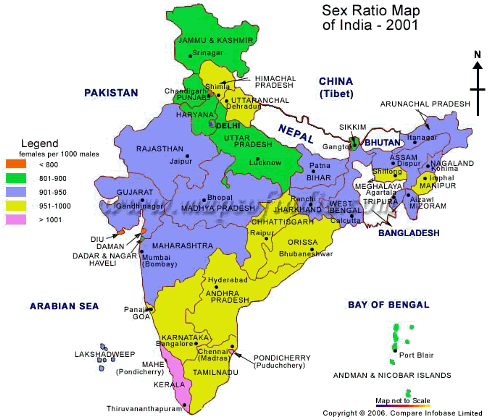
Bloomberg columnist Bill Pesek is on a roll nowadays as this is the second straight column of his featured here. I've had some posts on the possible future consequences of the lopsided gender imbalance in China [1, 2]. Although there is a ban on sex-selective abortion in place and officials vow to get tough on those who violate the ban, the gender imbalance there keeps worsening. India also suffers from the same problem due to, among other things, the still-widespread tradition of dowry in which the family of the bride is obligated to give that of the groom a bounty that would-be parents want to avoid. China and India have the dubious distinction of being #1 and #2 in gender imbalances worldwide. As I have already written more about China and its imbalance, let us focus here on India.

The chart above is taken from a page where you can drill down further to the district level to see demographic imbalances in India. Just as China has, India banned sex-selective abortion back in 1996 but this law has proven difficult to enforce. Meanwhile, the Times of India decries this imbalance in modern India:

It's long been a matter of shame for 'modern' India — and just keeps getting worse. Despite booming growth rates and rising literacy, more and more girl children are being killed at or before birth. Fresh statistics show 80% of India’s districts have recorded a decline in sex ratios since 1991.

The worst offender is Punjab, where the ratio of girls has dropped from 875 in 1991 to 798 girls for every 1000 boys in 2001. This chilling data is part of the latest report on "State of the World's Children", due to be released by Unicef shortly.

Punjab is closely followed by Haryana, which has recorded a 60-point drop from 879 girls in 1991 to 819 in 2001, followed by Chandigarh, Himachal Pradesh and Uttaranchal. A surprise entry to this hall of shame is Arunachal Pradesh, where the child sex ratio has dropped from 982 girls to 964. Delhi, with all its cosmopolitan pretensions, has a 47-point drop from 915 girls to 868...

The report is a sweeping indictment of efforts of governments to enforce laws against foeticide as well as killing of newborn girls. Campaigns to encourage people to consider girl children as socially and even economically desirable do not seem to have made much headway either.

The all-India average is 927 girls for 1000 boys which puts the country right at the bottom of the chart internationally. In fact, it fares even worse than countries like strife-wracked Nigeria (965) and neighbour Pakistan (958). According to the report, only China with 832 girls per 1,000 boys ranks below India on this dubious front.

According to sources, the dismal state of affairs is largely due to misuse of pre-natal diagnostic techniques and the consequent increase in cases of female foeticide.

"In prosperous states like Punjab and Haryana, people have both access and money to misuse technology," a source said. Incidentally, the report notes that incidence of female foeticide seem more prevalent in urban areas compared to rural regions. In Punjab, the number of girls in rural areas is 799 per 1000 boys, compared with an even grimmer 796 in urban zones.

Here is the Pesek column on what these imbalances may mean for the development of these countries going forward. It's a serious concern, no doubt:
No matter what one calls it, the desire for sons in China, India and other Asian economies is causing a dangerous gender gap. In China, for example, 120 boys were born for every 100 girls in 2005, according to a new United Nations report. This growing testosterone glut is something investors making long-term bets on Asia should be monitoring, and closely.

``Sex ratio imbalances only lead to far-reaching imbalances in society,'' Thoraya Ahmed Obaid, head of the UN Population Fund, said in Hyderabad, India, on Oct. 29. ``We must carry forward the message that every human being is born equal in dignity, worth and human rights.''

Tell that to the ever-growing numbers of families from Beijing to New Delhi and from Hanoi to Kathmandu actively avoiding the birth of daughters. It's a cultural phenomenon governments have yet to address sufficiently and one that could have unexpected economic side effects.

The preference for boys often boils down to economics. Sons tend to support parents in their old age, while daughters are often seen as a liability. Families sometimes need to pay a dowry when daughters marry. In some cultures, sons perform last rites when parents die and continue the family name.

It's a bit of Darwinism in reverse. Families are conducting a kind of unnatural selection process to get ahead economically. Yet hundreds of millions of households engaging in such an experiment may backfire on entire economies. Guilmoto, who wrote the UN report, says men will outnumber women by 23 million in India and by 26 million in China by 2030. Some estimates are even higher.

In the 1990s, economist Amartya Sen drew attention to the phenomenon of ``missing women.'' Improved census data now allow us to see how much the trend is growing and could undermine Asian growth, productivity and lead to bigger budget deficits. It might even lead to an increase in violence.

This latter risk was detailed in the 2004 book ``Bare Branches: Security Implications of Asia's Surplus Male Population.'' In it, Valerie Hudson and Andrea den Boer warned that Asia's shortage of women is giving rise to an entire generation of young men with no prospects of finding a mate. They argue that biology, sociology and history suggest the imbalance will lead to crime and social disorder.

Farfetched, perhaps, yet the UN warns that the focus on sons in countries such as China, India, Nepal and Vietnam may fuel sexual violence and trafficking in women. The UN notes that if Asia's overall sex ratio were the same as the rest of the globe, in 2005 the region would have had 163 million more females.

Here, China and India should be the largest concern for investors. Multinational companies are relying on increased consumer demand in the two most-populous nations. So are investors, who are betting on strong economic growth, rising productivity and an ample supply of increasingly skilled labor.

``To address the socio-economic basis for the preference for boys, both societies need to reduce the dependence of parents on their male children, while improving the economic standing of daughters,'' says Jing Ulrich, chairman of China equities at JPMorgan Chase & Co. in Hong Kong. ``This will require improvements in social security and policies to improve education and female participation in the workforce.''

One consequence of Chinese becoming richer may be more sex selection, not less. Improving ultrasound and amniocentesis technology is making it easier for parents to abort girls, and reports of female infanticide are becoming routine. The same is true of India; the wealthier the region, the wider the gender divide is likely to be.

What also concerns the UN is what all those single men will do with their desire for female companionship. Sadly, the real winner could be the human-trafficking business amid increased demand for prostitution and the outright purchase of mates.

China's government is beginning to address the issue. Earlier this year, the Communist Party vowed to take ``tough measures'' to control the imbalance. Yet China needs to become more aggressive in tackling a problem that's partly at the root of President Hu Jintao's push for a ``scientific outlook on development.''

Hu wants to spread the benefits of China's 11.5 percent growth. At the moment, the lack of safety nets -- public help with education, health care and pensions -- means that sons are the safety net. Having a boy is your retirement plan and until that changes, Chinese may welcome fewer and fewer daughters.

Among the biggest obstacles is the not-in-my-backyard dynamic that demographers confront in Asia. It's recognition by parents that it's important to have more girls -- just as long as someone else has them. Breaking this NIMBY mindset will require tremendous political will and spending in the years ahead.

Russia Bets on Nanotechnology

♠ Posted by Emmanuel in , at 11/02/2007 02:22:00 PM
Oil exporting countries have been contemplating the question, "after oil, what?" for quite some time. While these countries are currently making it big with oil prices at stratospheric levels, two things are making them plan ahead. First, some may be running out of reserves faster than they would like in the absence of major finds. Second, even if they have plentiful reserves, the drive towards alternative energy sources might lessen the demand for oil going forward. Thus, these countries are trying to hedge their bets in a number of ways. Dubai in the UAE is attempting to become a financial center in the Middle East. Saudi Arabia is putting up a massive university that is trying to spur research in science and technology. And, in today's post, Russia is trying to become a leader in the field of nanotechnology by using petrodollar proceeds.

Right off the bat, you might become suspicious as the Russian nanotechnology venture, Rosnanotekh, is state-owned. Can innovation thrive in such a contrived environment? I do not doubt the capabilities of Russian-born engineers, beginning with the Russian nuclear and space programs to Google's Sergey Brin. However, you've got to question whether Silicon Valley-style entrepreneurship can be replicated in state hands. In any event, here is Wired on the scene:
After sleeping through the high tech revolutions of the late 20th century, the Russian government is dumping billions into the burgeoning science of nanotechnology. The Kremlin last June announced the creation of Rosnanotekh, a state nanotechnology corporation slated for $5 billion in initial funding -- an outlay that propels Russia past China in nanotech spending, and puts the country on a par with the United States in government-funded nano research.

"Nanotechnology will be the (foundation) for all industries in a science-driven economy," said Mikhail Kovalchuk, director of Moscow's Kurchatov Institute. "Nanotechnology will be the driving force of the Russian economy -- if it can overcome the legacy of the recent past."

Russia's leap into nanotechnology is the sharp edge of Russian President Vladimir Putin's push to make up for this country's failure to develop high tech industries during the computing and biotech revolutions, and to compete globally in a field considered ripe for new discoveries.

Nanotechnology is the science of assembling devices out of individual atoms or molecules. It was first theorized by physicist Richard Feynman in 1959, and today is widely expected to produce major advances in everything from pollution control to cancer treatment.

It also represents a quiet admission that Siberian oil and gas, Russia's financial wellspring, won't last forever.

For Russia to succeed in nanotech, it must first overcome the yawning chasm between its deep intellectual resources and its economic infrastructure. Russian scientists have been quiet theoretical pioneers in nanotech since 1999, when the Russian Academy of Sciences began publishing the well-regarded Journal of Nano and Microsystem Technique. But Russia has no industry to put that research to use. When St. Petersburg hosted Russia's first international nanotech conference last fall, the audience was noticeably bereft of Russian companies, but packed with note-scribbling headhunters from Western technology firms like Intel, Siemens and Bosch.

"We could compete in the world market, and we are interesting to foreigners in the field of new ideas," said Sergei Kozyrev, director of the Center for Perspective Research in St. Petersburg, during the conference. "But when it comes to competition in the realm of production, to producing working samples, we find ourselves far behind other countries.... That has been our problem ever since Soviet times."

There's also the question of where all of Rosnanotekh's billions will end up. Transparency International routinely rates Russia among the most corrupt countries in the world, and state enterprises are dominated by Kremlin insiders with little public accountability and oversight. Rosnanotekh will likely be no exception.

"There's a lot of technical talent in Russia, but not all of the funds allocated to nanotech will be deployed effectively,” said Christine Peterson, a vice president at the Foresight Nanotech Institute, in an e-mail interview. "The lack of commercialization infrastructure will also be a serious handicap. Success will depend on convincing joint-venture partners from outside Russia that it is financially safe to participate."

Rosnanotekh will be a state entity, but will be free to pursue private partnerships unburdened by direct Kremlin control. While the company will dispense the research funds, the actual work will be overseen by the Kurchatov Institute, the leafy Moscow research campus named after the father of the Soviet bomb and home to the luminaries of 20th-century Russian science. Officials at Kurchatov will oversee grants to 50 state institutes engaged in nanotech research.

At the center of Russia's nanotech dreams is Kurchatov director Kovalchuk. The 62-year-old physicist from St. Petersburg is expansive to the point of dreaminess about the potential of nanotech. In a September lecture at a conference in Helsinki, Finland, Kovalchuk shared his vision of a postindustrial future defined by the "dematerialization of production" (write your own Marxism joke) and an energy grid fueled by nano-enabled solar and nuclear power. He envisions nothing less than a "nano revolution" that will solve the energy and environmental crises during his lifetime.

"Nanotechnology is key to de-energization in the next century," Kovalchuk told Wired News. "Coupled with bionics, it has the potential to reduce drastically the amount of energy we consume, and the corresponding waste."

An interest in cleaner energy is also a pet interest of metals oligarch Mikhail Prokhorov, who sits on Rosnanotekh's board. Prokhorov has pledged to channel part of his new $17 billion investment fund into developing hydrogen fuel cells using nanotech.

This talk of clean and renewable energy can sound strange in Moscow. Russia is a petro-state known for its lax attitude toward domestic and international pollution. It has by far the most wasteful pipeline and electricity-transmission infrastructure of any industrialized nation, and is being outspent in alternative energy research by its fellow petro-states in the Persian Gulf.

But oil and gas are increasingly seen in Russia as a means to an end -- a bridge to a clean-energy future beyond oil and gas. Kovalchuk is even hopeful that nanotech will find the magic bullet to make all carbon-based fuels obsolete: fusion power. The key, he believes, lies in the nano-engineering of the Tokamak, a magnetic-confinement device considered the leading candidate to one day produce fusion energy. Its inventors? Two Kurchatov scientists named Igor Tamm and Andrei Sakharov.

The Lexus and the Communist Party

♠ Posted by Emmanuel in , at 11/01/2007 02:54:00 PM
Photo Sharing and Video Hosting at Photobucket

Some of you may have caught my allusion to New York Times columnist Thomas Friedman's bestselling book from a few years ago The Lexus and the Olive Tree. Anyway, the graphic above comes from the website for the 2nd China Private Banking & Wealth Management Forum. Given that China now has the second most billionaires in the world according to one source, it's a good bet that banks looking after HNWIs (high net-worth individuals; see an earlier post on this market if you've got the scratch) would flock to the Middle Kingdom. The above graphic claims the Chinese HNWI market is worth over $3 trillion. While China has not really liberalized its financial services sector at the retail level for a handful of reasons, it appears to be welcoming international banks that cater to the HNWI market.

What struck me is not that most of the big international HNWI players are looking to ply their trade in China, but that even officials from the Party School of the CPC Central Committee are to speak at this jamboree alongside various bourgeois luminaries like John Major. (I've encircled it above.) Truly, as Deng Xiaoping noted, to get rich is glorious--even for comrades. Chairman Mao must be rolling in his grave as the capitalist roaders have seemingly taken control of the country's commanding heights. Little red book, meet little red dress.

Climate Change and Tourism

♠ Posted by Emmanuel in , at 11/01/2007 02:21:00 PM
The UN World Tourism Organization recently held a conference on the topic of "Climate Change and Tourism" in Davos, Switzerland. (There are seemingly endless UN subunits dedicated to various issues.) The issues behind climate change and tourism are straightforward to understand but not to solve: While tourism is a good source of income--especially for developing countries--handling tourists and travel exacts an environmental cost. Moreover, disappearing snow in ski resorts, damaged reefs in beach resorts and so on are wreaking havoc on parts of the industry. Below is a background from the UN World Tourism Organization on the topic. There is also a declaration from the conference available that is a typical UN-produced document, I'm afraid, filled with lofty aspirations that do not necessarily have the multisector buy-in necessary to achieve these aspirations...
  • The growing international awareness about the fast pace of climate ‎change taking place on our ‎planet, together with the impacts that such ‎changes are having on the natural environment, on ‎humans and their ‎economic activities have become evident.
  • ‎
  • For tourism, climate change is not a remote event, but a phenomenon ‎that already affects the ‎sector and certain destinations in particular, ‎mountain regions and coastal destinations among ‎others. At the same ‎time, the tourism sector is contributing to greenhouse gas emissions ‎‎‎(GHG), especially through the transport of tourists.‎ ‎
The impacts of climate change
  • Climate is an essential resource for tourism, and especially for the ‎beach, nature and winter ‎sport tourism segments. Changing climate and ‎weather patterns at tourist destinations and ‎tourist generating countries ‎can significantly affect the tourists’ comfort and their travel ‎decisions. ‎Changing demand patterns and tourist flows will have impacts on tourism ‎businesses ‎and on host communities, as well as knock off effects on ‎related sectors, such as agriculture, ‎handicrafts or construction.
  • ‎
  • In small island states and developing countries, where tourism is a major ‎economic activity, any ‎significant reduction in tourist arrivals will have ‎serious employment impacts and generate ‎further poverty.‎ ‎
Awareness
  • Since the 1st International Conference on Climate Change and Tourism, ‎convened by UNWTO ‎in Djerba, Tunisia in 2003, a growing body of ‎knowledge has been generated addressing the ‎complex relationships ‎between the tourism sector and climate change with important research ‎‎activities on this subject.
  • ‎‎
  • There is now a wide recognition of the urgent need for the tourism ‎industry, national ‎governments and international organizations to develop ‎and implement strategies to face the ‎changing climate conditions and to ‎take preventive actions for future effects, as well as to ‎mitigate tourism’s ‎environmental impacts contributing to climate change. Furthermore, such ‎‎strategies should take also into account the needs of developing ‎countries in terms of poverty ‎alleviation and other Millennium ‎Development Goals.
The International Herald Tribune offers a write-up:
It is often said that farmers are on the front lines dealing with global warming, their livelihoods being extraordinarily dependent on the weather. But tour operators and resort owners are not far behind.

Imagine a ski resort whose chairlifts are in the lower reaches of mountains, without decent snow. Or a scuba club whose reefs succumbed to warmer and stormier seas. Or a golfing hotel in a district where water shortages made it impossible to keep fairways green. All are real possibilities, industry experts say, and in fact, early effects are already being felt.

And so, this month, the United Nations convened a conference, "Climate Change and Tourism," for tour operators and officials from nearly 100 countries to discuss the impact of global warming on their livelihoods. "The tourism industry must adapt rapidly," the final report concluded.

"The entire tourism product will be affected - every destination has a climate-related component," Geoffrey Lipman, assistant secretary general of the UN World Tourism Organization, said by telephone from the meeting, held in Davos, Switzerland. If the climate is going to change, "which we know it will, we'd all better adapt," he said.

"Some people are going to find that they had tourism before and don't now," Lipman said. "In the Canadian Rockies it may be the reverse."

In the developed world, tour operators do not generally face a crisis, though profits will depend on successful adjustment. But along the equator, keeping the tourist industry afloat is often a matter of national survival. In much of Africa for instance, tourism is the major source of income and often the only source of foreign currency.

Yet there is a heavy cost. With the industry's reliance on cars and buses, air-conditioning and especially air travel, tourism is a major source of warming gasses. It accounts for about 5 percent of the world's carbon dioxide emissions, the Davos conference concluded. And poor countries normally do not have the money to make any eco-friendly changes.

"It's nice to talk about reducing air travel but many nation states depend on it," said Lipman, of the UN tourism organization. "Think about what happens to New Zealand and Australia. More important, what happens to poor countries - the Maldives, Seychelles and Africa - who need it because it is the only way to get tourists in."

Recognizing that tourism and climate change are intimately intertwined, Fiji combined its Ministries of the Environment and Tourism this summer.

"Tourism is the vehicle for poverty alleviation in Fiji - that's how important it has become," said Banuve Kaumaitotoya, permanent secretary of Fiji's new Ministry of Tourism and Environment, who attended the Davos conference. "Without it, our economy would collapse. So we have to plan to mitigate and adapt to climate change."

For some destinations, both warm and cold, climate change is already having an impact on tourism and planning.

In Fiji more frequent storms that scientists say are caused by warming are eroding mountains and driving dirt and fresh water into the sea. That threatens to erode pristine beaches, and endangers coral reefs which need considerable salt in the water.

Fijian planners are trying to gauge the course of such change and set new standards, like guideline for how far above the water bungalows should be built to be safe if the sea level rises. "At the moment the effect is subtle, but we don't want our reefs - our island - to disappear," Kaumaitotoya said.

At the Whistler Blackcomb Ski Resort in Canada, glaciers are receding and good snow is found higher up the mountain than 10 years ago. "We've been building lifts higher, in more snow-reliant zones to give us more stability," said Arthur De Jong, the mountain planning and environment resource manager at the resort.

Ski lifts last 25 years, De Jong said. To decide where to place new ones, the resort has run a mix of computer simulations to try to determine where the snow will be depending on varying calculations of how much the temperature might rise over 30 years.

In addition, the resort has a broader green plan. It is making energy to run the lifts from snow runoff on the mountain. Its ski village is car free. And the resort has diversified from snow and it now has a booming summer business as well...

"Adaptation is expensive and the finances are a big challenge for place like Kenya," said Judith Gona, executive director of Ecotourism Kenya, which is trying to make that country's travel industry greener.

"In recent years Kenya has become a mass tourism destination - hotels were built to hold as many people as possible. Things like air-conditioning systems are not very efficient..."

At the end of the Davos conference, the UN World Tourism Organization advised travelers to take the climate into account and "where possible to reduce their carbon footprint." But if Europeans stop flying to Fiji or Antalya, poverty will worsen, tourism officials said.

"Water Rage" Claims Victim in Oz

♠ Posted by Emmanuel in at 11/01/2007 01:33:00 PM
The prolonged drought in Australia is likely to claim PM John Howard as an electoral victim. In the meantime, a poor soul has just lost his life in a "water rage" incident as an irate neighbor took umbrage to what he mistook for the profligate use of water. [UPDATE: The Sydney Morning Herald says the victim suffered a heart attack.] It's an anecdotal story, but gee, can you imagine these things happening on a wider basis as the world's water supplies dwindle? It may not be as far-fetched as you think as tempers run high. From Reuters:
A man has been charged with murder in Australia after an elderly man who was watering his garden was bashed to death in an apparent case of suburban water-rage.

Australia is in its sixth year of severe drought and most towns and cities have imposed strict limits on household water use, prompting a rise in suburban arguments and neighbors informing authorities about those who waste water.

In the latest incident, police said 66-year-old Ken Proctor was using a hose to water the front lawn of his suburban Sydney home when a man walking past made a remark about water waste.

Proctor then turned the hose on the passer by, prompting a fight. He was knocked the ground and was punched and kicked. He was treated by ambulance officers, but died later in hospital.

Authorities said Proctor was not in breach of water restrictions, as he was using a hand-held hose and was watering his lawn on his allocated day. A 36-year-old man charged with Proctor's murder appeared briefly in a Sydney court on Thursday. He was denied bail and will remain in jail until his next court appearance on November 15.

Most of Australia, apart from parts of the island state of Tasmania and towns in the tropical north, have banned garden sprinklers, made it illegal to hose down cars and pavements, and allow gardens only to be watered on set days.