When McDonalds China Can't Serve Burgers...

♠ Posted by Emmanuel in ,, at 7/23/2014 01:30:00 AM
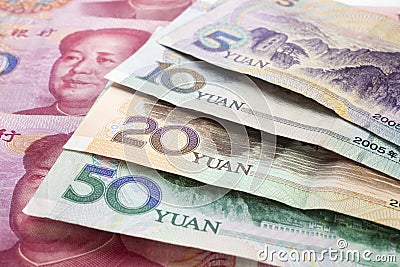
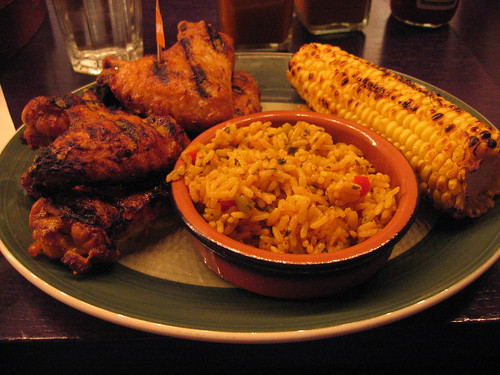
...it's like Amazon without books to sell. A colleague in China posted the picture above to his social media account in the wake of Chinese food supplier Shanghai Husi being found to have relabeled the expiration date of its meat products. Upping the visibility and impact of its food safety violations, it sold these products to several major Western food chains. We usually believe that tampering with food products is common among PRC firms and not Western ones who would think more carefully about tarnishing their reputations for a bit more profit, but this instance depicts the opposite: Shanghai Husi is a subsidiary of the OSI Group of America, a private meat processing concern headquartered in Aurora, Illinois of Wayne's World fame. You can't get more American than that.

With an already lengthy history of food scares, there was no other option for the Chinese authorities other than to disrupt the food supply chain to these chains:
Authorities suspended operations at Shanghai Husi, a unit of Aurora, Illinois-based OSI Group, after the local Dragon TV channel reported on July 20 its workers repackaged and sold chicken and beef past the sell-by date. The probe may affect chains such as McDonald’s, Yum’s KFC and Pizza Hut, Papa John’s International Inc. (PZZA) and Burger King Worldwide Inc. (BKW), which said they had bought and have since removed items from the supplier.
Unfortunately, the Chinese government doesn't go scot-free here. As it turns out, they had already been looking into the firm's practices prior to the investigative show on Dragon TV running its feature on Shanghai Husi. How do we know this? Part of the show contained the interrogation of a Shangai Husi employee stating that these practices have been going on for years now:
An unnamed quality manager at Shanghai Husi’s factory said company executives approved the use of expired ingredients, a practice he said had been going on for a few years, according to Dragon TV’s taping of his interrogation by authorities. Two calls to OSI China’s main office in Shanghai weren’t answered. The Shanghai city government’s media office didn’t immediately respond to a request for comment.

Shanghai Husi’s case would be handed to police if crimes were suspected, according to the regulator. It also ordered probes into all other China food-production operations invested by the OSI Group, including in Shandong, Guangdong and Yunnan. 
Instead of taking action only after the show was aired, the authorities ought to have cracked down as soon as they confirmed these irregularities not only to bolster their reputations but also to ensure public safety. When I travel abroad, I usually think of McDonald's as a haven for clean and safe (if not necessarily healthy) food. After all these years, I guess I should rethink that.Apologies won't work now, unfortunately.

UPDATE: For what it's worth, TIME speculates that finding against this firm may be part of Chinese efforts to undermine foreign companies operating in the PRC:
We can speculate why that might be happening. The government could be trying to reel in a few “big fish” to try to scare smaller fry into better behavior. Officials might be attempting to win points with the public by appearing to address issues of great public concern like food safety without roiling any Chinese interests. And in the process, the Chinese government might believe it can aid Chinese companies in their competition with foreign firms by undercutting the reputation of international brands...

The Chinese government has a long history of attempting to tilt the local playing field in favor of its own firms. Foreign carmakers, though very successful in China, are still forced to manufacture in the country only through joint ventures with Chinese firms — a restriction most other emerging economies don’t impose. Reports from chambers of commerce accuse Chinese bureaucrats of routinely hampering the expansion of foreign business by taking a “go-slow” approach when issuing mandatory permits and licenses. 

Adios Sochi Grand Prix 2014, Russia World Cup 2018?

♠ Posted by Emmanuel in ,,, at 7/22/2014 01:30:00 AM
Geography is against Russia retaining these events without scrutiny.
This is not exactly a pleasant post to write given the circumstances, but it's something that will be the subject of discussion anyway in the coming months and perhaps years. First, as I wrote a few weeks ago, the first Russian Grand Prix is scheduled on the Formula One calendar for October 12. Even as its business elites are preparing for the worst as the full weight of Western sanctions passed (and yet to pass_ disrupt their abilities to conduct business abroad, Russian race organizers are adamant that show must go on:
Organizers insist Russia's first Formula One Grand Prix will go ahead as planned despite an airliner being shot down in the conflict zone in eastern Ukraine.

Malaysian Airlines Flight 17 from Amsterdam to Kuala Lumpur crashed Thursday in eastern Ukraine. All 298 people on board are believed to have been killed. Ukraine accused pro-Russian separatists of shooting the plane down, something the rebels deny.

The promoters of the Oct. 12 Russian Grand Prix in Sochi told The Associated Press in a statement Friday that "all the preparations are on track and run according to the schedule," and that "organisers are confident that the inaugural Russian Grand Prix will be comfortable for all."
All I can say is that the organizers of the Bahrain Grand Prix were making similar noises prior to the 2011 race being canceled against the backdrop of anti-monarchy protests during the Arab Spring. Self-evidently, the disorder in Sochi's case emanates not from internal turmoil--Chechnya is far away--but from the weight of disapproval from foreign powers-that-be. In motorsports, they reside in Great Britain.. As the graphic above indicates, 7 out of 11 Formula One constructors are headquartered in the UK (never mind that the car brands themselves are "foreign"; their F1 facilities are mainly in the Blighty. 

I am obviously not clairvoyant as to what the culpability of Russia is in the downing of Malaysia Airlines MH17. Nor do I know what Russia's response will be if and when an international body finds the weight of evidence implicates Russia. However, I do know this: if Russia is designated a "state sponsor of terrorism" or something similar that results in severed trade ties as UK Defence Minister Michael Fallon suggests, there is no chance whatsoever that the race will proceed as planned. It will be curtains for the race and much else that is Russian-invested in Europe. Aside from most of the teams being UK-headquartered, commercial sponsors scare easily.
* * * 
Tis sad talking about real generals instead of the Oranje Generaal, but we are where we are.
Next, consider the 2018 World Cup. Unlike the IOC with its Olympic events behind the Iron Curtain--the most memorable being the 1980 Summer Games in Moscow, USSR and the 1984 Winter in Sarajevo, Yugoslavia--there were never any FIFA World Cup events held behind the Iron Curtain. (See this interesting story behind IOC politics during the Cold War.) Obviously, large-scale disapproval of Russian involvement will also torpedo Russia hosting the next World Cup even if it's only 4 years away. Being designated a state sponsor of terror or being taken to the International Criminal Court and the like will scare any sensible commercial sponsor away. 

Russia has also rubbed one of football's powers the wrong way--the Netherlands. With a majority of the passengers aboard MH17 coming from the Netherlands [193/298], it has been deeply affected by current events. That said, the Netherlands also has significant commercial ties with Russia alike many other Western European countries. What to do, then? If Russian involvement is found, then trade ties will probably not be enough to quell Dutch frustrations. For obvious reasons, Dutch input will be crucial in forming the international response to Russia.
And while the disaster has touched so many here, the government is also mindful that Russia is the country’s third-largest trade partner and that business is growing, especially natural gas.
“We are a small country, dependent on our exports, and unlike the United States, we cannot always react from our moral high grounds,” [opposition leader Alexander] Pechtold said. “Still, if it is proven that the Russians have their fingerprints on this horrible event, we cannot look in the other direction.”
Also consider that the Dutch national team is one of football's most famous draws. In Yank-speak, the World Cup without the Netherlands participating is like the Lone Ranger without Tonto. (Sorry Dutch readers; if your team had won at least one World Cup final in three tries, I'd say the World Cup without the Netherlands is like the Simpsons without Bart.) As the worst-affected country, the Netherlands is not a pushover being a NATO member and fielding one of football's most recognizable squads in sporting terms. End result? You can safely conclude that the Dutch will play a significant role in determining the fate of the 2018 Russia World Cup.

UPDATE: The highly reliable Christian Science Monitor explains why EU sanctions will likely be shaped by the Dutch. Also notice how the Russia-aligned rebels are now providing passenger remains to the Dutch.

Bhagwati: PRC's Corruption 'Developmental', India's Isn't

♠ Posted by Emmanuel in , at 7/21/2014 01:30:00 AM
Corruption is one of the most studied phenomena given its ubiquity in developing countries. If corruption did not occur on a significant scale in these countries, then they would probably be classified as developed. That said, there are many debates about corruption. At one extreme, there is a "zero tolerance" approach that suggests all forms of using public office for private gain are unwelcome and should be discouraged. On the other hand, others would say that there are different forms of corruption--some of which are potentially beneficial such as "speed money" which hastens the processing of documentation in slow-moving and unwieldy bureaucracies.

It is a perhaps unfortunate sign of its developmental status that India features large as a setting for debates on corruption. In a recent "Lunch with the FT" feature, economist Jagdish Bhagwati explains how Chinese-style corruption is preferable to Indian-style corruption. In effect, the former is efficiency-promoting whereas the latter is not":
I ask [Bhagwati] if he thinks the country can get back on track after several mediocre years. Once there was an idea, now mostly forgotten, that the “tortoise” India could eventually overtake the “hare” – China. “That’s an exaggeration, I think,” [Bhagwati] says. A crucial difference between the two countries is the type of corruption they have. India’s is classic “rent-seeking”, where people jostle to grab a cut of existing wealth. “The Chinese have what I call profit-sharing corruption”: the Communist party puts a straw into the milkshake so “they have an interest in having the milkshake grow larger”.
You can certainly have a debate about whether "developmental corruption" is an oxymoron or otherwise. Those who espouse a "zero tolerance" approach--typically Americans and their acolytes at development banks and other international organizations--would agree. However, a more pragmatic view looks at how corruption relates to how conflicting interests are resolved. If corruption does not engender additional economic activity in a zero-sum sort of setting, then it is not beneficial in the sense most understand it. This is the Indian scenario according to Bhagwati: little growth and much fighting over what resources already exist. However, there is a possibility--admittedly rarer--in which corruption occurs after economic growth has been generated in the absence of significant spoils to quarrel over beforehand. This is the Chinese scenario.


MNCs and Setting Cambodia's Minimum Wage

♠ Posted by Emmanuel in , at 7/20/2014 01:30:00 AM
Textile workers of Cambodia unite to mixed consequences.
Economics textbooks will tell you that the cost of labor is determined when the downward-sloping demand curve for labor meets the upward-sloping supply curve of workers. Their intersection is called the "market-clearing" wage. Governments may introduce "distortions" however in the form of minimum wages when the market-clearing wage is deemed insufficient to meet the needs of the workers or are otherwise below what is normatively acceptable.

In Cambodia, however, the cost of labor may be determined more by external forces. Namely, pressure from multinational corporations that subcontract textile manufacturing to the country. At present, 80% of Cambodia's exports revenues supposedly come from garments. Hence, Cambodia is yet another country in our region that sees manufacturing garments as a stepping stone to development. Fair enough, but it seems the workers are discontent with the wages:
Textile workers in Cambodia have been demonstrating for weeks demanding a monthly minimum wage of around 115 euros. Violent clashes broke out during protests that took place last December and in January. According to human rights organizations, five protesters were shot dead by the police and many more were seriously injured. Twenty-three people were arrested. David Welsh of "Solidarity Center," a labor rights organization in Phnom Penh, is concerned about the recent developments. "This is a gross violation of trade union rights in the largest and most important economic sector of the country. This has nothing to do with the rule of law," said Welsh.
The crux of their complaint is that the government is failing to enforce the minimum wage suggested by a commission that it convened regarding the matter:
Last autumn, the Cambodian government set up a commission to stipulate a statutory minimum wage for the textile sector. The commission's report concluded that, depending on the location of the factory, the living wage should range between 111 and 127 euros. But the minimum wage for workers at the beginning of this year was set at only 73 euros. "The government has ignored the findings of its own commission. Because of this, the unions called for protests. Although political parties took the topic on board, the demonstrations were controlled solely by workers," said activist Welsh.
Even in Cambodia, the loudest labor activist is some white guy. It figures. More importantly, though, some other white guys--namely foreign firms subcontracting work--may be the ultimate arbiters of the wage level. Their fear, of course, is that foreign NGOs will fault them for running "sweatshops." Add the political violence into the mix and there is considerable reputation risk for these Western retailers:
“We can see frequent industrial conflicts coming here,” an H&M representative told the Cambodia Daily in February. “We need a sourcing country that is predictable [and] stable.” During the spring, Levi Strauss cut back on its orders to Cambodia because of the risk of more trouble and more disruption...


H&M, Levi, Gap (GPS), and other companies met with government officials in Phnom Penh this week to discuss their concerns about political unrest. Afterward, Levi spokeswoman Amber McCasland said the company supports the government’s efforts, which “should lead to the announcement of a new minimum wage as soon as possible.” On Friday the Cambodian high court convicted the workers and activists—and then gave them suspended sentences and freed them. “The verdict today is clearly connected to the political situation and pressure from the big brands,” said Am Sam Sath of the rights group Licadho.
Not for the first time, the wage levels of a labor-intensive manufacturing industry in a poor country will in no small part be set by the corporate social responsibility debates in rich countries. 

A Bad Idea: Flying Passenger Jets Over Ukraine

♠ Posted by Emmanuel in ,, at 7/18/2014 12:45:00 PM
I am greatly saddened by the loss of Malaysia Airlines MH17 over the airspace of Ukraine. I have been following the disaster since it was reported several hours ago and remain none the wiser about where responsibility lies, and I am afraid that the circumstances may never be fully known. A colleague working on global health also pointed out that several European experts on AIDS en route to a major conference in Australia also lost their lives. It is thus an additional tragedy that a number of the world's top AIDS researchers have met such a fate.

In the fog of war--and there is no doubt that's what's going on in Ukraine--details remain iffy. That said, Malaysian authorities have reasoned that the flight path traversing Ukraine was not listed as restricted airspace by the International Civil Aviation Organization (ICAO), the UN body tasked with overseeing the industry worldwide:
Malaysia's prime minister Najib Razak says the aircraft's flight route was declared safe by the ICAO. Mr Razak says the International Air Transportation Association had stated that the airspace the aircraft was traversing was not subject to restrictions. The Malaysia Airlines European chief executive says crossing eastern Ukraine was not unusual since the area had not been classified as a war zone for aviation purposes.
To be exact, there are five flight information regions in Ukraine (which provide air traffic advisories in their respective portions of the country's airspace):
Ukrainian upper airspace is divided into five flight information regions: Kiev, Lviv, Dnipropetrovsk, Odessa and Simferopol. Flight MH17 had been transiting the Dnipropetrovsk FIR eastbound, approaching the Russian border, when it lost contact.
On April 2, ICAO issued advice against flying over Simferopol, not Dnipropetrovsk over which it crashed. However, this advice was not due to the risk of being shot down in a conflict zone, but to conflicting flight information region being provided by Ukraine and Russia:
ICAO issued a letter to its member states on April 2 advising of a potentially unsafe situation because of the presence of more than one air traffic services provider in the Simferopol area. Both Russia and Ukraine are apparently offering services in the region and there was concern the situation could lead to safety issues because it could mean two sets of instructions being sent to an aircraft. ICAO issued a statement Thursday stressing that the loss of Malaysia Airlines Flight MH17 occurred outside of the Simferopol region [my emphasis].
ICAO's statement is here. So the incident occurred in Simferopol where a warning was not raised by ICAO, but I believe that few families of the victims will be comforted by this technicality. Instead, the key points IMHO are as follows:
  1. Regardless of aviation authorities not labeling it a "warzone," Ukraine--more specifically Eastern Ukraine--has been the site of armed hostilities for several months now.
  2. Reports of Ukrainian military aircraft being shot down have been prominent in international news media for over a month. 
  3. Still, several airlines--especially Asian carriers--nonetheless continued flying over Ukraine.
The UN organization ICAO cannot primarily be blamed for this result, nor the International Air Transport Authority (IATA). Like other international organizations, they are bureaucracies that take a while to respond to current events. If you rely on them to make decisions for you about passenger safety when common sense suggests you should not fly over conflict areas where belligerents possess and use surface-to-air missiles, then I am afraid it was only a matter of time before civilians got hurt.

The time and fuel savings traveling through Ukraine cannot possibly offset what has now happened.

UPDATE: Ukraine has now closed its airspace to commercial traffic.

Diversifying Zambia's Copper-Based Economy

♠ Posted by Emmanuel in , at 7/18/2014 09:42:00 AM
Welcome to Zambia's Copperbelt.
Commodity-based economies are often Johnny-One-Note economies: their fortunes rise and fall based on those of a single commodity (or at best, a handful of them). In Africa, Zambia has had boom and bust cycles based on copper. During the Cold War, its preeminence was such that it once ranked as the world's third-largest producer after the US and the USSR during the late 60s. As copper prices have waxed and waned, Zambia's economic well-being has largely followed a similar path.

So many decades later on, Zambia is emblematic of the challenges these commodity-based economies face of moving towards more diversified sources of economic output: 
The country’s economic development over the past decade has not attracted as much attention as some other African states, such as the oil economies of Angola, Nigeria and Equatorial Guinea, yet Zambia’s success has been almost as dependent on the export of a single commodity – in this case, copper. The government has pledged to reduce its dependence on copper exports, but there is no doubt that Zambia has benefited from its mineral wealth. China’s economic explosion and the long boom in the global telecoms industry has pushed up demand for Zambian copper, so the country now exports more and generates increased income per tonne of production. Annual copper production increased from 257,000 tonnes in 2000 to more than 900,000 tonnes last year, with the government setting a target of 1.5 million tonnes for 2015.
To be sure, there have been some moves towards diversification:
Some progress was made on rebalancing the economy last year. The strongest performing sectors during the year were transport, storage and communications, with a 27.1 per cent rise in GDP; construction (24 per cent); community, social and personal services (17.4 per cent); financial institutions and insurance (13.7 per cent); manufacturing (8.2 per cent); and mining (five per cent). In common with the rest of the continent, most people are employed in agriculture and it is here that stronger growth had most effect on living standards.
However, the noteworthy thing about African nations' efforts to diversify is that, well, there is not much diversity to them in emphasizing infrastructure:
Following a continent-wide trend, the government is banking on infrastructural improvements to help drive private sector development. The country’s road network is being upgraded, in urban and rural areas, to enable farmers to transport their crops to market – even during the rainy season. A total of 8,000 km of road is to be surfaced and sealed by 2017, taking the total to 16,000 km. Much of the work is being carried out by Chinese companies and funded by Beijing or Lusaka itself. The country’s first Eurobond issue in 2012 was 15 times oversubscribed and raised $750 million, but yields on the bond have increased as government spending has risen and another issue may be required later this year. In addition, Lusaka has taken out a wide range of loans with various Chinese state-owned organisations, probably on attractive terms, but whose details have not been published. 
I am of two minds on infrastructure as a development tool. On one hand, it may simply expedite the extractive (copper) trade by making it easier to get ores out of the country. OTOH, other industries should also benefit, but the details of what industries benefit and how infrastructure is geared to meet their needs in scant As any number of other countries also demonstrate, diversification is difficult.

New World Order? BRICS "New Development Bank"

♠ Posted by Emmanuel in ,, at 7/17/2014 01:30:00 AM
We've heard all that before, unfortunately, BRICS.
Grand plans to supplant the (American-designed) postwar global financial architecture lie thick on the ground. As I noted in 2007, poor countries have championed the G-77, Non-Aligned Movement (NAM), New International Economic Order (NIEO), and UN Conference on Trade and Development (UNCTAD) as alternatives giving poor countries a larger voice in global economic governance. Interestingly enough, the BRICs grouping which was formed out of Goldman Sachs' Jim O'Neill acronyms has had regular meetings discussing reform of the world's financial architecture. (South Africa has been included in these discussions, hence BRICS instead of BRICs.) Wouldn't it be nice if poor countries could look out for one another instead of having to bow to Western-led interests as prescribed by the World Bank and IMF?

In the most recent BRICS meeting in Fortoleza, Brazil, participants have upped the (rhetorical) ante in proposing alternatives to not one but both Bretton Woods institutions the World Bank and the IMF. In place of the World Bank, consider this description of the supposedly forthcoming, Shanghai-based New Development Bank:
The New Development Bank, as it will be called, is intended to finance infrastructure projects in the founding members of Brazil, Russia, India, China and South Africa, and in other emerging-market countries as well. The NDB still needs approval from each Brics countries' lawmakers, which could take years.

But when it is finally set up, the bank will provide an alternative source of financing for the Brics and other emerging markets and give them much greater control over funding decisions that affect them directly [read: instead of having Westerners ultimately decide]. 
The stated cause of plans to accelerate the so-called NDB's formation is delayed reform of the Bretton Woods institutions:
The new institution, whose first chief executive will be from India, will start out with capital of $50 billion, to be paid in equally by all five Brics countries. Capital is planned to grow eventually to $100 billion, according to the memorandum released after the meeting in Brazil of the heads of government of the five countries.

The Brics have been trying for years to reform the International Monetary Fund and the World Bank, the backbone of the world's global financial structure, to give emerging markets more influence over those institutions, but with little success. "In the IMF and the World Bank, the U.S. and a handful of allies really do make almost all the decisions, and the vast majority of the world…doesn't really have a voice," said Mark Weisbrot, co-director of the Center for Economic and Policy Research, in Washington, D.C. 
Also consider the mooted IMF alternative, the Contingent Reserve Arrangement:
In addition to the new bank, a new monetary fund was also launched at the Fortaleza summit. The five leaders signed a memorandum establishing a Contingent Reserve Arrangement (CRA) - a $100 billion contingency fund, which member states can draw on in financial emergencies when their foreign exchange reserves become dangerously depleted. The BRICS countries currently have the world's largest foreign currency reserves, and the new institution offers an opportunity to invest those savings at a profit. China contributed $41 billion to the capital stock; India, Brazil and Russia each paid in $18 billion, and South Africa's share is $5 billion.

The CRA is meant to provide an alternative to International Monetary Fund's emergency lending. In the CRA, emergency loans of up to 30 percent of a member nation's contribution will be decided by a simple majority. Bigger loans will require the consent of all CRA members.
After hearing dozens of these plans being aired without having much to show for in terms of results, my take here is simple: I will believe them when I see the NDB and CRA fully funded by the BRICS. Climate change has probably been exacerbated by so much hot air about South-South groupings (see the institutions mentioned in the first paragraph). Unless these countries really put their money where their mouths are at, it's better to consider these Bretton Woods alternatives with a grain of salt.

JP Morgan: How FIrms Can Profit From Using RMB

♠ Posted by Emmanuel in , at 7/15/2014 01:30:00 AM
It's true that Chinese currency unit the renminbi (RMB) AKA the yuan has been devaluing these past few months in tandem with slowing PRC growth. Aside from the most optimistic of speculators, did anyone really think that the currency would steadily rise forever? Yet, the global adoption of the currency continues apace as China experiments with greater liberalization of its current account. Among the early beneficiaries of this process are multinationals who've already benefited much from China opening up to the world that can now take advantage of PRC currency reforms:
As China's internationalization of the RMB and its associated deregulation continue to advance, a variety of new opportunities for both MNCs and local corporations are emerging. One recent example is the State Administration of Foreign Exchange's (SAFE) April 2014 release of a Circular on supporting MNCs’ centralized foreign exchange management. The circular aims to further simplify MNCs’ trading and investment processes, supports MNCs’ centralized treasury management across domestic and overseas entities, and continues to explore capital account convertibility.

Whilst the new rules are only applicable to eligible MNCs, they allow corporations to convert foreign exchange (FX) freely for Foreign Direct Investments (FDI) and foreign debt funding. This gives corporations important, additional flexibility that will assist them in managing their FX exposure effectively.
JP Morgan adds further implications of these changes for MNCs. First, no longer will payments and transactions handling need to be separated into a "mainland China-only" entity but these can be streamlined into firm-wide (international) backroom operations. Second, and following from the first, operations can thus be centralized for documentation purposes:

Plugging China Into Regional/Global Operations

Previously, China has been somewhat isolated by regulatory hurdles from corporations' regional and global operations. While it has been possible to perform treasury management within the country, linking that to regional or global management has not been easy. However, de-regulation is gradually remedying this situation, so it is now possible to connect China with operations elsewhere in a variety of areas. Whilst some of these are as yet only fully connectible as part of pilot schemes (such as those operating in the Shanghai Free-Trade Zone) and have not yet been rolled out nationwide, they
currently include areas such as liquidity management, netting and payables/receivables on behalf of.

Seizing the Centralization Edge

A considerable number of Chinese treasury-related operations have formerly been decentralized in terms of management. This has often been due to significant physical documentation requirements, as in the case of cross-border flows. The net result was that many financial processes ended up having to be conducted on an entity by entity basis, resulting in appreciable duplication, non-standardization and additional costs.

However, as Chinese regulatory bodies continue to simplify or remove documentary requirements, companies have the opportunity to standardize and centralize their Chinese treasury operations. Ultimately, many activities that were replicated across multiple business units in China can now be standardized in accordance with any regional or global processes which a company may have established. They can then be run from a Shared Service Centre, either within China or elsewhere. Apart from economies of scale, standardization and centralization also serve to reduce the operational risks associated with individual business entities developing and running their own financial processes.
The third and most intriguing possibility is of reducing foreign exchange risks emanating from moving RMB back and forth between onshore and offshore accounts: 

Making China FX Risks History

RMB internationalization and the reduction of regulation in China also give corporations the opportunity to minimize FX risks. In the past, cross-border flows with China were foreign currency-denominated, typically U.S. Dollars (USD). As a result, even though a domestic business would have RMB as its functional currency, any incoming USD investment had to be converted to RMB and vice versa for outgoing flows, such as dividends or trade payments. This resulted in FX risk exposure and associated costs that corporate treasuries had to handle. However, the internationalization of the RMB and the shrinking of associated regulatory hurdles mean that it is now possible to minimize FX exposures while also benefiting from increased currency mobility.

For example, a corporation might opt to include surplus onshore [read: mainland-issued] RMB in its global liquidity pool. Should it subsequently require RMB onshore (perhaps to fund a new onshore business unit or to make an acquisition), the funds can simply be remitted from the global liquidity pool back onshore. These two transactions would previously have incurred two FX dealing spreads (from RMB to USD and back again) plus administrative overheads. It will not take many such transactions under the new regime to accrue a very substantial saving over the previous regulatory requirements.
Make no mistake: the China opening up the West story still has a few more chapters waiting to be written.

Tracing Tax Avoidance, Chicken Chain Style

♠ Posted by Emmanuel in at 7/14/2014 10:45:00 AM
Coming to a theater near you: Chicken Wings of Global Deception.
I used to love spy thrillers set in exotic destinations featuring mysterious characters with their cloak-and-dagger machinations. As vast sums of money moved back and forth, the glamorous implication was that some were definitely better positioned to take advantage of how the world works than others. The world was indeed their oyster as they bent rules to their advantage. Nowadays, however, shuffling large amounts of cash to and fro in order to avoid paying taxes is fairly common practice among multinationals. So much so that what used to be exotic is, well, ordinary nowadays.

Today's Exhibit A is Nando's, the South African spicy chicken chain that has made it big in other parts of the world, notably the United Kingdom where it features on many high streets along with the similarly ubiquitous Marks & Spencer, Pret A Manger, Starbucks, etc. (It also features "Comrade Bob" Mugabe as an ad pitchman.) The Guardian has a neat video clip tracing the money trail among its different shell companies the world over that ultimately benefit Nando's South African owners. Why the complexity? Simple: to avoid taxes:
Nando's is fast becoming Britain's go-to place for spicy chicken. But behind the simplicity of their menu lies a complex offshore network of money that involves the Isle of Man, Ireland, Guernsey, the Netherlands, Ireland, Luxembourg and the British Virgin Islands. But how does it all end up in Jersey? And what is the connection to a grand 16th century estate in Wiltshire? Guardian special projects editor James Ball explains.
The accompanying article is also interesting and adds detail. Isle of Man, Guernsey, BVI...can't fault the locations, mate. It makes me want to play Duran Duran's "Rio" in the background. Anyway, Accountancy Age has more:
[Nando's] is the latest big-name brand accused of operating a complex offshore tax avoidance scheme. A £750m trust held in the Channel Islands sits at the top of the structure, which sees the South African chain's capital flow through Malta, the Isle of Man, Guernsey, the Netherlands, Ireland, Luxembourg, Panama and the British Virgin Islands, the Guardian reported...

Profits then end up in owner Dick Enthoven's Taro III trust in Jersey. The trust, not liable for UK tax, contains no less than £750m and possibly much more, the newspaper claimed. While entirely legal, the structure is opaque significantly reduces the amount of tax the company and the family pay around the world. Nando's owners also legally reduce their UK corporate tax bill by making various permissible payments offshore, before then paying UK corporation tax on the remainder of its profits.
The company claims that the seemingly complex structure is unavoidable given Nando's multinational operations, and that it pays a lot in UK taxes anyway:
Nando's said in a statement:"We want to set the record straight. Last year we paid over £12m in corporation tax, 23% of the operating profit we made. The year before we paid £10.4m. "Serving chicken in so many different places does make our parent group's financial structure complex, but we have always been open and honest about the tax we pay in the UK.
To be fair, Nando's is hardly the only chain store operating in the UK accused of using complex and obscure structures designed to reduce tax obligations there. Forbes' Tim Worstall adds that the Guardian itself uses similar structures for its non-UK operations. (I am skeptical about classifying the UK as a tax haven of the same magnitude, though.) At any rate, it makes me want to pitch a thriller to John le Carre entitled Chicken Wings of Global Deception.  Heck, maybe I should write the novel myself since it sounds like a bestseller. I could certainly use the royalties from the movie...

World Cup of Default: Argentina at T-Minus 19

♠ Posted by Emmanuel in , at 7/13/2014 01:30:00 AM
Despite its tremendous natural wealth, Argentina has long been the poster child of underdevelopment. Aside from the sporting conquests of its racing car drivers (think Juan Manuel Fangio) and footballers (Diego Maradona or Lionel Messi), it's better known in economic circles for lurching into crises with some regularity. Off the playing field, the economic fortunes of the World Cup finalists Germany and Argentina could not be more different. The winners of the World Cup will win a cool $35 million in prize money, so now may be a good time to root for Argentina (assuming that its football association gives the money to the rather broke government). Then again, Argentina may need far more than the measly $28 billion or so it has left in its foreign exchange reserves depending on how its impending default is resolved.

To make a long story short, Argentina has nineteen days to sort out how it will make interest payments to its creditors, or it will default when August comes around."Bang on schedule" some say as the country has a crisis of some sort every decade. This time, though, impending default is not entirely its fault. True, retro-socialist policies have sunk it into the mire of recession--what else is new? All that fudging of the books--the IMF wanted to show it a football-esque "red card" for inappropriate conduct--has not concealed its state of penury from anyone.

Chaotic finances aside, Argentina's current situation has been exacerbated by the legal machinations of American hedge funds (characterized as "vulture funds" by the Argentine government). After defaulting on about $95 billion in debt at face value in 2001, Argentina renegotiated $62.3 billion worth of outstanding debt in 2005 down to a value of $35.2 billion with private creditors. In financial lingo, the creditors received a "haircut." In 2010, another $12.4 billion worth of private debt was renegotiated along similar terms.Together they represented 93% of all creditors. That left Argentina with a touch under $10 billion worth of debt to holdouts. (The rest was sovereign debt AKA "Paris Club".)

It is this non-renegotiated amount that is currently causing Argentina trouble. In 2008--well after the first round of renegotiations were held--hedge fund NML Partners speculated on this "distressed debt" by buying bonds that were not renegotiated at a dirt-cheap price:
[H]owever, a handful of hedge funds purchased the bonds after the default when they were at deep discounts. Since then, they have repeatedly demanded to be paid at 100 per cent of their face value. This is considered by many as predatory. For example, NML Capital purchased the majority of their Argentine bonds from June-November 2008, paying an estimated $48.7 million for over $220 million in defaulted bonds, a price of just over 20 cents on the dollar.
NML Capital and company have used legal machinations--forum shopping--to get the result it desires in a lower New York court since the original default is covered by New York law. (The US Supreme Court has since refused to hear the case.) By resorting to the US legal system, the hedge funds obtained a favorable ruling that compels Argentina to pay them at face value before compensating those who had renegotiated their bonds. The difficulty now facing Argentina is that it is was due to pay bondholders of the restructured debt this month. However, it cannot do so since it courses its payments through the Bank of New York-Mellon which is a well-known correspondent bank (that which specializes in handling payments for transactions). Poor BNY-Mellon is being hit by all sides since it obviously cannot make the interest payments due to restructured debt holders due to court order:
It’s been a fun week for Bank of New York Mellon. The bank is getting lawsuit threats left and right from just about everyone involved in the Argentina debt dispute. “Nearly economic stakeholder in this litigation has either sued or threatened to sue,” the bank said in a letter from BNY’s lawyer filed to the U.S. District Court last night.

The reason is because BNY is still holding onto some $539 million deposited by Argentina with the bank on June 26. The deposit was Argentina’s attempt to get around a U.S. court ruling that said the country is not allowed to pay its restructured bondholders, who had an interest payment due June 30, until it pays a small group of holdout creditors. Argentina deposited the interest payment anyway, even though it hadn’t paid the holdouts.
The question occurs: why not pay the $15 billion or so claimed by the holdouts and be done with it once and for all? Argentina still has (an admittedly measly) $28 billion in reserves, right? Doing so would invoke a clause in the contract with the holders of restructured debt that improved terms offered to others would be extended to them. In other words, the face value of Argentina's principal obligations would return to $95 billion (less that owed to sovereign lenders) as if the haircut never took place upon paying the holdout creditors at face value.

The UN Conference on Trade and Development (UNCTAD) summarizes the negative precedents this case sets:
  • First, by removing financial incentives for creditors to participate in orderly debt workouts, the rulings will make future debt restructuring even more difficult, in particular for outstanding bonds without a Collective Action Clause, the actual amount of which is unknown but is likely to be large.
  • Second, obligating third-party financial institutions to provide information about assets of sovereign borrowers will have a significant impact on the international financial system as it forces financial service institutions to provide confidential information on the sovereign borrower's global financial transactions to facilitate the enforcement of debt contracts for the creditors.
  • Third, the ruling will erode sovereign immunity.
I am, remarkably, in agreement with UNCTAD that the world needs a centralized process for handling debt workouts so complications like these wrought by profiteers and opportunists are avoided. In others words, close off the numerous avenues for forum shopping that still exist. This impasse reminds me of movies where all the main characters are antagonists: Save for the innocent bystander BNY-Mellon, the New York lower court, US Supreme Court, the hedge funds, and the government of Argentina are unsavory characters all around.

If this impasse is not resolved by month's end, Argentina will indeed by partying like it's 2001. As the lyric goes, I was dreaming when I wrote this, forgive me if it goes astray...

UPDATE 1: Lest you think football and default are not on Argentine fans' minds, Bloomberg suggests otherwise judging from their chants:
But a less traditional song could also be heard in the streets of Rosario, Argentina’s third-biggest city and the birthplace of team captain Lionel Messi: a profanity-laced taunt of the hedge funds that have battled the government over defaulted debt since 2001. “Vulture funds,” a group chanted amid celebrations at the city’s National Flag Memorial. “Stop messing around and agree to the swap.”

The chants underscore how the country’s decade-old legal dispute with holdout creditors is still capable of stirring up nationalistic passions among Argentines. The U.S. Supreme Court last month left intact a ruling that may cause the nation to default on July 30 unless it can reach a settlement with the funds, which are led by billionaire Paul Singer’s Elliott Management Corp. The investors rejected government exchange offers that imposed 70 percent losses after the record $95 billion default, suing for full repayment instead. 
UPDATE 2: One of the holdouts, fund manager Jay Newman at Elliott Management Corporation, says that some of them purchased Argentine bonds before the 2001 default and that the government has refused to negotiate terms with them ever since, offering the take-it-or-leave-it deal described above. It is the other side of the story:
Our firm began buying Argentine bonds long before its default. We joined thousands of others in declining Argentina’s coercive bond-exchange offers, which imposed steep losses on holders. As the International Monetary Fund noted: “No constructive dialogue was observed and the authorities presented a non-negotiated offer.”

In the contract Argentina signed in 1994, it promised to rank its payment obligations on the original bonds equally with any new external debt, and to submit to the jurisdiction of US courts. Without these promises, a country that had earned a reputation as a serial defaulter could not have borrowed on such attractive terms.
Argentina's Finance Minister Axel Kicillof says Jay Newman is distorting matters, though:
Elliott Management Corporation’s NML Capital purchased Argentine bonds in 2008 and immediately sued Argentina. These bonds, defaulted in 2001, were bought with the sole purpose of obtaining a favourable judgment to make an exorbitant profit.

Mr Newman wants to portray Argentina as a country that does not negotiate. This is outright false. Following lengthy negotiations, Argentina offered two debt exchanges, in 2005 and 2010, which were voluntarily accepted by 92.4 per cent of the country’s bondholders. The vulture funds never negotiated. They never lent money to Argentina. NML purchased bonds at a value close to $50m.
On one hand, I believe that the bulk of the Elliott Management Corporation purchases were made post-default. OTOH, Argentina did not "negotiate" but largely devised terms of the debt restructuring by itself. Both sides dabble in half-truths. As I said, there are no protagonists here.

UPDATE 3: Notice how Argentine President Cristina Fernandez did not attend the World Cup final for the lame reason that it was her grandson's birthday....on Monday. (Contrast her with Angela Merkel who flew halfway around the world just to be there for the finals.) Either (a) she knew the odds were against Argentina or (b) the flak that would accompany her being at a loss would add further pressure on her as Argentina nears another default. It is now T-18 and counting from where I'm writing..