Unlike China: India's Civil Approach to Territorial Disputes

♠ Posted by Emmanuel in ,, at 8/13/2014 01:30:00 AM
Civil sorts prefer going this route.
This Southeast Asian is rather tired of intrusions by would-be imperialists into our waters: China and the United States are similarly bullying presences, with the former coming more and more into the focus as the latter embarks on the road to nowhere fast. In the study of international relations, there is the so-called "power transition theory" which is frequently invoked to explain how Southeast Asia is being caught in the crossfire between these rival powers:
One by-product of differential growth is the high potential for conflict when a challenger [China] and a preeminent or dominant nation [the United States] reaches the stage of relative equivalence of power, and specifically when the challenger is dissatisfied with the status quo. Understanding the interaction of the structural and dynamic components of power transition theory provides a probabilistic tool by which to measure these changes, and to forecast likely events in future rounds of change.
The trouble with China with regard to the so-called South China Sea is that, having asserted time and again to its citizens that it is an inseparable part of China, moves to moderate its position and accommodate its smaller neighbors the Philippines and Vietnam will not likely happen. It cannot lose face. Nevermind that China does not respect international law--the law of the sea--but they've learned from the United States that might makes right since the US isn't even a signatory to this law. Imagine, however, an alternate parallel universe where China did not adapt inflexibly totalitarian positions on territorial questions. It may, in this case, be more like India. Recently, India coming into compliance with a ruling against it at the International Tribunal on the Law of the Sea (ITLOS) meant it giving in to Bangladesh--hardly a scary threat to it:
If good fences make good neighbors, that may explain why much of Asia’s recent territorial tension has centered on the ocean. India took a step toward tighter ties with Bangladesh this month in surrendering its four-decade claim to a swathe of the Bay of Bengal about the size of Lake Ontario, opting to heed a United Nations-backed ruling. Bangladesh praised its neighbor’s move, with the head of state-run oil monopoly Petrobangla saying the newfound clarity will unlock drilling opportunities. 
Contrast India's example to our rather less accommodating neighbor:
The decision provides a contrast with China, which declines to acknowledge any UN jurisdiction in its dispute with the Philippines over maritime claims. The difference in approach shows why tensions are rising in the South China Sea as companies ramp up oil and gas investment in the Bay of Bengal. “This is a showcase judgment of how countries can reach an amicable agreement,” said S. Chandrasekharan, New Delhi-based director of the South Asia Analysis Group, referring to India and Bangladesh. “The South China Sea is a glaring example of how one intransigent country can hold up everything.” 
I love that dig aimed at China. To be sure, China added exceptions to its ratification of the law of the sea precisely to avoid legal entanglements with the Philippines and Vietnam over the South China Sea. That said, its neo-imperialist intransigence does nothing for its soft power. To insist on a claim so expansive means that few could call it legitimate with a straight face given that historic grounds are not considered valid by the law of the sea. Meanwhile, here is another article on the ruling. The court's site has the particulars on the decision.

Let India show China the way.

Could Military Rule Work? Thai Junta & Phuket

♠ Posted by Emmanuel in ,, at 8/12/2014 01:30:00 AM
Cleaning up paradise.
As a pragmatist, I am not wedded to ideas that "democracy" and "free markets" are necessarily the best solutions in all places at all times. If you want simplistic, crusader-grade pontification, there are many other places for you to visit. For a case in point, consider what was happening to Thailand's famous beach resorts during the years when the Thaksinite red shirts were in power: wiseguys were abusing the system, making private what was public for their own gain. With the ouster of sister Yingluck Shinawatra's regime through a military coup, Westerners were ostensibly aghast at this violation of civil rights. A military coup? How barbaric! Me, I prefer to dwell on outcomes rather than processes, so here it goes.

The truth is that the restoration of order has done much to help shore Thailand's tourism industry after the tumult of the pro-Thaksinite era. Consider is the world-famous beach destination of Phuket. The military junta--there is no point calling it something else--has cracked down on abuses in the resort that made it resemble an overcommercialized tourust trap overcrowded with vendors and others encroaching on the beachfront that is supposed ot be public space:
Raddled by allegations of corruption and mismanagement by inept authorities, the Thai holiday island of Phuket looked destined within a few years to have its once-beautiful beaches destroyed by the side-effects of mass tourism. Since the 2004 tsunami made Phuket even more of a household name around the world, tourism boosters have catered to sharply increasing numbers of visitors, with the island's overwhelmed infrastructure deteriorating rapidly...

Along the foreshores at many beaches, illegal businesses sprang up and grew. Beach clubs predominated, but a visitor could spend hours in a beauty salon on the sand or even buy a time-share property. A constant stream of vendors left tourists little time to snooze. Paradise was evaporating, if it hadn't already.
The military has begun putting these slackers in their place:
Today, all that is changing, due to the arrival of khaki and camouflage-clad soldiers. They tromped Patong, Phuket's main west coast beach, enforcing the message that the hedonistic days of lazing on sunbeds were at an end, along with the vendors' privateering ways. Sand was making a comeback.

Though many Western countries have condemned Thailand's latest coup, it may just have saved Phuket from further decay -- also producing some useful social outcomes for similarly troubled holiday destinations in other parts of the country. All beaches in Thailand are public space by law. The prohibition of private business operations on these public beaches is without exception, but has been ignored on Phuket and some other tourism destinations.
Locals are beginning to understand these guys mean business:
Phuket locals interpreted the concept of public beaches as meaning anyone could use them, so first they added sunbeds, then built thatch and bamboo bars on the shore fronts. Over the years, entrepreneurs joined in, expanding the venues into large restaurants and beachclubs. Some businesses grew to the water's edge. There was no enforcement by authorities to force them off the beach.

Once the army took charge, though, local mayor Ma-Ann Samran, of Cherng Talay, says he began receiving daily visits from officers in civilian clothes. He had no hesitation in admitting he eventually acted to save the beaches in his district out of fear. ''I was genuinely scared,'' Ma-Ann said. ''The Army let me know I had to act.''

After decades of local ''law'' being applied, the Army transformation came at great speed, within days of the May 22 coup.  Graders toppled beach clubs and restaurants, while the sunbeds and umbrellas were carted off in pickup trucks, banned forever. Tourists on all Phuket beaches now sit on towels.
To be fair, it is true that the military junta has been more successful at restoring peace and order than generating economic growth. That said, providing a semblance of order is more likely a prerequisite for economic growth than chaos. So we'll see what happens, but tidying up the beaches is undoubtedly a step in the right direction.

China's Plan on Full Yuan Convertibility in 2015

♠ Posted by Emmanuel in , at 8/11/2014 01:30:00 AM
Decisions made in this building shake the world.
It's kind of hard to relinquish on Stalinesque, iron-fisted control once you get used to it: Around 2011, PRC official sources made some noises giving tacit support to the idea that their currency the yuan (RMB) would be fully convertible by 2015. Through fits and starts the yuan has gradually appreciated since then, but now the People's Bank of China (PBOC) has come to an important fork in the road of monetary development: to become fully convertible or not? That is the question that needs to be resolved before 2015 rolls around.

Just like an anxious bride-to-be antsy about leaving the familiar past for an uncertain future, the PBOC is showing second thoughts about leaving behind a monetary system that has proven relatively stable during China's transition to becoming the world's second-largest economy:
China is quietly pushing back its loose timetable to make the yuan freely convertible, policy insiders say, as authorities fear removing capital controls too soon could unleash damaging speculative flows that will make it harder to reshape the economy.

There has never been a hard target date for a freely traded yuan, although the central bank had outlined a goal of making it 'basically convertible' by 2015. That rhetoric has been toned down recently, and now analysts are looking to 2020, a deadline implied by the government's reform agenda set out last November.
 
Heading off a sharp slowdown in growth and domestic reforms, such as fixing the fiscal system to rein in debt, overhauling banks and state conglomerates will be done first, according to economists at top government think-tanks and policy advisers.

"Opening up the capital account will be the last of reforms. We need to improve domestic financial markets and improve legal systems first," said an influential former central bank researcher who now works for the government. "That was the reason why other emerging markets were hit by speculators," said the researcher, who requested anonymity.
A slowing Chinese economy does not quite inspire confidence. Nor does the experience of premature liberalization a la the Southeast Asian nations prior to the 1997 Asian financial crisis. With speculative flows showing few signs of letting up, authorities fear a deluge of inflows that will hurt Chinese competitiveness in export markets:
While the yuan is already convertible under China's current account, the broadest measure of trade in goods and services, the capital account, which covers portfolio investment and borrowing, is still closely managed by Beijing.

Nearly one-fifth of China's trade is now settled in yuan, up from less than 1 percent in 2009, when internationalisation was seen as a way for firms to reduce currency risks and also to challenge the U.S. dollar's role as the key reserve currency.

As the yuan is increasingly used in trade and investment, as well as in offshore yuan trading hubs, investors have sought to skirt capital controls by exploiting various loopholes - some of which could remain until the currency is fully liberalised.

The government keeps a tight grip on speculative flows, but under the yuan internationalisation scheme, firms can move their funds across the border via trade settlements. One method is to borrow funds cheaply overseas and move them into China to profit from China's higher interest rates and, at least until earlier this year, a view the yuan would steadily rise. The funds are later repatriated.
In other words, don't hold your breath waiting for full yuan convertibility in 2015...or 2016, 2017, 2018 and 2019 for that matter. 2020 is the more realistic target date, but still. Reuters has a video clip of this story as well.

Pity the Children: 'War on Drugs' Fuels Asylum Seekers

♠ Posted by Emmanuel in ,, at 8/10/2014 01:30:00 AM
This train of pain begins and ends in the United States.
I am not sure if there is a moral to recent events, but the number of children seeking asylum in the United States from gang warfare-torn countries El Salvador, Guatemala and Honduras has dropped in the last month. What to do with these young people has given rise to a fierce debate Stateside on an issue Obama would likely prefer not to deal with domestically at this point in time: immigration reform. With an ever-growing Latino population, the stakes are high for center-left politicians like him. Even so, the Tea Party brigade is hung up on antiquated notions of perpetuating white majority rule despite demographic trends showing they will be less than half the population by mid-century.

In the meantime, however, stricter enforcement coupled with disabusing would-be migrants of the delusional idea that the US was granting asylum have played their part in staunching arrivals. From the Arizona Republic:
The number of children and families apprehended by the Border Patrol in July crossing the U.S.-Mexican border illegally fell by more than half from June, according to Customs and Border Protection. The significant drop reverses the recent surge in unaccompanied children and families fleeing north from Central America, and analysts cited a combination of reasons including tougher anti-smuggling measures.

The decline is much sharper than the fall in overall Border Patrol apprehensions from June to July. And it is steeper than in past years — suggesting that it's not just hotter weather that is drying up the flow of migrants coming primarily from Honduras, Guatemala and El Salvador. "I don't think this is a seasonal shift," said Doris Meissner, a senior fellow at the Migration Policy Institute, a nonpartisan Washington think tank that deals with migration and refugee policies.

"I think it's a combination of factors: stepped up anti-smuggling efforts, the fact that Mexico is returning substantially larger numbers of people crossing their territory ... and the fact that the countries themselves have been making a huge effort to tell people that what the smugglers are saying is not true and that the journey is really dangerous," added Meissner, who served as a commissioner in the former U.S. Immigration and Naturalization Service.
Believe it or not, I do not enjoy bashing the United States for the heck of it. Given its far-reaching influence, however, it bears much culpability here. Why are there gang wars in these central American states that are driving young people to leave? Because the United States' admittedly failed "war on drugs" is causing violence to spread to its backyard. Why is demand so great for illegal drugs? Because United States residents (can't use "American" in this context) consume more of them than any other country on Earth:
The refugee crisis is now our problem, which is appropriate: The drug-linked violence that the children are fleeing is in large part our fault. Anti-drug policies in the U.S. and Europe have not succeeded in curbing drug use or in raising drug prices, but they have considerably increased crime and violence worldwide. It is time to shift the effort to focus on helping drug users at home rather than battling drugmakers and traffickers abroad...

Some in the U.S. may still consider the mission accomplished: at least we’ve sent the problem elsewhere. But if the point of banning domestic production was to reduce domestic consumption, the effort has been a miserable failure—with the side effect of 60,000 kids to care for. Because production can move to countries least able to control output and trade can flow through countries least able to control transport, even the most draconian attempts to reduce overseas supply to U.S. drug consumers have had a limited impact. The U.S.-backed Plan Colombia represented an immense effort to reduce cocaine production—the size of the country’s security forces expanded from 250,000 to 850,000 between 2003 and 2006. In response, farms became more productive, and production shifted to neighboring countries, more than offsetting the increase in drug seizures and coca plant destruction according to World Bank researchers. A U.S. inspector general report suggests attempts to wipe out poppy production in Afghanistan have been a similar failure.
The lure of the US market increases as even more regulations are put in place to combat drugs:
Efforts to control international trafficking–the transport of drugs from producers to drug sellers in the U.S.—have been a little more successful than efforts to control production. The spread between cocaine export prices in Colombia and import prices in Miami reflects a 2,100 percent markup (from about $1,000/kg to $23,000/kg). That associated potential profit margin is what helps fuel gang violence in Central America. But for all the violence of the drug wars in Mexico and Honduras, the big cost of drugs in the U.S. is still accounted for by domestic wholesale and retail distribution costs. The markup from wholesale to retail is about 700 percentnot too different from the markup for imported agricultural products in general. The drug war has considerably destabilized countries in Central and South America and cost tens of thousands of lives—and yet it hasn’t even worked to make drugs in the U.S. or Europe appreciably more difficult to obtain than legal imports.
Just as Prohibition-era gangsterism came to an end with legalizing alcohol, legalizing marijuana in the United States is long overdue to reduce incentives to smuggle drugs into the US for the chance at an exorbitant profit. In this case, the Yanks really should do so on behalf of the children who are victims of the trouble they inflict on neighboring countries.

Give them back the future your country took away, Barack.

USA vs Russia: Real Victims are the Chickens

♠ Posted by Emmanuel in ,, at 8/08/2014 01:30:00 AM
The victims we know so well / They shine in your eyes when they kiss and tell.
The main difficulty for the United States in applying trade sanctions against Russia is that, well, there is not really that much trade between them. The US doesn't buy significant amounts of oil and gas from Russia--its main lines of export. On the other hand, Russia usually reacts to these sanctions by halting imports of the major agricultural product it does import from the US. It's not consulting services, financial services, or the like. Instead, it's poultry as the real losers in this game of chicken are our fair feathered friends:
 In response to U.S.-led sanctions against Russia, Moscow is banning imports of U.S. chicken. The order issued Wednesday is expected to block access to America’s third biggest poultry export market for a year. The ban comes after Washington and its European allies imposed targeted sanctions on Russia’s energy, banking and defense industries to punish Moscow for its support of separatists in neighboring Ukraine...Russia accounts for only 7% of American poultry exports today, down from 20% as recently as 2008 and 40% in the mid-1990s.
 It is war by trade means...
The move has become something of a tradition every time relations between Moscow and Washington turn frosty.In 2008, Russia banned several American poultry producers over U.S. support of Georgia in the South Ossetia War. Moscow briefly imposed a broader ban in 2002 in response to U.S. steel tariffs. When former Russian President Boris N. Yeltsin sought reelection in 1996, Moscow blocked U.S. chicken to curry favor with domestic producers.
 ...as Russia also implements dubious safety regulations on American poultry when relations are strained:
Russian concerns over Western food safety practices often coincide with tense political relations. In 2010, the ban was a point of pride in Russia, eschewing the Soviet-era days of the early 1990s when the first Bush administration sent over American chicken as food aid. During the South Ossetia War in 2008, Russia blacklisted several American chicken producers over U.S. support for Georgia. And in 2002, when the U.S. raised steel tariffs for foreign trade, Russia stopped importing chickens from the U.S.
As mentioned above, the chickens take it on the cackles since they're the United States' only substantive exports to Russia:
Chicken is vulnerable because it’s one of the few things the U.S. sells to Russia. “It’s the damndest thing. When Putin came to visit the U.S., he and Obama were talking about nuclear proliferation one second and then poultry the next,” said Mike Cockrell, chief financial officer and treasurer for Sanderson Farms Inc., a Mississippi company that sends about 40,000 metric tons, or 2% of its total annual production, to Russia

We don’t want to lose them. They’re a good customer,” Cockrell said of Russia. “But if we do, the industry will find alternative markets. My guess is every company in the industry is calling to find those.”
So now we know the real victims when war drums sound in the background. Such fowl play is never welcome. In the immortal words of Culture Club: And I keep on telling you / Please don't do the things you do / When you do those things / Pull my puppet strings / I have the strangest void for you...

Cultural Revolution 2: PRC Targets Apple, Mercedes-Benz

♠ Posted by Emmanuel in ,, at 8/07/2014 01:30:00 AM
Begone ye foul capitalist roaders; the second Cultural Revolution has begun.
I have written a lot--far too much for my tastes--about recent Communist Party efforts to wean the PRC off foreign products and services as if the country never opened up to the rest of the world [1, 2, 3]. However, this juggernaut keeps rolling on. After all, with all and sundry multinationals having set up shop in China as the ultimate emerging market, there is no shortage of them to bash for the next hundred years or so. On today's hit list are (surprise!) another American tech firm. For variety, though, also on the menu is German automaker Mercedes-Benz.

I. Despite nearly all their stuff being made in the PRC--nearly everything they sell says "Designed in California...Assembled in China"--Apple has reportedly been blacklisted from government procurement as well:
China’s government excluded Apple Inc. iPads and MacBook laptops from the list of products that can be bought with public money because of security concerns, according to government officials familiar with the matter...

Apple is the latest U.S. technology company to be excluded from Chinese government purchases amid escalating tensions between the countries over claims of hacking and cyberspying. China’s procurement agency told departments to stop buying antivirus software from Symantec Corp. and Kaspersky Lab, while Microsoft Corp. was shut out of a government purchase of energy-efficient computers...

Apple depended on Greater China for about 16 percent of its $37.4 billion in revenue last quarter, according to data compiled by Bloomberg. IPad sales in the world’s biggest market increased by 51 percent and Mac sales by 39 percent, Chief Executive Officer Tim Cook said July 23.
Unlike Norton and Kaspersky, I venture that Apple does not have much to worry about insofar as their sales to apparatchiks for official use are minimal. What's more, their reliance on government purchases which have to be legitimate is likely lower since pirated hardware is much less salable to Jian Q. Public than commonly pirated software. Still, it's ironic that they would so willingly bash China-made goods for being a security threat since it implies Apple is doing the American government's bidding by installing spying apparatus right in their own backyard. It makes China look dumb, doesn't it?

II. The more novel move here is hitting Mercedes-Benz with an antitrust suit. Why would M-B be considered a monopolist when virtually all of the world's car brands are now represented in the PRC? It goes back to a nice "captive market" luxury car marques have all to themselves and abuse with impunity as owners of these cars will attest: incredibly costly car parts, Apparently, Mercedes-Benz was hit by an unannounced raid:
Foreign auto makers came under new pressure in China on Tuesday, with Daimler AG DAI.XE -2.38% saying it is assisting Chinese authorities in an investigation into the car maker's Mercedes-Benz brand and Chrysler unveiling wide-ranging price cuts on some of its cars and spare parts. Chrysler said its move is a "proactive response" to an antitrust probe. The investigation into Daimler comes after efforts by the German auto maker to appease regulators with price cuts on spare parts two days earlier. A Daimler spokesman couldn't be reached for comment Tuesday on the company's pricing policy in China...

Foreign luxury-auto makers have been facing mounting pressure in what has been a lucrative market. China's state media have accused auto makers of earning exorbitant profits in China by dominating the market, overcharging consumers and controlling auto-parts sales. In recent weeks, Chinese regulators have increased scrutiny of the industry, people familiar with the matter have said. On Sunday, Daimler said it would reduce prices on average by 15% for aftermarket auto parts to address Beijing's concerns about anticompetitive behavior in the domestic auto industry. It followed a similar move by VW's Audi the week before, and that of Tata's Jaguar Land Rover brand for a few models.
This action I am more sympathetic to. Maybe some Communist Party bigwig's S-Class broke down overheating in Beijing traffic and he was outraged by Mercedes-Benz spare parts pricing that the rest of the world knows is a ripoff. He then called his ol' buddy Xi Jingping to strong-arm, I mean, mount an antitrust investigation into German automakers' monopolistic practices. Now, if they could only down the prices of spare parts worldwide I'd be so appreciative.
---

Anyway, to the Cultural Revolution analogy. We are witnessing the following actions which mirror those that occurred during the cultural revolution:

1. Purification of thought from malign foreign influences;
2. Leadership purges;
3. Adversarial relations with neighbors (India/Russia then, Japan/assorted SE Asia now)

It's all part of a cleansing process to restore the ideological purity of the Communist revolution. Sure it's backward-looking and "corruption" is in the eye of the beholder, but that it isn't over yet is clear.

Dumb capitalist roaders apparently don't know what hit them as China turns back the clock to 1966. Having gained Western know-how, the Chinese leadership probably believes their country is now rich and smart enough to turn the screws on the West. It's payback time for indignities the West foisted onto China.

Korean Revivalism: Choinomics, Not Abenomics

♠ Posted by Emmanuel in at 8/06/2014 01:30:00 AM
In S Korea, they don't call it the "Ministry of Strategy and Finance" for nothing.
I haven't had this feeling since the Clone Wars: South Korea together with its fellow Asian tigers have gained a reputation for following trends set in Japan, the archetypal story of development. There is even a theory based on the idea that Japan's example is sequentially emulated by others in earlier stages of development, the "flying geese model." Despite modern-day Japan being much different from its go-go (grow-grow?) days, trends established there still have a way of being copied by other Asian countries. It's not just manufactures for export that they emulate but also services as well as governance trends.

Today's case in point is economic reform. While I have bashed Abenomics as a half-hearted set of reforms that will only swell Japan's astronomical national debt--already over 200% of GDP and counting--Abenomics has the usual novelty appeal of reform measures. (The key to success for a debt-laden country is to pile on even more debt!) That is, they promise change after years and years of same old, same old. Especially after the Korean ferry tragedy, the general's daughter Park Geun-hye  has been looking to make changes. Hence the installment of a new finance minster, the titular Mr. Choi, who has been a dervish since gaining the position less than a month ago:
Three frenetic weeks into the job, South Korea's new finance minister Choi Kyung-hwan has made such a splash that his name already describes Seoul's plans to rev-up faltering growth. But while "Choinomics" is proving an effective quick fix, lifting markets and giving an unpopular government a boost, it falls short thus far of a full-fledged manifesto similar to the "Abenomics" launched by Japanese Prime Minister Shinzo Abe in late 2012 to shake his country from its economic torpor.
Economists say bolder measures to reform structural weaknesses are needed to head-off what Choi warns is a serious threat that Asia's fourth-largest economy could slide into Japan-style stagnation. The veteran lawmaker's plan combines extra spending with an easing of mortgage curbs to boost the property market, a proposal to tax excess corporate cash reserves, and not-so-subtle pressure on the central bank to ease interest rates.
OK, so the Abenomics comparison is not like-for-like since Abe is a prime minister and Choi a finance minister. Then again, public expectations have been lifted in both instances, most visibly through rising stock indices:
It has already helped dispel some of the gloom hanging over the economy since the April 16 sinking of the Sewol ferry that killed more than 300 people.Since Choi's appointment, the benchmark stock index has risen 4 percent in anticipation of higher dividends, while bond prices are also up, reflecting rate cut bets. Some economists are also revising up their growth forecasts.
So far it's similar to what happened in Japan in the early days of Abenomics: higher equity valuations buoyed by expectations of interest rate cuts that also raise bond prices. However, just as Japan has not really made the structural changes most non-Japanese advise such as opening the depopulating country up to migration, increasing competition in domestically-oriented and not just export-oriented industries, many of those in South Korea are still just promises. In South Korea, questions surround excessive dominance of chaebol or massive conglomerates that are the country's counterparts of Japanese zaibatsu at the expense of presumably more dynamic SMEs:
Choi - nicknamed "the Bull" for his hard-charging style - is promising more, including an expansionary budget next year and possibly beyond. Further potential steps include relaxing construction regulations, incentives for companies to hire part-time workers, and encouraging investment in services and smaller enterprises .Some commentators credit "Choinomics" for the ruling party's strong showing in last week's by-elections, where it won 11 of 15 contested seats, strengthening its majority and making it easier for Choi and Park to push further reforms.

"The opposition will be more receptive to the government's push to boost domestic demand," said JPMorgan economist Lim Ji-won. However, Choi is unlikely to pursue policies that would inflict much pain on chaebol, which power South Korea's exports and back Park's conservative Saenuri Party.
 
Therein lies the rub: how much reform can you make when those who need reforming are your benefactors--the chaebol? Certainly there have to be other enterprises of note other than Korean giants? Watch this space

PRC Jihad vs US Tech: Norton, Kaspersky Banned

♠ Posted by Emmanuel in ,, at 8/05/2014 01:30:00 AM
Battling the evil empire of US technology.
There's more fun news suggesting a further escalation of China's tech jihad against American technology firms. Now, PRC authorities are banning government procurement of US antivirus and security suites such as Norton and Kaspersky Labs. Given the importance of government purchases to software spending in China--mainly because they are almost certainly licensed copies rather than pirated ones--this is bound to hurt. However, you cannot say this was a surprise after PRC authorities began encouraging its banks to stop using hardware and software from IBM, Oracle and EMC. Even more recently, they have initiated antitrust investigations against Microsoft.
China has excluded U.S.-based Symantec Corp and Russia's Kaspersky Lab from a list of approved anti-virus software vendors, according to a Chinese media report suggesting Beijing is expanding efforts to limit use of foreign technology.

The state-controlled People's Daily reported the news early Sunday on its English Twitter feed, saying that the government's procurement agency "has excluded Symantec & Kaspersky" from a list of security software suppliers.
A second tweet said that government procurement office had approved the use five anti-virus software brands, all from China: Qihoo 360 Technology Co., Venustech, CAJinchen, Beijing Jiangmin and Rising.
What has surprised me so far is that these prejudicial actions have not yet prompted US technology concerns to approach their government to make a case against China at the WTO over not observing national treatment. With the United States being such a lawyer-infested place, you'd think they'd be chomping at the bit. In other words, China is clearly not treating foreign firms on a level playing field by encouraging commercial and government purchases of homegrown hardware and software. True, China has signed on to the Government Procurement Agreement (GPA) which discourages precisely these sorts of practices, but the PRC's meddling extends far beyond the public realm.

Then again, you could say Americans were simply asking for it with all this holier-than-thou BS about how PRC employs spies on the US. There is no doubting that the US government's National Security Agency (NSA) conducts espionage, but here it's just a ready-made excuse to ban US software in the same way the American government presumes Chinese tech firms are out to do the Communist Party's bidding.

What goes around comes around as far as US-China trade spats are concerned. In the end, these two countries deserve each other.

Singapore and the Demoncracy [sic] of Political Freedom

♠ Posted by Emmanuel in ,, at 8/04/2014 01:30:00 AM
Ah, independent Singapore: a Lee-controlled city-state with a brief Goh Chok Tong intermission. I call it the "Medvedevian Interlude." Harry Lee Kuan Yew is famous for his "Asian Values" argument that the natural mode of governance in Asian countries is authoritarianism due to cultural factors unique to the region. Confucianism and all that. This argument has been endlessly debated--see, for instance, Amartya Sen's criticism of the whole idea.

While visiting Singapore on a recent trip, a former student of mine with something of an authoritarian streak took a photo of an advertising hoarding (the British term for a billboard) that to me best sums up the Lee family line on democracy if they had a sense of humor: "DEMONCRACY NOW: The region's most TERRIFYING event is back." Adding to the hilarity, if you go to the website listed in the hoarding, it further advises us that this Universal Studios attraction features "The Ministry of Evil." Aaaigh...elections [!]...real opposition parties [!!]...that actually win elections in heavily gerrymandered Singapore [!!!] The sheer horror is too much to contemplate.

I guess in tightly-controlled Singapore where Lee the Elder and latterly Lee the Younger have sued any and all media outlets who have dared criticize them with defamation suits, your digs have to be subtle ;-) While I would appreciate the notoriety of being sued by the Lees, I'm afraid I've said nothing remotely defamatory here. Universal Studios may be hearing from the Lees, soon, however.


Can Malaysia Airlines Be Rebranded?

♠ Posted by Emmanuel in , at 8/01/2014 01:30:00 AM
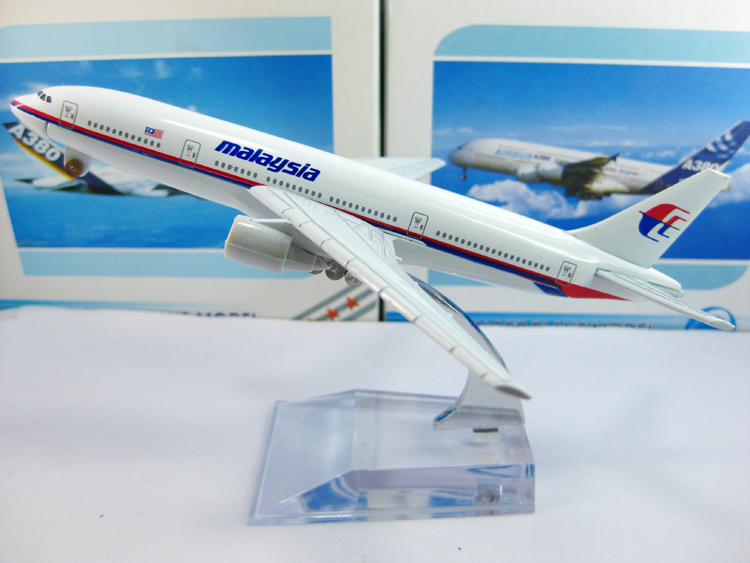
This model may soon become a historical item.
 Can a once-proud name like Malaysia Airlines be restored after two headline-grabbing accidents in 2014? I have written about how the carrier is already burdened with overstaffing, competition on domestic routes from low-cost carriers, and competition of international routes from Middle Eastern ones. On top of everything, it is a state-owned firm with all the (check-in) baggage that entails in terms of being politicized as a "flag carrier." Actually, Malaysia Airlines was briefly privatized, but it soon found itself in government hands as credit woes struck. Hence, 2014's incidences hit an airline that was already in financial trouble.

Now there is talk of rebranding the carrier. However, the problem for Malaysia Airlines for as long as it remains a government-owned firm is that it cannot bear a name which does not have "Malaysia" in it for obvious reasons. To show you how this principle works, recall the Korean Airlines 007 that was shot down for straying into Soviet airspace in 1983. The year after, its name was shortened to "Korean Air" and its livery was changed to different colors but that's about it. The options here are rather similar:
A government-led review of Malaysia Airlines – the carrier reeling from the disappearance of one aircraft and the alleged shooting down of another – is examining the case for renaming the company. Two people familiar with the situation said the Malaysian government – which through the country's sovereign wealth fund has a 69 per cent stake in Malaysia Airlines – was looking at a rebranding alongside other potentially far-reaching options to safeguard the carrier's future[...]
 
The person close to Malaysia Airlines said the government-led review would consider renaming the airline, founded in 1947, but stressed no decisions had been reached. Another person with knowledge of Malaysia Airlines cautioned that rebranding may not be straightforward because Malaysia's economy is partly built on tourism, and therefore it was important for the carrier to bear the country's name. The people familiar with the government-led review of the carrier said it could lead to a reshaping of the company – for example, its aircraft maintenance unit could be spun off.
Extraordinary circumstances aside, Malaysia Airlines has a reputation for well-maintained planes, and it may spin off these operations to make them available to other carriers (just as Lufthansa Technik does). With regard to rebranding, though, I think Malaysia Airlines' options are limited in having to bear the country's name. If the company is not divested by the government, I think the most it will do is change its paint scheme, logo and even the uniforms of cabin crew, but that's about it.

Here in Southeast Asia, we have yet to get past the notion that "nationhood" means having an identifiable national airlines. Yes, yes, I know: Garuda Airlines of Indonesia doesn't bear the country's name in the title, but its subtitle is "The Airline of Indonesia." For better or worse, it is what it is--Malaysia's national carrier.